

You want the best for your dog, especially when it comes to their health and growth. One important question many dog owners ask is, “When should my puppy switch from puppy food to adult food?” Making this change at the right time can help your furry friend stay strong, energetic, and happy.
If you switch too early or too late, it could affect their development and overall well-being. Keep reading to discover the signs to watch for and expert tips to make this transition smooth and safe for your dog. Your pup’s health depends on it!

Credit: hospimedicaintl.com
Growth Stages In Dogs
Dogs grow quickly during their first months of life. Their food needs change as they grow. Understanding their growth stages helps choose the right diet. Feeding the right food supports healthy bones, muscles, and energy. Knowing when to switch from puppy to adult food depends on these stages.
Puppy Phase Duration
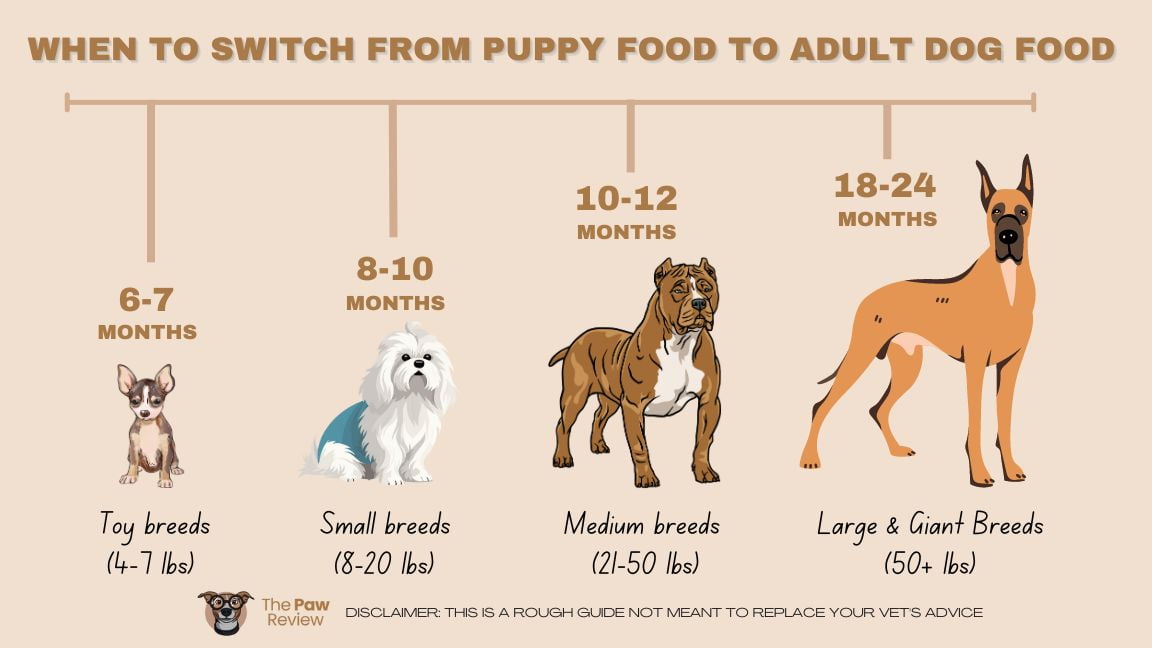
The puppy phase lasts from birth to about one year. Small breeds may finish this phase earlier, around 9 months. Large breeds take longer, sometimes up to 18 months. During this time, puppies need more calories and nutrients. Puppy food is rich in protein and fat for growth.
Adult Dog Milestones
Adult milestones mark when dogs slow their growth. Most dogs reach adult size by one year old. Large breeds may still grow until 18 months or two years. At this stage, dogs need balanced nutrition for maintenance. Adult dog food has fewer calories than puppy food.
Breed Size And Growth Rate
Breed size affects how fast dogs grow. Small breeds grow quickly and mature early. Medium breeds grow at a moderate pace. Large and giant breeds grow slowly and need more time. Knowing your dog’s breed size helps decide the right time to switch food.

Credit: www.iams.com
Signs To Switch Dog Food
Knowing the right time to switch your dog from puppy to adult food is key for their health. Puppies grow fast and need special nutrition. Their bodies change, and so do their food needs. Watch for signs that show your dog is ready for adult food. These signs help make the change smooth and healthy.
Changes In Appetite
Puppies often eat small, frequent meals with high energy needs. As they grow, their appetite may change. They might eat less or show more interest in food. A sudden drop or rise in appetite can signal it is time to switch. Adult dogs usually eat less often but larger amounts.
Physical Development Indicators
Look at your dog’s size and body shape. When a puppy reaches about 80% of its adult size, switching food is wise. Check the teeth, too. Puppies lose baby teeth and get adult teeth around six months old. Their coat and muscle tone also change. These signs show your dog is growing up.
Behavioral Shifts
Growing dogs act differently. They may be less hyper or restless than puppies. Your dog might become calmer or more independent. These changes mean their energy needs are shifting. Adult food supports steady energy and keeps your dog healthy. Notice these behavior changes to know when to switch.
Choosing The Right Adult Food
Choosing the right adult food for your dog is important for their health and happiness. The change from puppy food to adult food must support your dog’s growth and energy needs. The right food helps keep your dog strong and active as they grow older.
Nutritional Requirements
Adult dogs need different nutrients than puppies. Protein levels should be balanced to maintain muscles. Fat content usually lowers compared to puppy food. Vitamins and minerals support overall health and immunity. Calories must match your dog’s activity level to avoid weight gain.
Food Types And Ingredients
Dry kibble, wet food, and raw diets are common choices. Each type has pros and cons for digestion and convenience. Look for real meat, whole grains, and vegetables in the ingredients. Avoid foods with fillers like corn or soy. Quality ingredients support better digestion and nutrient absorption.
Consulting Your Veterinarian
Your vet knows your dog’s health history best. They can suggest the ideal food type and brand. Special diets might be needed for allergies or health issues. Regular check-ups help track your dog’s weight and condition. Always ask your vet before changing your dog’s diet.
Transitioning Between Foods
Switching your dog from puppy food to adult food needs care. The change affects their digestion and nutrition. A smooth transition helps avoid stomach upset. It also keeps your dog healthy and happy.
Gradual Food Change Process
Start by mixing 25% adult food with 75% puppy food. Do this for three days. Then, mix half adult and half puppy food. Keep this for another three days. Finally, serve only adult food. This slow change helps your dog’s stomach adjust.
Monitoring Digestive Health
Watch your dog’s stool during the switch. Soft or runny stool shows digestion issues. Loss of appetite or vomiting is a warning sign. If these happen, slow down the transition. Give your dog more time to adapt.
Avoiding Common Feeding Mistakes
Do not switch food suddenly. Avoid mixing too many brands at once. Stick to one adult food type during transition. Keep feeding times consistent every day. These steps prevent stomach problems and stress for your dog.
Special Considerations
Switching your dog from puppy to adult food is not the same for every dog. Some dogs have special needs that affect the right time to change their diet. Paying attention to these special considerations helps keep your dog healthy and happy. Learn about how breed size, health issues, and age affect this important change.
Large Vs Small Breed Needs
Large breed puppies grow fast but need a slower growth rate. Their food should support strong bones without too many calories. Small breeds mature quicker and need more energy-dense food. Choose food that fits your dog’s size to avoid health problems later.
Health Conditions Impact
Some dogs have health issues like allergies or digestion problems. These conditions need special diets. Talk to your vet before switching foods. The right adult food can help manage health problems and improve your dog’s life.
Age-related Adjustments
Dogs mature at different ages depending on breed and size. Smaller dogs may switch to adult food around 9-12 months. Larger dogs might need puppy food longer, up to 18-24 months. Watch your dog’s growth and energy to decide the best time to switch.
Credit: paw-review.com
Frequently Asked Questions
When Is The Best Time To Switch Puppy Food?
Switch your dog to adult food between 9 and 12 months. Large breeds may need to wait up to 18 months. This timing supports healthy growth and development as puppies mature into adults.
How To Know If My Dog Needs Adult Food?
Look for slowed growth and less playful behavior. Your vet can assess if your dog is ready. Proper nutrition changes prevent obesity and support overall health.
Can Switching Food Too Early Harm Puppies?
Yes, switching too early can cause nutrient deficiencies. Puppy food contains essential nutrients for growth. Premature change may lead to digestive issues and poor development.
What Are Signs Of Poor Transition To Adult Food?
Watch for vomiting, diarrhea, or decreased appetite. These may indicate digestive upset. Gradually mix adult food with puppy food over 7-10 days to ease transition.
Conclusion
Switching your dog from puppy to adult food depends on their age and size. Most dogs change food between 9 and 12 months. Large breeds may need more time, up to 18 months. Watch your dog’s growth and energy levels closely.
Healthy teeth and steady weight are good signs. Consult your vet to choose the best time to switch. Feeding the right food helps your dog stay strong and happy. Remember, every dog is different. Take your time to make the change smooth and easy.
Your dog will thank you for it.


