Are you wondering when to switch your puppy from their special puppy food to adult dog food? This change is important for your dog’s health and growth.
If you make the switch too early or too late, it could affect their energy, weight, and overall well-being. You’ll learn exactly when and how to make this transition smoothly. Keep reading to make sure your furry friend gets the best nutrition at every stage of life.
Puppy Growth Stages
Puppy growth happens in clear stages. Each stage needs different care and food. Understanding these stages helps you feed your puppy right. This way, your dog grows strong and healthy.
Newborn To Weaning
Newborn puppies depend fully on their mother’s milk. It gives all the nutrients they need. This stage lasts about 3 to 4 weeks. Puppies start to open their eyes and move more. They are fragile and need gentle care.
Weaning To Juvenile
At about 3 to 4 weeks, puppies begin weaning. They start eating soft solid food. This change helps their teeth and digestion grow. By 8 weeks, puppies eat puppy food only. This stage lasts until about 6 months. Growth is fast, so nutrition is very important.
Juvenile To Adult
After 6 months, puppies enter the juvenile stage. Growth slows down but continues steadily. Their body needs less energy but more balanced nutrition. Most dogs switch to adult dog food between 9 and 12 months. The exact time depends on breed and size. Large breeds may need more time before switching.
Nutritional Needs By Age
Puppies need different nutrition than adult dogs. Their bodies grow fast and need extra care. Changing their food at the right age helps keep them healthy. Understanding their nutritional needs by age guides you on when to switch foods.
Energy Requirements
Puppies have high energy needs to support growth. They burn more calories than adult dogs. Their food must provide enough energy for active play and development. Adult dogs need fewer calories to avoid weight gain. Adjusting energy intake helps maintain a healthy weight.
Protein And Fat Levels
Puppies require higher protein and fat levels. Protein builds strong muscles and tissues. Fat supplies essential energy and supports brain growth. Adult dogs need less protein and fat to prevent health issues. Feeding the right balance ensures proper growth and long-term health.
Vitamin And Mineral Balance
Vitamins and minerals support bone growth and immune health. Puppies need extra calcium and phosphorus for strong bones. Adult dogs need balanced vitamins for maintenance, not growth. Too much or too little can cause problems. Proper vitamin and mineral balance is key at each stage.
Signs To Switch To Adult Food
Knowing when to switch your puppy to adult dog food is important. Puppies need different nutrition than adult dogs. Watching for signs helps make the change at the right time. These signs come from your puppy’s body, behavior, and advice from experts.
Physical Development Indicators
Puppies grow fast. Their baby teeth fall out and adult teeth come in. Muscle tone improves and their body looks more filled out. Their energy levels may change as growth slows. Once they stop growing quickly, their food needs change too.
Behavioral Changes
Changes in behavior can show your puppy is ready for adult food. They may seem less hyper than before. Eating habits might shift, with smaller or slower meals. Playtime might be less intense. These signs show their body needs different nutrition.
Veterinarian Recommendations
Your vet can guide the best time to switch foods. They check growth, weight, and health. Vets know breed differences and special needs. Follow their advice to keep your dog healthy. Regular check-ups help track your puppy’s progress.

Credit: www.iams.com
Timing By Breed Size
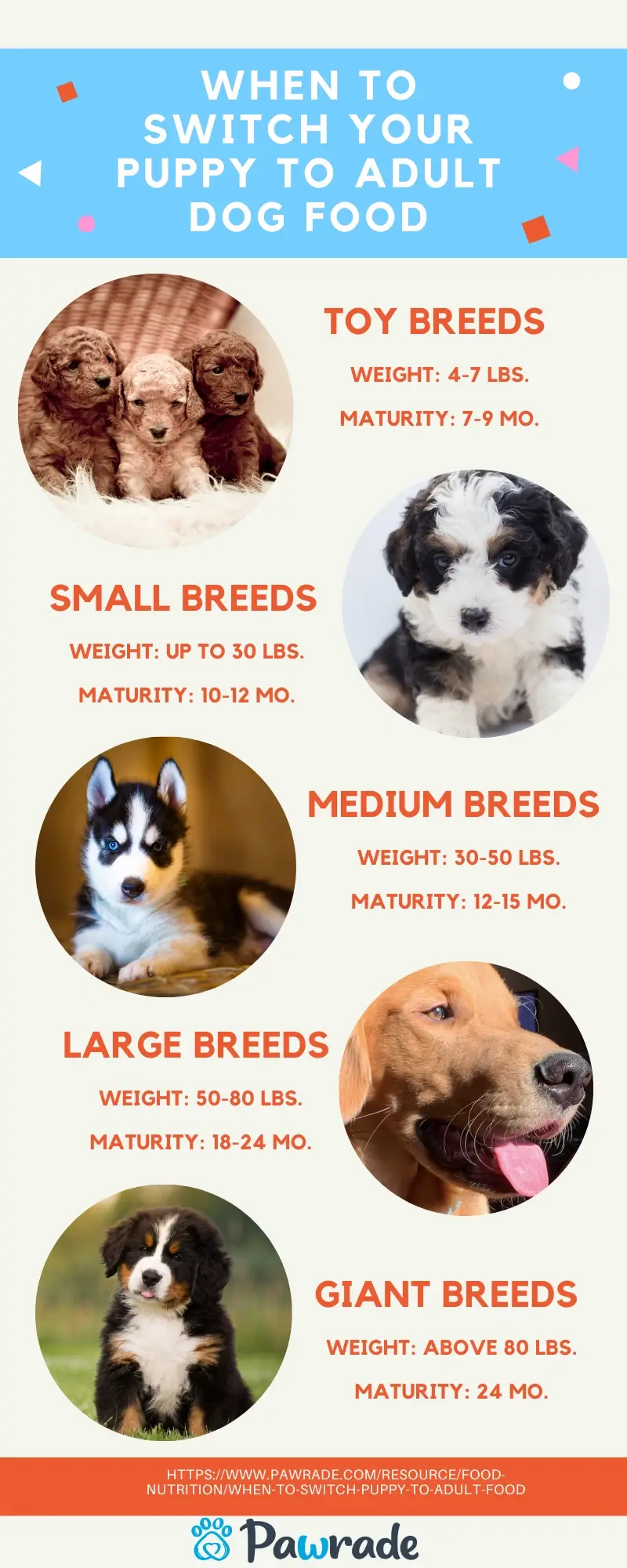
Knowing the right time to switch your puppy to adult dog food depends on their breed size. Different breeds grow at different speeds. This growth pace changes when they need adult food. Feeding adult food too early or too late can affect their health and growth.
Here is a guide based on breed size to help with this important decision.
Small Breeds
Small breed puppies grow quickly. They usually reach adult size by 9 to 12 months. At this time, they are ready to switch to adult dog food. Small breeds have fast metabolisms and need nutrient-rich food during growth. Switching food too late can lead to weight gain. Too early can cause nutrient loss.
Medium Breeds
Medium breed puppies grow a bit slower. They reach adult size between 12 and 15 months. This stage marks the best time to start adult dog food. Their growth is steady, and their energy needs balance out. Proper timing helps maintain healthy weight and strong muscles. Transitioning gradually helps avoid digestive upset.
Large And Giant Breeds
Large and giant breed puppies grow slowly. They can take 18 to 24 months to reach full size. Their bones and joints develop over a longer period. Feeding adult food too early may harm their growth plates. They need special puppy food with controlled calcium and protein. Switching after 18 months supports healthy bone growth and overall development.
Choosing The Right Adult Dog Food
Choosing the right adult dog food is important for your pet’s health. Adult dogs need balanced nutrition to stay active and strong. The right food supports their energy, coat, and digestion. Not all dog foods are the same. Some have better ingredients than others. Knowing what to pick helps you give your dog the best care.
Ingredients To Look For
Good adult dog food has real meat as the first ingredient. Chicken, beef, or fish provide protein for muscle health. Whole grains like brown rice or oats offer energy. Vegetables such as carrots and peas add vitamins and fiber. Avoid foods with too many fillers like corn or soy. Natural ingredients keep your dog healthy and happy.
Avoiding Common Allergens
Some dogs have allergies to certain foods. Common allergens include wheat, soy, and dairy. Signs of allergies are itching, redness, or upset stomach. Choose dog food labeled “hypoallergenic” or “grain-free” if allergies are a concern. Always check the ingredient list to avoid triggers. This helps your dog feel comfortable and prevents health issues.
Special Dietary Needs
Some dogs need special diets for health reasons. Older dogs may need food with less fat and more fiber. Active dogs might need extra protein for energy. Dogs with kidney problems need food low in phosphorus. Talk to your vet about your dog’s needs. Pick food that matches their health and lifestyle.
Credit: bulit.com
Transitioning Process Tips
Switching your puppy from puppy food to adult dog food needs care. The transition affects their digestion and energy. A smooth change helps your dog feel good and stay healthy. Follow these tips for a safe food switch.
Gradual Food Mixing
Start by mixing a small amount of adult food with puppy food. Increase the adult food slowly over 7 to 10 days. This helps your puppy adjust to new tastes and nutrients. Sudden changes can upset their stomach.
Monitoring Digestive Health
Watch for signs like vomiting, diarrhea, or constipation. These may mean the new food is not agreeing with your dog. Also, check if your puppy stays active and happy. Healthy digestion shows the food suits them.
Adjusting Portion Sizes
Adult dogs need fewer calories than puppies. Reduce portion sizes as you switch foods. Use feeding guidelines on the package as a start. Adjust based on your dog’s weight and energy level.
Common Mistakes To Avoid
Switching your puppy to adult dog food is a big step. Many pet owners make common mistakes during this change. These errors can cause health problems or slow growth. Avoiding these pitfalls helps your dog stay healthy and strong.
Switching Too Early Or Late
Changing to adult food too soon can harm your puppy’s growth. Their bodies need more nutrients from puppy food. Waiting too long can lead to weight gain and poor digestion. Follow your vet’s advice about the right time to switch.
Ignoring Breed Specific Needs
Different breeds grow at different speeds. Large breeds need a slower transition to avoid bone problems. Small breeds may need adult food sooner. Learn about your puppy’s breed to feed them properly.
Overfeeding During Transition
Overfeeding is a common mistake during food changes. Puppies may eat more due to new flavors. Extra food can cause obesity and stomach upset. Measure portions carefully and watch your puppy’s weight.
Expert Advice And Faqs
Understanding when to switch your puppy to adult dog food is important for their health. Expert advice helps you make the right choice. This section answers common questions and shares insights from veterinarians.
Veterinarian Insights
Most vets recommend switching to adult food between 9 and 12 months. Large breeds may need more time, up to 18 months. This supports proper growth and joint health.
Watch your puppy’s energy and weight. Changes in appetite or digestion may signal a need to adjust food. Always ask your vet before making changes.
Frequently Asked Questions
Q: Can I switch foods suddenly?
A: No. Gradually mix adult food with puppy food over 7-10 days.
Q: What if my puppy refuses adult food?
A: Try different flavors or brands. Consult a vet if problems continue.
Q: Is adult food less nutritious?
A: No. It has nutrients for adult dogs, not growing puppies.

Credit: shop.bullymax.com
Frequently Asked Questions
When Should Puppies Switch To Adult Dog Food?
Puppies typically switch to adult dog food between 9 to 12 months. Large breeds may transition later, around 12 to 18 months. This timing supports their growth and nutritional needs effectively during development.
Why Change Puppy Food To Adult Food?
Adult dog food has fewer calories and different nutrients. This suits a mature dog’s slower metabolism and maintains healthy weight. Continuing puppy food too long can cause obesity or nutrient imbalance.
How To Transition Puppies To Adult Dog Food?
Gradually mix adult food with puppy food over 7 to 10 days. This helps avoid digestive upset and allows your puppy to adjust to the new taste and texture smoothly.
What Signs Show Puppies Are Ready For Adult Food?
Signs include slowed growth rate, reaching near full size, and reduced energy levels. Your vet can confirm readiness based on breed, weight, and health status.
Conclusion
Puppies usually switch to adult dog food between 9 and 12 months old. This change helps meet their growing body’s needs. Watch your dog’s size and energy to know the right time. Always choose food that fits their breed and health.
Gradually mix new food to avoid stomach upset. Healthy feeding supports a happy, strong dog. Remember, every puppy grows at its own pace. Stay patient and observant during this transition. Your dog will thank you with good health and energy.