Potty training a dog in an apartment can feel like a big challenge. You want your furry friend to be clean and happy, but limited space and busy schedules make it tricky.
What if you could teach your dog where to go without stress or mess? In this guide, you’ll find simple, practical steps that work even in small living spaces. By following these tips, you’ll gain control, save time, and enjoy a fresh-smelling home.
Ready to make potty training easier and more effective? Keep reading to discover how to turn your apartment into a dog-friendly space everyone will love.
Choose The Right Spot
Choosing the right spot for your dog to potty is key in apartment living. Dogs need a clear, consistent place to relieve themselves. This helps them learn faster and avoid accidents inside your home. The spot should be easy to reach and clean. It must suit your dog’s size and habits. Different options work for different apartments and dogs.
Indoor Potty Options
Indoor potty spots work well in apartments without easy outdoor access. Use potty pads or artificial grass mats. Place them in a quiet, low-traffic area. Keep the spot clean to encourage your dog to use it. Change the pads often to prevent odors. Some dogs like a small litter box with dog-specific litter. Train your dog by taking them to the spot regularly. Praise them when they go there. Consistency helps your dog understand what to do.
Balcony Or Nearby Outdoor Area
A balcony can be a great potty spot if you live in an apartment. Use a potty tray or grass patch on the balcony. Make sure it is safe and secure. Take your dog there at regular times each day. Reward them for using the spot. If you have a nearby outdoor area, use it as the potty place. Choose a quiet corner away from busy paths. Carry cleaning supplies to keep the area tidy. Regular visits help your dog learn to go outside.

Credit: www.amazon.com
Create A Consistent Schedule
Creating a consistent schedule is key to successful potty training in an apartment. Dogs thrive on routine. It helps them understand when to eat and when to go outside. A steady plan reduces accidents and stress for both you and your dog.
Feeding And Bathroom Times
Feed your dog at the same times every day. This predictability helps control when they need to go. After eating, take your dog outside right away. Puppies usually need a bathroom break 10 to 15 minutes after a meal. Regular feeding and bathroom times teach your dog to hold it until the right moment.
Regular Walks And Breaks
Schedule walks at consistent times daily. Short, frequent walks give your dog chances to relieve themselves. In an apartment, these breaks are crucial. They prevent accidents and build good habits. Keep walks calm and focused on bathroom needs. Praise your dog after they go outside. This rewards good behavior and encourages repetition.
Use Positive Reinforcement
Using positive reinforcement helps your dog learn faster. It builds trust and makes training fun. Dogs respond well to rewards and kind words. This method encourages good behavior and reduces stress for both of you.
Treats And Praise
Give your dog a small treat after every successful potty break. Choose tasty, healthy snacks your dog loves. Use a happy voice to say “Good job” or “Well done.” This shows your dog that it did something right. Treats and praise together create strong positive feelings. Repeat this often to build good habits quickly.
Avoiding Punishment
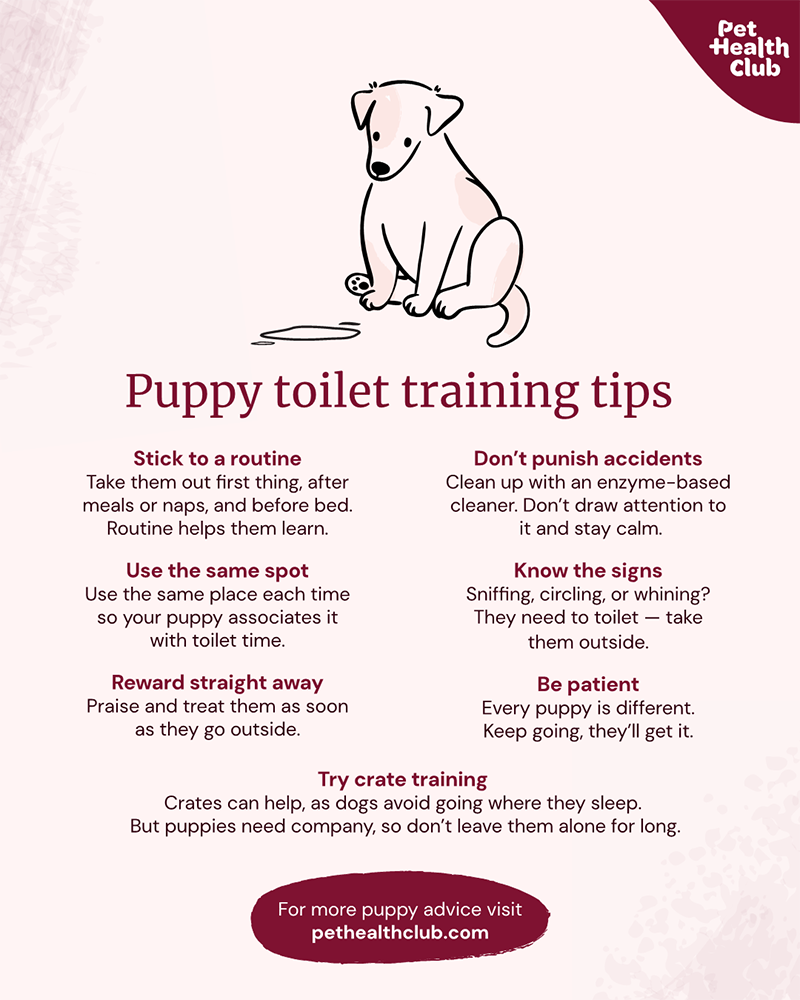
Do not punish your dog for accidents. Punishment can make your dog scared or confused. It may stop your dog from telling you when it needs to go. Focus only on rewarding good behavior. Stay calm and patient during training. Positive support helps your dog feel safe and willing to learn.
Credit: www.pethealthclub.com
Introduce Training Aids
Introducing training aids can make potty training easier in an apartment. These tools help guide your dog to the right place. They reduce accidents and create good habits fast. Training aids suit small spaces and busy schedules. Choose aids that fit your dog’s size and personality. Consistent use helps your dog learn quickly. Here are two common aids that help a lot.
Pee Pads And Trays
Pee pads are soft, absorbent mats for dogs to pee on inside. Place them in a quiet corner your dog likes. Use trays with pee pads to keep the area neat and stable. Change pads often to avoid smells and keep your dog happy. Praise your dog when it uses the pad correctly. Pee pads work well for puppies or dogs left alone longer. They teach your dog where it is okay to go.
Crate Training Benefits
A crate is a small, safe space for your dog to rest. Dogs do not like to soil their sleeping area. Use a crate to teach your dog bladder control. Keep the crate comfortable with soft bedding. Let your dog out regularly to pee and play. Crate training helps your dog learn to hold it longer. It also stops accidents in the apartment. A crate gives your dog a sense of security and routine.
Monitor Your Dog’s Behavior
Watching your dog closely helps you understand their needs better. This step is key to potty training in an apartment. Dogs cannot tell us when they need to go. They show signs through their actions. Noticing these signs early prevents accidents. You learn to act fast and guide your dog.
Signs They Need To Go
Dogs show many signs before they need to pee or poop. They might sniff the floor or circle around. Some dogs whine or bark softly. Others pace near the door or their usual potty spot. Pay attention to sudden restlessness or sniffing. These clues help you take your dog out on time.
Preventing Accidents
Catch the signs early to stop accidents inside. Take your dog out right after they show signs. Keep a regular schedule for bathroom breaks. Use a leash to guide them to the right spot. Praise your dog when they go outside. Clean any indoor accidents quickly to remove smells. This stops your dog from returning to the same place.

Credit: earthrated.com
Handle Accidents Calmly
Accidents happen during potty training, especially in an apartment. Staying calm helps your dog learn faster. Reacting with anger can scare your pet and slow progress. Patience and calmness build trust and encourage good habits.
Cleaning Tips
Clean accidents quickly and thoroughly. Use an enzymatic cleaner to remove all odors. Regular cleaners might not remove smells that attract dogs back. Avoid ammonia-based cleaners. They smell like urine to dogs and cause repeat accidents.
Keep cleaning supplies handy in your apartment. Prompt cleaning prevents stains and lingering smells. This step is important to keep your space fresh and your dog focused on training.
Redirecting Your Dog
After an accident, gently guide your dog to the right spot. Use a leash if needed to control the movement. Praise your dog when they go potty in the right place.
Do not punish your dog for accidents. Instead, show where to go next time. Use treats or toys as rewards. Positive redirection helps your dog learn faster and feel safe.
Adjust Training For Small Spaces
Potty training a dog in an apartment needs special care. Small spaces limit your options. Your training plan must fit your home size. Adjusting your methods can help your dog learn faster. Pay attention to the space around you and your dog’s needs. This makes training smooth and stress-free.
Maximizing Limited Area
Use a small potty spot inside. Puppy pads work well in tight spaces. Place them in a quiet corner. Change pads often to avoid smells. Use barriers to create a potty zone. Keep the area clean to encourage use. Take your dog outside regularly for fresh air. Short walks help your dog understand outside is for potty. Always praise your dog after success.
Dealing With Noise And Neighbors
Noise can scare shy dogs. Loud sounds may stop your dog from pottying. Use calm, soft words to comfort your dog. Avoid yelling or harsh tones. Train your dog at times neighbors are less likely to be disturbed. Close windows to reduce noise. Use white noise machines to cover sounds. Talk to neighbors about your training. Their understanding helps reduce stress. Keep your dog on a leash outside to control behavior.
Frequently Asked Questions
How Long Does Apartment Dog Potty Training Take?
Potty training a dog in an apartment usually takes 4 to 6 weeks. Consistency and positive reinforcement speed up the process. Puppies may take longer, while adult dogs might learn faster. Patience and routine are key to success.
What Is The Best Potty Spot In An Apartment?
Choose a quiet, easily accessible spot for potty breaks. A balcony with pee pads or a designated outdoor area works well. Keep the spot consistent to help your dog associate it with bathroom time. Clean it regularly to avoid odors.
How Often Should I Take My Dog Out In An Apartment?
Take your dog out every 2 to 3 hours during potty training. Puppies need more frequent breaks, about every 1 to 2 hours. Regular trips prevent accidents and reinforce good habits. Always reward your dog after successful potty breaks.
Can I Use Pee Pads For Apartment Potty Training?
Yes, pee pads are a practical solution for apartment training. They help teach your dog where to go indoors. Gradually move the pads closer to the door, then outside. Clean pads regularly to maintain hygiene and encourage use.
Conclusion
Potty training a dog in an apartment takes time and patience. Consistency is key to helping your dog learn good habits. Use the same spot for potty breaks every time. Praise your dog when they do well. Expect accidents but stay calm and keep trying.
Small steps lead to big progress. Your dog will adapt with love and care. Soon, both of you will enjoy a cleaner, happier home. Keep going—you’re doing great!