

Have you ever wondered how long it takes to become a dog trainer? If you love dogs and want to turn that passion into a rewarding career, you’re probably asking yourself this question right now.
Knowing the time commitment is key to planning your path and staying motivated. You’ll discover the realistic timeline, the steps involved, and what you need to focus on to become a skilled dog trainer. Keep reading, and you’ll have a clear picture of what lies ahead on your way to working with dogs every day.

Credit: www.qcpetstudies.com
Paths To Becoming A Dog Trainer
Becoming a dog trainer involves different paths. Each path offers unique ways to learn skills and gain knowledge. The right path depends on your goals, time, and resources.
Self-study And Experience
Many trainers begin by learning on their own. Books, videos, and online courses provide helpful information. Hands-on practice with dogs builds real skills. This path is flexible and low cost. Experience teaches how dogs behave and respond.
Formal Education Options
Some choose to study at colleges or training schools. These programs offer structured lessons on dog behavior and training methods. Certificates or diplomas can boost your credibility. Formal education often covers animal science basics. It takes months to a few years to complete.
Apprenticeships And Mentorships
Working under an expert trainer helps gain practical skills. Apprentices learn by watching and assisting in real sessions. Mentors provide guidance and feedback on your progress. This path offers valuable hands-on experience. It usually lasts several months to a year.
Timeframes For Different Training Levels
Becoming a dog trainer takes different amounts of time depending on the level of training you want. Each level teaches you new skills and knowledge. Understanding these timeframes helps you plan your path clearly.
Basic Certification Timeline
Basic certification usually takes three to six months. During this time, you learn dog behavior, basic commands, and training techniques. Many programs combine classroom lessons with hands-on practice. This level prepares you to work with most dogs safely and confidently.
Advanced Specializations
Advanced specializations require extra time after basic certification. These courses can last from six months to a year. You study topics like behavior problems, agility training, or service dog preparation. This level demands more practice and deeper knowledge of dog psychology.
Continuing Education
Continuing education is ongoing and never really ends. Trainers attend workshops, seminars, and courses regularly. This keeps their skills fresh and up to date. Dog training methods change, so learning new techniques is important. It helps trainers provide the best care and training for dogs.
Key Skills And Knowledge Areas
Becoming a dog trainer requires learning many skills and knowledge areas. These skills help trainers work well with dogs and their owners. Understanding key topics is important to train dogs safely and effectively. Below are some essential skills every dog trainer needs to know.
Canine Behavior Basics
Knowing how dogs think and act is the first step. Trainers study dog body language and emotions. They learn why dogs bark, growl, or wag tails. Understanding behavior helps trainers predict how dogs will react. This knowledge avoids problems and builds trust between dogs and trainers.
Training Techniques
Trainers use different methods to teach dogs new skills. Positive reinforcement is a common technique. It means rewarding good behavior to encourage it. Trainers also learn how to use commands clearly and consistently. Knowing which technique fits each dog is key for success.
Communication And Handling
Good communication helps trainers connect with dogs and owners. Trainers use clear signals and calm tones. They also learn how to handle dogs safely and gently. Proper handling keeps dogs relaxed and focused during training. This skill improves learning and strengthens the trainer’s control.
Certifications And Accreditation
Certifications and accreditation play a key role in becoming a dog trainer. They show your skills and knowledge to potential clients. These credentials help build trust and prove your professionalism.
Many trainers choose to get certified to stand out in the field. Certification often involves exams and practical tests. It also requires meeting specific education and experience standards.
Popular Certification Bodies
Several organizations offer dog trainer certifications. The Certification Council for Professional Dog Trainers (CCPDT) is widely known. The International Association of Canine Professionals (IACP) also provides respected credentials. Another important body is the Association of Professional Dog Trainers (APDT). These groups set high standards for training and ethics.
Requirements And Exams
Certification usually requires a mix of education and hands-on experience. Candidates must pass written exams that test knowledge of dog behavior and training methods. Some certifications need practical demonstrations or video submissions. Many programs also require continuing education to keep skills updated.
Benefits Of Certification
Certification boosts your credibility as a dog trainer. It helps attract more clients and better job opportunities. Certified trainers often earn higher fees for their services. Accreditation also shows your commitment to ethical and effective training. Clients feel more confident hiring someone with verified skills.
Gaining Practical Experience
Gaining practical experience is a key step in becoming a skilled dog trainer. Training dogs requires more than just theory. Hands-on work helps you understand dog behavior deeply. It builds your confidence and sharpens your skills. Real experience also teaches you how to handle different dog personalities.
Practical experience can come from various places. Finding the right opportunity will speed up your learning. Let’s explore some ways to gain this valuable experience.
Volunteering Opportunities
Volunteering at animal shelters or rescue centers is a great start. You get to work with many dogs daily. This helps you see how dogs react in different situations. Volunteers often assist with basic training and socialization. This experience is useful for beginners. It also shows your dedication to future employers or clients.
Internships With Trainers
Internships offer direct learning from experienced trainers. You observe and practice training techniques under guidance. This setting helps you ask questions and improve fast. Internships also expose you to real client interactions. You learn how to communicate with dog owners. This experience is often required for certification programs.
Building A Client Base
Starting with friends and family dogs is a smart move. It allows you to practice training in a low-pressure environment. Positive results lead to word-of-mouth referrals. As your client base grows, you face new challenges. Each dog presents unique training needs. This variety strengthens your skills and reputation.
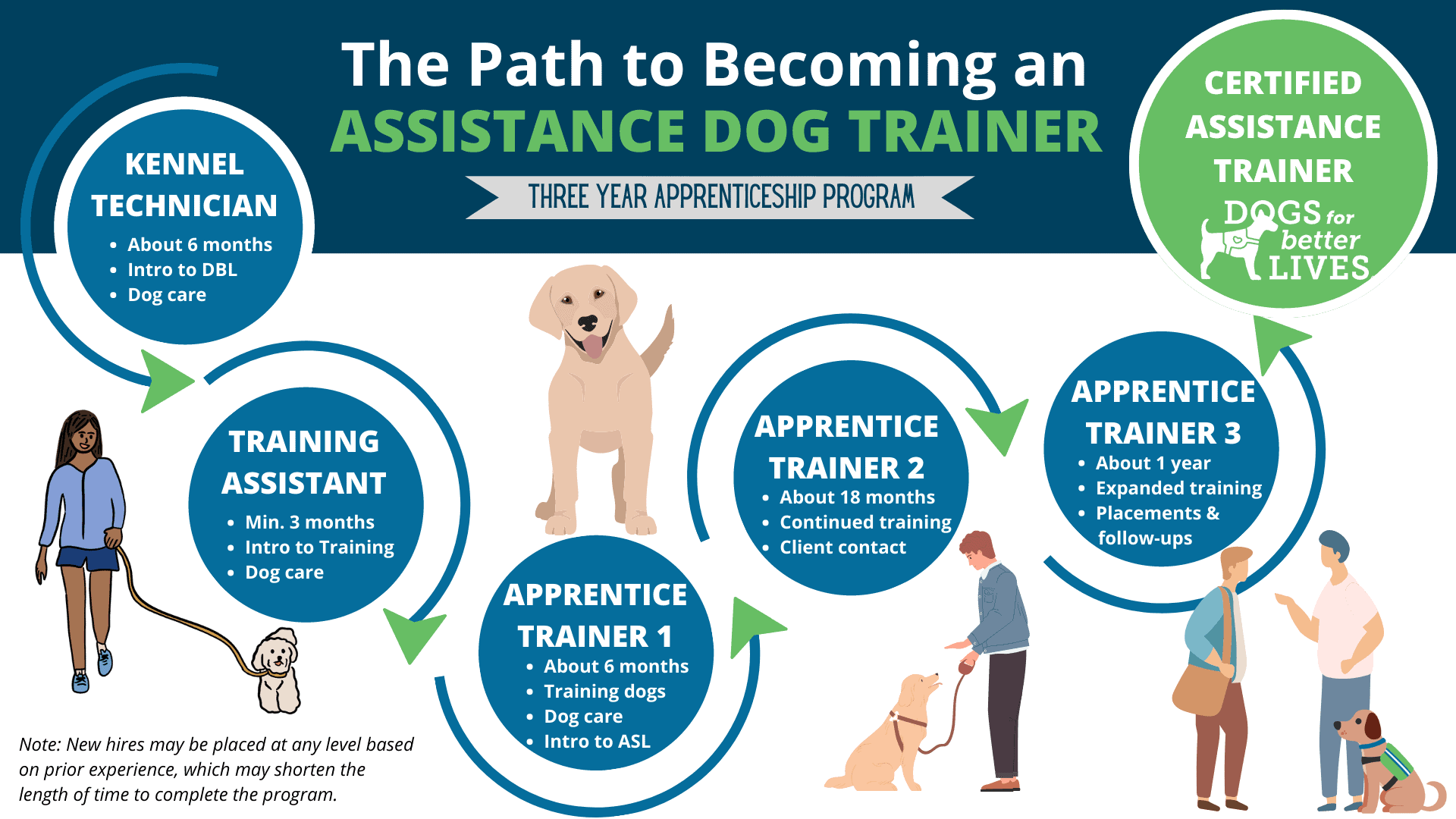
Credit: dogsforbetterlives.org
Factors Influencing Training Duration
The time it takes to become a dog trainer varies from person to person. Several key factors influence how long training lasts. Understanding these can help you plan your path better.
Each factor affects learning speed and skill development differently. Some might speed up the process, while others could extend it. Let’s explore the main influences on training duration.
Personal Learning Pace
Everyone learns at their own speed. Some pick up dog training skills quickly. Others need more practice and review. Experience with dogs before training also matters. Those familiar with animals may learn faster. Patience and persistence help improve learning pace. It is normal to take extra time on difficult topics.
Training Program Intensity
Programs vary in how fast they teach. Some are short and intensive. These demand many hours each day. Others spread lessons over weeks or months. Intense courses often lead to faster certification. Slower programs give more time to absorb knowledge. Choose a program that fits your lifestyle and goals.
Part-time Vs Full-time Study
Full-time study shortens the learning period. You focus on training without many breaks. Part-time study suits those with jobs or families. It takes longer but offers flexibility. Balancing study with other duties can be tough. Consistent effort helps progress regardless of study type.
Career Paths After Training
After completing dog trainer training, many career options open up. You can choose different paths based on your interests and skills. Each path offers unique experiences and challenges. Understanding these options helps you plan your future better.
Starting Your Own Business
Starting your own dog training business gives you freedom. You set your schedule and choose your clients. Many trainers build strong local reputations this way. It needs good marketing and customer service skills. You must handle all business tasks, from bookings to payments.
Working For Training Centers
Training centers hire certified dog trainers regularly. They offer steady work and a team environment. You gain experience with many dog breeds and issues. Working here means less worry about business management. It can lead to career growth within the company.
Specializing In Therapy Or Service Dogs
Some trainers focus on therapy or service dogs only. These dogs help people with disabilities or emotional needs. Specializing requires extra training and certification. It is a rewarding path with deep impact. Trainers in this field work with clients and healthcare professionals.
Credit: blog.scitraining.com
Frequently Asked Questions
How Long Does It Take To Become A Certified Dog Trainer?
Becoming a certified dog trainer usually takes 6 months to 2 years. This depends on the chosen program’s intensity and your prior experience with dogs.
What Skills Are Essential For A Successful Dog Trainer?
Key skills include patience, communication, observation, and understanding canine behavior. These skills help trainers effectively teach dogs and guide owners.
Can I Become A Dog Trainer Without Formal Education?
Yes, many trainers start with hands-on experience and apprenticeships. However, formal education and certification improve credibility and job opportunities.
How Much Practical Experience Is Needed To Train Dogs Professionally?
Most programs require 100 to 500 hours of hands-on experience. Practical work is crucial to mastering dog training techniques and handling diverse behaviors.
Conclusion
Becoming a dog trainer takes time and effort. You need to learn about dogs and practice regularly. Training courses can last from a few months to a year. Experience with different dogs helps you improve faster. Patience and dedication are very important.
Every trainer’s journey is unique and depends on personal goals. Keep learning and practicing to become confident. Helping dogs and owners is rewarding work. Start small, stay consistent, and enjoy the process. Success comes step by step, not overnight.


