

Bringing a German Shepherd puppy into your home is exciting, but it can also feel overwhelming. You want to raise a happy, healthy dog that listens and loves being by your side.
The good news? With the right tips, you can make training and caring for your puppy easier than you think. You’ll discover simple, practical advice that will help you build a strong bond and avoid common mistakes. Ready to give your German Shepherd the best start?
Let’s dive in.
Choosing The Right Puppy
Choosing the right German Shepherd puppy sets the foundation for a happy life together. This decision takes time and care. Every detail matters. From finding a trustworthy breeder to recognizing healthy signs and making space at home, these steps shape your puppy’s future.
Selecting A Reputable Breeder
Start by searching for breeders who care deeply about their dogs. Good breeders provide clean spaces and proper care. They answer questions honestly and show health records. Avoid places that rush sales or hide information. Visiting the breeder helps you see the puppy’s early environment.
Identifying Healthy Traits
Look for bright eyes, a shiny coat, and a lively attitude. Healthy puppies move easily and show curiosity. Check ears and teeth for cleanliness. Avoid puppies that cough, sneeze, or seem weak. Early social skills show a well-raised pup.
Preparing Your Home
Make a safe, quiet spot for your new friend. Remove anything harmful or small enough to swallow. Have food, water bowls, and a cozy bed ready. Puppies need gentle space to explore and rest. This helps them settle and feel secure fast.
Nutrition Essentials
Proper nutrition is key for a healthy German Shepherd puppy. Good food supports growth, strong bones, and a shiny coat. Choosing the right diet helps your puppy stay active and happy. Nutrition also boosts their immune system to fight illnesses.
Understanding what to feed, how often, and what to avoid makes a big difference. This section covers essential tips for feeding your German Shepherd puppy well.
Best Puppy Food Options
Choose puppy food made for large breeds. These foods have the right balance of protein, fat, and vitamins. Look for brands with real meat as the first ingredient. Avoid foods with too many fillers like corn or wheat. Wet and dry food can both work, but dry kibble helps keep teeth clean.
Feeding Schedule
Feed your puppy three to four times daily. Small, regular meals help digestion and keep energy steady. Puppies under six months need more frequent meals. After six months, switch to two meals per day. Always provide fresh water alongside meals.
Avoiding Common Diet Mistakes
Do not overfeed your puppy. Extra weight strains their growing joints. Avoid giving table scraps or human food. Some foods can upset their stomach or be toxic. Watch for signs of allergies or intolerance like itching or diarrhea. Consult a vet if unsure about any food.
Training Basics
Training a German Shepherd puppy starts with a strong foundation. This breed is smart and eager to learn. Clear and consistent training helps shape good behavior early. It builds trust between you and your puppy. Training also prevents future problems and keeps your dog happy.
Begin with basic training tasks. Keep sessions short and fun. Use gentle praise and rewards to encourage your puppy. Patience is key as puppies learn at their own pace.
Housebreaking Tips
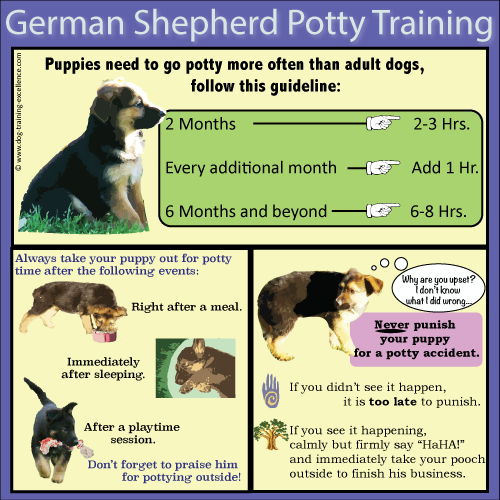
Start housebreaking as soon as your puppy comes home. Take your puppy outside often, especially after eating or waking up. Choose a specific spot for bathroom breaks. Praise your puppy when they go outside. Clean accidents inside quickly to remove smells. Consistency helps your puppy learn faster.
Socialization Strategies
Expose your puppy to new people and places early. Let your puppy meet other friendly dogs. Different sounds and sights teach your puppy to stay calm. Positive experiences build confidence. Keep socialization safe and stress-free. Small, frequent outings work best.
Basic Commands To Teach Early
Start with simple commands like “sit,” “stay,” and “come.” Use clear words and hand signals. Reward your puppy with treats or praise. Practice daily for short periods. These commands create good manners. They also keep your puppy safe.
Credit: www.dog-training-excellence.com
Health Care Needs
Taking care of a German Shepherd puppy’s health is very important. Good health care helps your puppy grow strong and happy. It also protects them from many diseases. Knowing the right steps keeps your puppy safe.
Vaccination Timeline
Vaccines protect your puppy from serious illnesses. Start vaccinations at six to eight weeks old. Your vet will give shots every three to four weeks. Core vaccines include distemper, parvovirus, and rabies. Follow the schedule closely to keep your puppy safe.
Regular Vet Checkups
Visit the vet often during your puppy’s first year. These visits check growth, weight, and overall health. The vet can spot problems early. Regular checkups also help update vaccines and give advice. Early care leads to a healthier dog.
Preventing Common Illnesses
Keep your puppy’s environment clean and safe. Use flea and tick prevention regularly. Watch for signs of illness like coughing or loss of appetite. Give your puppy a balanced diet and fresh water. Healthy habits lower the risk of many diseases.
Exercise And Playtime
Exercise and playtime are vital for a German Shepherd puppy’s health and happiness. These dogs are active and smart. They need enough movement and fun to stay balanced. Regular exercise helps them burn energy and grow strong. Playtime builds a bond between you and your puppy. It also teaches good behavior and social skills.
Daily Activity Requirements
German Shepherd puppies need about 30 to 60 minutes of exercise each day. This should be spread out in short sessions to avoid overworking their growing bones. Walking, gentle running, and playing fetch are great choices. Avoid hard running or jumping until they are older. Daily activities help keep your puppy fit and calm.
Safe Play Ideas
Choose toys that are safe and suitable for puppies. Soft chew toys and balls work well. Avoid small objects that can be swallowed. Play in secure areas like a fenced yard or indoors. Interactive games like hide and seek with toys keep your puppy busy and happy. Always watch your puppy during play to avoid accidents.
Mental Stimulation Techniques
German Shepherds are very intelligent and need mental challenges. Teach simple commands like sit, stay, and come. Puzzle toys with treats inside encourage thinking. Change toys often to keep interest high. Short training sessions work best for young puppies. Mental exercises reduce boredom and prevent bad habits.

Credit: www.youtube.com
Grooming Practices
Proper grooming keeps your German Shepherd puppy healthy and happy. It helps prevent skin problems and keeps their coat shiny. Grooming also builds a strong bond between you and your puppy. Simple, regular care is best for these active dogs.
Brushing And Coat Care
Brush your puppy’s coat at least two times a week. Use a brush made for medium to long hair. Brushing removes loose fur and dirt. It also stops mats and tangles from forming. Pay close attention to the neck, behind ears, and tail areas. Brushing helps you check for skin issues or pests.
Bathing Frequency
Bath your German Shepherd puppy only when needed. Usually, once every two to three months is enough. Use a mild dog shampoo that won’t dry their skin. Too many baths remove natural oils and cause itchiness. After bathing, dry your puppy well to avoid cold or skin infections.
Nail And Ear Maintenance
Trim your puppy’s nails every few weeks. Long nails can hurt their paws and affect walking. Use a sharp nail clipper made for dogs. Clean their ears weekly with a damp cotton ball. Check for redness, bad smell, or dirt. Healthy ears prevent infections and discomfort.
Handling Behavioral Issues
German Shepherd puppies are smart but need guidance. Behavioral issues can start early. Addressing these problems early helps your puppy grow into a well-behaved dog. Patience and consistency are key. Let’s explore common behavioral challenges and how to handle them.
Dealing With Chewing
Chewing is natural for puppies. It helps their teeth and relieves stress. Provide plenty of chew toys. Redirect your puppy to these toys when they bite furniture or shoes. Never punish your puppy for chewing. Instead, praise them when they chew the right items. Regular exercise also reduces destructive chewing.
Managing Separation Anxiety
Puppies can feel scared when left alone. Separation anxiety causes whining, barking, or chewing. Start by leaving your puppy alone for short times. Gradually increase this time. Create a safe space with toys and water. Avoid long goodbyes. Calm departures help your puppy feel secure. Consistent routines reduce anxiety.
Addressing Excessive Barking
Barking helps puppies communicate. Excessive barking can annoy you and neighbors. Identify the cause: boredom, fear, or attention seeking. Use commands like “quiet” and reward silence. Provide enough exercise to tire your puppy. Keep distractions low during training. Patience and calmness help reduce barking over time.
Credit: www.akc.org
Frequently Asked Questions
How Do I Train A German Shepherd Puppy Effectively?
Start training early using positive reinforcement. Be consistent, patient, and use clear commands. Socialize your puppy regularly for better behavior.
What Is The Best Diet For A German Shepherd Puppy?
Feed high-quality puppy food rich in protein and essential nutrients. Avoid overfeeding to prevent obesity. Consult a vet for personalized diet plans.
How Much Exercise Does A German Shepherd Puppy Need?
Provide moderate exercise twice daily. Avoid strenuous activity to protect growing joints. Short walks and playtime help build strength and stamina.
When Should I Start Socializing My German Shepherd Puppy?
Begin socialization as early as 3 weeks old. Expose your puppy to various people, animals, and environments to build confidence and reduce fear.
Conclusion
Caring for a German Shepherd puppy takes time and patience. Start training early and be consistent every day. Give your puppy love, exercise, and proper food. Watch for signs of health issues and visit the vet regularly. Enjoy the fun moments and the bond you build together.
Raising a happy and well-behaved dog is a rewarding journey. Keep learning and stay positive with your puppy’s growth. Your efforts will shape a loyal, smart, and strong companion.


