

You want the best for your dog, especially when it comes to their health and diet. One big question many dog owners face is: When should your dog switch to adult food?
Feeding your furry friend the right food at the right time can make a huge difference in their energy, growth, and overall wellbeing. You’ll discover clear signs to look for and simple tips to make the switch smooth and safe.
Keep reading to ensure your dog gets the nutrition they truly need as they grow.
Credit: www.hospimedicaintl.com
Puppy Growth Stages
Puppy growth happens fast in the first year. Understanding these stages helps you feed your dog right. Each stage has different needs. Knowing when to switch to adult food depends on these growth phases.
Key Development Milestones
Newborn puppies rely fully on their mother’s milk. By three weeks, they start trying solid food. At eight weeks, they eat more solid meals and less milk. Around six months, puppies enter adolescence. Their bodies grow stronger and bones harden. By one year, most dogs reach adult size. Growth varies by breed and size.
Nutritional Needs By Age
Young puppies need food rich in protein and fat. This supports rapid growth and energy. After six months, calorie needs slow down. Nutrients shift to support muscle and bone health. Large breeds need special diets to avoid joint problems. At about one year, switch to adult food. Adult diets have balanced nutrients for maintenance. Proper nutrition helps your dog stay healthy and active.
Credit: paw-review.com
Signs To Transition
Knowing when to switch your dog to adult food is important for their health. Dogs grow fast, and their needs change. Watch for signs that show your dog is ready for a new diet. These signs fall into two groups: behavioral changes and physical indicators. Both help you decide the right time to change their food.
Behavioral Changes
Your dog’s habits can tell you a lot. They may seem less hungry or more selective about food. Puppies might start eating less frequently. Energy levels often change, becoming more steady rather than hyperactive. They may show less need to chew or play with teething toys. These changes suggest their growth stage is shifting.
Physical Indicators
Look at your dog’s body for clues. Teeth development is a key sign. Adult teeth usually come in by six months. Their coat might become shinier and thicker. Growth in height and weight will slow down or stop. Muscle tone becomes more defined and firm. These signs show your dog’s body is maturing and ready for adult food.
Breed And Size Factors
Breed and size greatly affect when a dog should switch to adult food. Different breeds grow at different rates. Their nutritional needs change as they grow. Understanding these factors helps keep dogs healthy.
Small Breeds
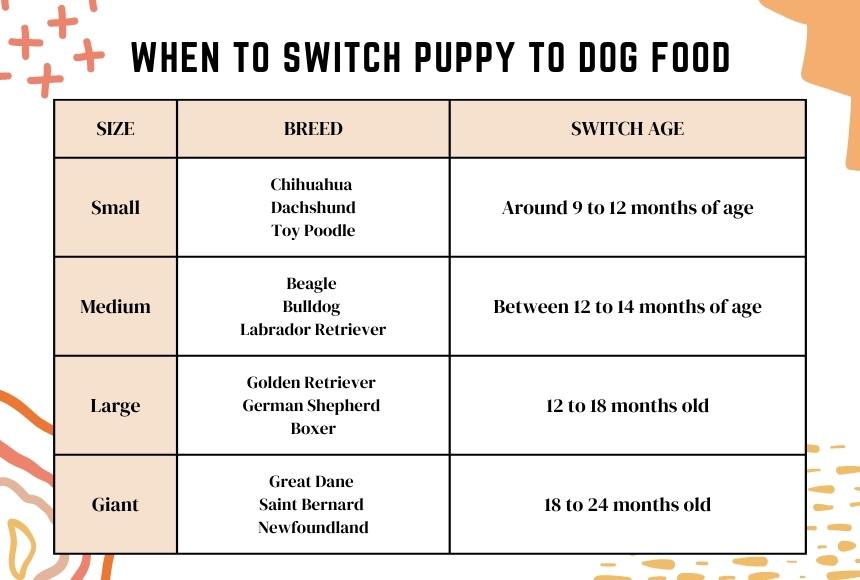
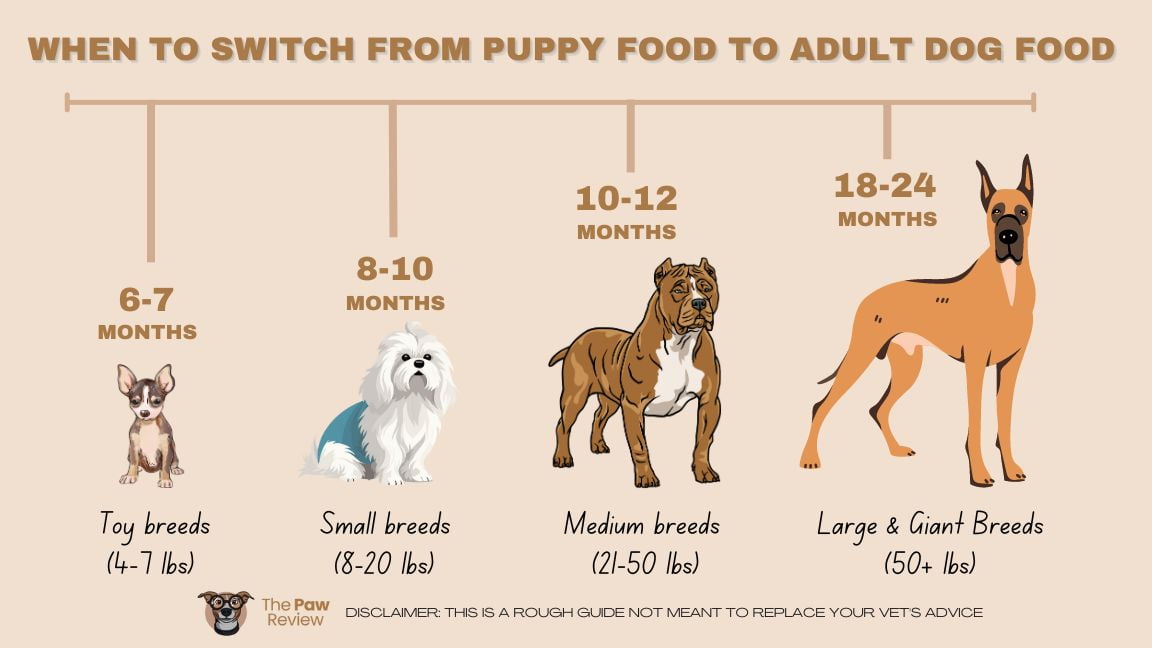
Small breed dogs grow faster than large breeds. They often reach adult size by 9 to 12 months. Switching to adult food around this time supports their energy needs. Small breeds need food that supports a fast metabolism. Their adult food should be rich in nutrients but easy to digest.
Large Breeds
Large breed dogs grow more slowly than small breeds. They may take 12 to 24 months to fully mature. Delaying the switch to adult food helps prevent growth problems. Large breed puppies benefit from food with controlled calcium and protein. This supports strong bones and joints during growth.

Credit: www.iams.com
Choosing The Right Adult Food
Choosing the right adult food for your dog is very important. Adult dogs have different needs than puppies. Good food helps keep them healthy and active. It supports their muscles, skin, and energy levels.
Pick food that fits your dog’s size, breed, and activity. Some dogs need special diets. Always check what the food offers before buying. Understanding your dog’s needs makes feeding easier and better.
Nutritional Requirements
Adult dogs need balanced nutrients every day. Protein helps build strong muscles. Fat gives energy and keeps skin soft. Carbohydrates provide fuel for daily activities. Vitamins and minerals support body functions and immunity.
Choose food with good protein sources like chicken or fish. Avoid fillers like corn or wheat in large amounts. Proper nutrients help your dog stay fit and happy.
Reading Food Labels
Food labels show important details. Look for the list of ingredients first. Ingredients come in order of weight. The first few ingredients matter most. Find named meats like beef or lamb.
Check for the guaranteed analysis section. It shows protein, fat, fiber, and moisture percentages. Compare these numbers with your dog’s needs. Avoid foods with too many artificial additives or preservatives.
Transitioning Process
Switching your dog from puppy food to adult food needs care and patience. This change affects their digestion and health. A smooth transition helps avoid stomach issues and keeps your dog happy. Follow a clear plan to make this switch easy for your pet.
Gradual Food Switching
Start by mixing a small amount of adult food with puppy food. Increase the adult food bit by bit over 7 to 10 days. This slow change helps your dog’s stomach adjust. Watch if your dog eats well and stays interested in food. Avoid sudden changes that might upset your dog’s digestion.
Monitoring Health And Digestion
Watch your dog closely during the food change. Check for any signs of upset stomach like vomiting or diarrhea. Notice changes in energy or behavior that seem unusual. Keep track of their stool quality and frequency. Consult a vet if you see any problems or if your dog refuses food.
Common Mistakes To Avoid
Switching your dog from puppy food to adult food is important. Many pet owners make mistakes that can affect their dog’s health. Knowing these common errors helps your dog grow strong and happy. Avoiding these mistakes ensures the switch is smooth and safe for your dog.
Switching Too Early Or Late
Changing your dog’s food too early can cause stomach upset. Puppies need special nutrients for growth. Adult food may not have enough of these. Switching too late can lead to weight gain or poor nutrition. Adult dogs need different nutrients than puppies. Follow your vet’s advice on the right time to switch.
Ignoring Individual Needs
Every dog is unique. Size, breed, and health affect food needs. Some dogs need more calories or special diets. Ignoring these needs can cause health problems. Watch your dog’s behavior and weight during the switch. Adjust the food type or amount as needed. Always consider your dog’s personal needs before switching food.
Veterinarian Advice
Veterinarians play a key role in deciding the right time to switch your dog to adult food. They understand your pet’s health and growth needs best. Their advice helps avoid feeding mistakes that can affect your dog’s health.
Regular Checkups
Regular vet visits help track your dog’s growth and weight. These checkups reveal if your dog is ready for adult food. Your vet checks teeth, coat, and energy levels to assess maturity. They can spot health issues that may affect diet changes. Frequent visits ensure your dog stays healthy during the transition.
Customizing Feeding Plans
Each dog is unique and needs a tailored feeding plan. Your vet considers breed, size, and activity level. They recommend the best type and amount of adult food. Special health conditions may require specific diets. A custom plan supports your dog’s long-term health and happiness.
Frequently Asked Questions
When Should A Dog Switch To Adult Food?
Dogs should switch to adult food between 12 and 18 months. Large breeds may need adult food closer to 18 months. Consult your vet for breed-specific guidance to ensure proper nutrition and health.
Why Is Switching To Adult Dog Food Important?
Switching to adult dog food supports your dog’s growth needs. Puppy food is higher in calories and nutrients, which adult dogs do not require. Adult food helps maintain a healthy weight and prevents nutritional imbalances.
How To Transition Dog Food Safely?
Transition gradually over 7-10 days by mixing increasing amounts of adult food with puppy food. This prevents digestive upset and helps your dog adjust to new taste and texture.
Can Switching Too Early Harm My Dog?
Yes, switching too early can lead to nutrient deficiencies. Puppies need higher protein and calorie content to support growth. Premature change may stunt development and affect overall health.
Conclusion
Switching your dog to adult food is important for their health. Watch their age and size for the right time. Most dogs change food between one and two years old. Choose adult food that fits their breed and activity level.
Always check with your vet before making changes. This helps your dog stay strong and happy. Feeding the right food supports their growth and energy. Remember, good nutrition means a longer, better life for your dog. Keep an eye on their needs as they grow.
Simple steps make a big difference.


