

If you have a puppy at home, you’re probably wondering when it’s time to switch from puppy food to adult dog food. This change is important for your dog’s health, growth, and energy.
But how do you know the right moment to make the switch? Choosing the right time can feel confusing, and getting it wrong might affect your dog’s wellbeing. You’ll discover the clear signs to watch for and expert tips to help you decide exactly when your dog should start eating adult food.
Keep reading to make sure your furry friend gets the best nutrition at every stage of life.

Credit: hospimedicaintl.com
Puppy Nutrition Stages
Puppy nutrition changes as dogs grow. Understanding these stages helps provide the right food. This support helps puppies grow strong and healthy. Each stage has different needs that suit their body and energy.
Newborn To Weaning
Newborn puppies drink their mother’s milk. This milk has all the nutrients they need. It helps build their immune system. Puppies rely on milk for the first few weeks. They cannot eat solid food yet.
Transition To Solid Food
Around three to four weeks, puppies start tasting solid food. This stage is called weaning. Start with soft, wet puppy food. Mix it with water or puppy milk replacer. Gradually, they eat less milk and more solids.
Growth And Dietary Needs
After weaning, puppies need food rich in protein and fat. Their bodies grow fast and need energy. Choose food made for puppies, not adults. This food supports bones, muscles, and brain development. Feed them small, frequent meals each day.
Timing For Adult Food
Knowing the right time to switch your dog to adult food is important. This change helps your dog stay healthy and get the right nutrition. Timing depends on several factors like age, breed, and size. This section explains the best timing for feeding adult dog food.
Common Age Benchmarks
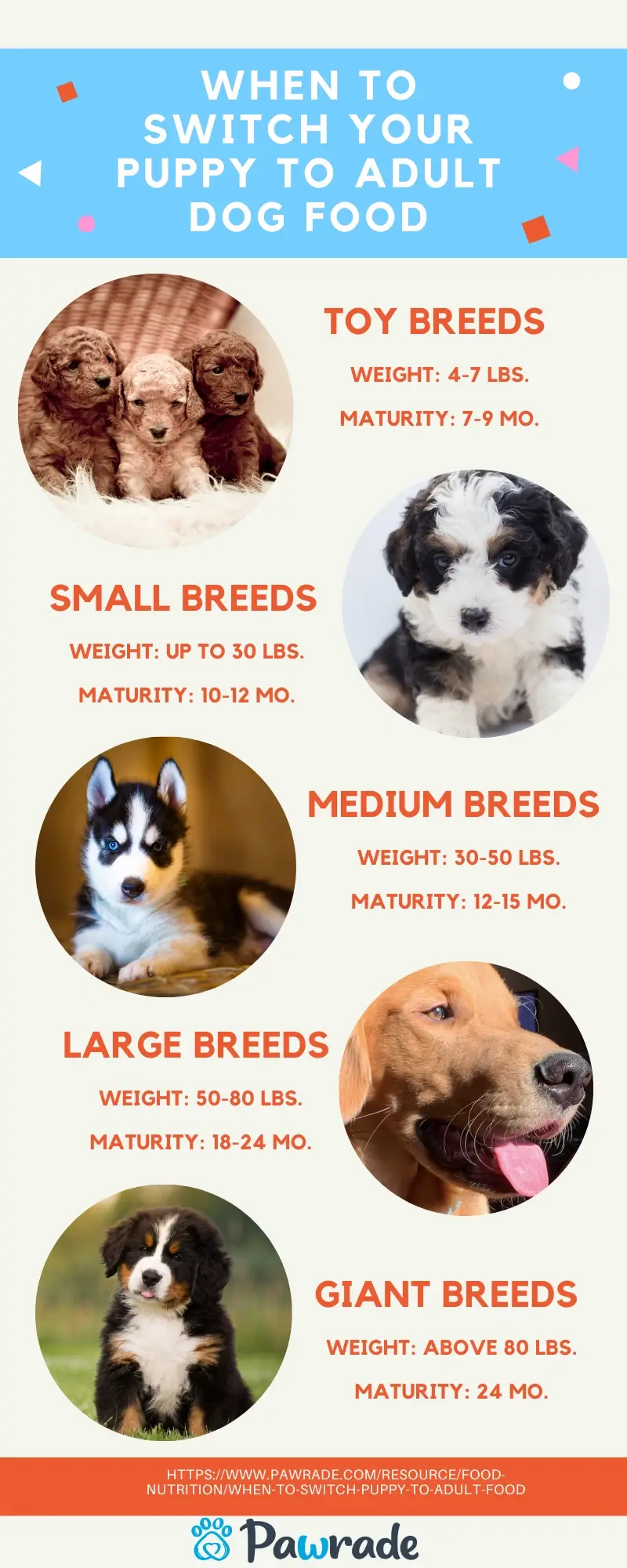
Most puppies start eating adult food between 9 and 12 months old. Small breeds usually switch closer to 9 months. Larger breeds may need puppy food up to 12 months or longer. At this age, puppies finish growing fast and need adult nutrients.
Watch your dog’s growth and energy levels. If your dog seems full-grown and active, adult food may be ready. Always check with your vet before changing food. This helps avoid health problems.
Breed And Size Considerations
Breed and size affect when dogs start adult food. Small breeds grow faster and mature earlier. They often switch at 9 months. Large breeds take longer to grow. Some need puppy food for 12 to 18 months.
Large breed puppies need special food to support joints and bones. Switching too early can cause health issues. Tailor feeding time to your dog’s breed and size. This helps keep your dog strong and healthy.
Signs Your Dog Is Ready
Knowing when your dog is ready to eat adult food is important. Dogs grow fast and their needs change. Watch for clear signs that show your puppy is ready to switch. These signs help you feed the right food at the right time. This keeps your dog healthy and happy.
Physical Development Indicators
Your dog’s body shows many signs of growth. Teeth are a big clue. Puppies start to lose their baby teeth around four months. New adult teeth come in soon after. Your dog’s size also matters. When your puppy looks less like a baby and more like an adult, it is time. Stronger bones and muscles mean your dog needs more nutrients. These changes tell you the puppy is ready for adult food.
Behavioral Changes
Watch your dog’s behavior closely. Puppies become more active and curious as they grow. They may eat less often but want larger meals. Signs like increased energy and longer playtime show growth. Your dog may also start to eat different textures. A move to adult food helps meet these new habits. These changes mean the puppy’s body needs adult nutrition.
Veterinarian Recommendations
Your vet knows best about your dog’s growth. Regular check-ups help track your puppy’s progress. The vet can tell you when to start adult food. They may check weight, teeth, and overall health. Follow your vet’s advice closely. This ensures a smooth and safe transition for your dog.

Credit: rheumconsultants.com
Choosing The Right Adult Food
Choosing the right adult food for your dog is very important. It helps keep your dog healthy and active as they grow. The right food gives them energy and supports strong bones and a shiny coat. Dogs have different needs as they move from puppy food to adult food. Knowing what to look for makes feeding easier and better for your pet.
Nutritional Requirements
Adult dogs need balanced nutrition. Their food should have the right amount of protein, fat, and carbohydrates. Protein helps build muscles. Fat gives energy and keeps the skin healthy. Carbohydrates provide fuel for daily activities. Vitamins and minerals support the immune system and bone health. Avoid foods with too many fillers or artificial ingredients.
Special Dietary Needs
Some dogs have special needs. Older dogs may need food with fewer calories to avoid weight gain. Dogs with allergies may require hypoallergenic food. Large breeds need food that supports joint health. Puppies growing into adults may need a gradual change in food. Talk to your vet about your dog’s specific needs before choosing food.
Reading Food Labels
Read the label carefully. Check the first few ingredients for quality proteins like chicken or beef. Avoid foods with unknown fillers or excessive by-products. Look for guaranteed analysis to see nutrient levels. Check for added vitamins and minerals. Ensure the food meets AAFCO standards for adult dogs. Labels help you choose the best food for your dog’s health.
Transition Tips
Transitioning your dog to adult food is an important step in their growth. This change needs care to avoid stress on their body. Proper tips can help your dog adjust smoothly. Follow these steps to make the switch safe and easy.
Gradual Food Switching
Start mixing small amounts of adult food with puppy food. Increase adult food slowly over 7 to 10 days. This slow change helps your dog’s stomach adjust. Sudden food changes may cause upset stomach or diarrhea. Watch your dog’s eating habits during this time.
Monitoring Digestive Health
Keep an eye on your dog’s digestion. Look for signs like vomiting or loose stools. These signs show your dog may not tolerate the new food well. If problems happen, slow down the transition. Make sure your dog stays hydrated and active.
Managing Food Preferences
Some dogs prefer puppy food’s taste and texture. Try warming the adult food slightly to improve flavor. Mix in small amounts of broth for better taste. Be patient; your dog may take time to accept new food. Praise and reward your dog during mealtime for encouragement.
Common Challenges
Switching your dog to adult food can bring some challenges. These issues may confuse new dog owners. Understanding common problems helps make the change smoother. Dogs react differently to new food types. Watch your dog closely during this time. Patience and care are essential for success.
Picky Eating
Many dogs refuse to eat adult food at first. They may prefer the taste of puppy food. Some dogs resist change because of texture or smell. Try mixing old and new food to ease the switch. Offering food at regular times helps build a routine. Avoid giving treats too often to keep appetite strong.
Allergies And Sensitivities
Adult dog food may contain ingredients new to your pet. Some dogs develop allergies or digestive issues. Watch for signs like itching, vomiting, or diarrhea. Choose food with limited ingredients if allergies appear. Consult your vet for advice on sensitive diets. Changing food slowly can reduce tummy troubles.
Adjusting Portion Sizes
Adult dogs need different portion sizes than puppies. Overfeeding can cause weight gain and health problems. Underfeeding may lead to low energy and poor growth. Follow feeding guidelines on the dog food package. Monitor your dog’s weight and adjust portions as needed. Regular vet check-ups help keep feeding on track.
Maintaining Adult Dog Health
Maintaining your dog’s health after switching to adult food is very important. Adult dogs need a balanced diet and good care to stay strong. Healthy habits help your dog live a long, happy life. Focus on regular health checks, balanced exercise, and watching for signs of health problems.
Regular Vet Checkups
Take your dog to the vet regularly. Vets check your dog’s weight, teeth, and overall health. They can spot problems early. Vaccinations and parasite control are also part of checkups. Regular visits keep your dog feeling good and prevent illness.
Exercise And Diet Balance
Exercise helps your dog stay fit and active. Daily walks and playtime are great. Balanced meals give your dog the right nutrients. Avoid overfeeding to prevent obesity. A good mix of protein, fats, and vitamins supports health and energy.
Signs Of Nutritional Deficiency
Watch your dog for changes in coat, energy, or appetite. Dull fur, tiredness, or weight loss can mean poor nutrition. Digestive issues or skin problems may also appear. Early detection of these signs can help fix the diet in time.
Credit: paramounttextilebd.com
Frequently Asked Questions
When Should I Switch My Puppy To Adult Dog Food?
Puppies typically switch to adult food between 12 to 18 months. Small breeds may transition earlier, around 12 months. Large breeds often need up to 18 months. Consult your vet to choose the best time based on your dog’s breed and growth.
Why Is Timing Important For Changing Dog Food?
Switching dog food too early or late affects nutrition. Puppies need nutrient-rich food for growth. Adult food supports maintenance, not growth. Proper timing ensures your dog receives the right nutrients for their life stage and health.
How To Transition From Puppy To Adult Dog Food?
Gradually mix adult food with puppy food over 7-10 days. Increase adult food amount daily while decreasing puppy food. This helps prevent digestive upset and allows your dog to adjust to the new diet comfortably.
Can Feeding Adult Food Early Harm My Puppy?
Feeding adult food too early can harm growth. Adult food lacks essential nutrients puppies need. It may cause nutritional deficiencies and stunt development. Always feed age-appropriate food until your vet advises a switch.
Conclusion
Choosing the right time to switch your dog’s food matters. Puppies usually start eating adult food around six months old. Watch their growth and health to decide the best moment. Always mix new food slowly with old food. This helps avoid stomach problems.
Feeding adult food too early can cause nutrition gaps. Feeding it too late might slow growth. Keep checking with your vet for advice. Your dog will stay strong and happy with good food. Simple steps make a big difference in your dog’s life.


