

You want the best for your puppy, and that includes feeding them the right food at the right time. But how do you know when it’s time to switch from puppy food to adult dog food?
Making this change too early or too late can affect your dog’s health and growth. You’ll discover the key signs to watch for and expert tips to help you make the switch smoothly. Keep reading to ensure your furry friend stays healthy and happy every step of the way.
Credit: www.bluebuffalo.com
Puppy Growth Stages
Puppy growth happens in clear stages. Each stage has different needs. Understanding these stages helps you know when to change food. Puppies need special care as they grow fast. Their diet must match their growth rate and energy.
From Newborn To Weaning
Newborn puppies drink their mother’s milk. It gives all the nutrients they need. During this time, puppies cannot eat solid food. At about 3 to 4 weeks, puppies start weaning. They try soft, mushy food mixed with water. This step helps their stomach adjust to solid food.
Rapid Growth Phase
Between 6 weeks and 6 months, puppies grow very fast. They need more calories and protein for muscles and bones. Their energy levels are high. Feeding high-quality puppy food supports healthy growth. This food has extra nutrients for bones and brain development.
Maturation Milestones
After 6 months, growth slows but continues steadily. Puppies begin to look like adult dogs. Their energy needs change. Around 9 to 12 months, many dogs reach adult size. This is the right time to switch to adult dog food. Adult food has fewer calories but keeps dogs healthy and fit.

Credit: www.iams.com
Differences Between Puppy And Adult Food
Puppy food and adult dog food differ in many important ways. These differences help meet the changing needs of your dog as it grows. Feeding the right type of food supports healthy development and maintains good health.
Understanding these differences can help you choose the best time to switch your puppy to adult dog food. The main areas where puppy and adult food vary include nutrition, calorie content, and ingredients.
Nutritional Needs
Puppies need more protein and fat than adult dogs. These nutrients help build strong muscles and support brain growth. Puppy food has extra vitamins and minerals to aid bone development. Adult dogs require balanced nutrition to keep their body healthy and active.
Calorie Content
Puppy food contains more calories per serving. Puppies burn a lot of energy while growing and playing. Higher calorie content fuels their rapid growth. Adult dog food has fewer calories to prevent weight gain. Adult dogs need enough energy but not excess calories.
Ingredient Variations
Puppy formulas include ingredients that are easy to digest. These ingredients help young dogs absorb nutrients well. Puppy food often has smaller kibble for little mouths. Adult dog food focuses on maintaining health and may include fiber for digestion. Ingredients reflect the different needs of growing versus mature dogs.
Signs Your Puppy Is Ready
Knowing when to switch your puppy to adult dog food is important for their health. Puppies grow fast, but they do not need the same food forever. Watch for signs that show your puppy is ready for the change. These signs help you feed your dog what suits their age and size best.
Weight And Size Indicators
Puppies grow at different speeds depending on their breed. Small breeds usually mature faster than large breeds. Check your puppy’s weight regularly. When they reach about 80% of their expected adult weight, it may be time to switch food. Also, look at their size. If they seem to have stopped growing taller, that is a good sign too.
Behavioral Changes
Puppies change behavior as they grow. They may become less hyperactive and more calm. Eating habits can shift too. Your puppy might eat less frequently or finish meals faster. Watch how they act after eating. If they seem full or less hungry, adult food portions might work better. These changes show their body is ready for different nutrition.
Vet Recommendations
Your veterinarian knows your puppy’s health best. Regular check-ups help track growth and health. Ask your vet when to change food. They can advise based on breed, weight, and health needs. Vets may suggest a gradual switch to avoid stomach upset. Always follow professional advice for the best results.
Timing For Different Breeds
Different dog breeds grow at different speeds. This affects the best time to switch from puppy food to adult dog food. Feeding adult food too early or too late can affect your dog’s health. Knowing the right timing helps your dog get the right nutrients for growth and energy. Read on to find out the best switching times for small, medium, and large breeds.
Small Breeds
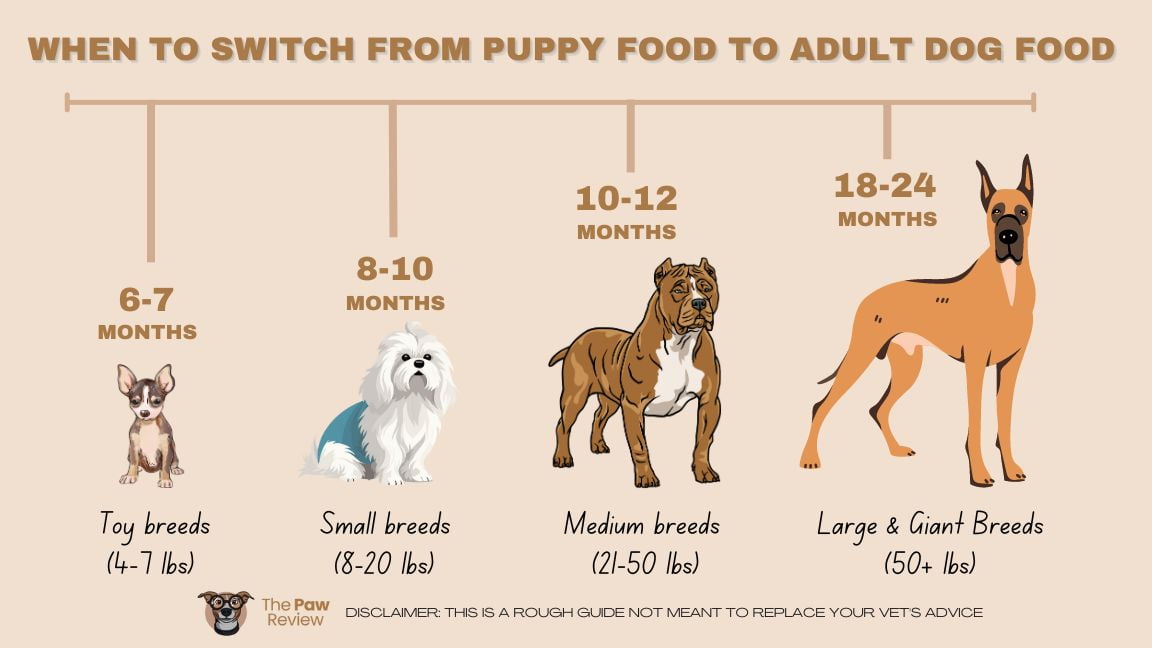
Small breed dogs grow faster than larger breeds. Most small dogs reach full size by 9 to 12 months. You can start switching their food at about 9 months. Use a mix of puppy and adult food at first. This helps their digestion adjust slowly. By 12 months, they can eat only adult dog food.
Medium Breeds
Medium breeds grow a bit slower. They usually finish growing by 12 to 15 months. Start mixing adult food with puppy food around 12 months. Watch their energy and weight during the change. By 15 months, feed them only adult food. This timing supports steady growth and health.
Large And Giant Breeds
Large and giant breeds take the longest to grow. Their growth can continue up to 18 to 24 months. Switch to adult food slowly starting around 15 months. Use a gradual change over several weeks. This prevents health problems linked to fast growth. Feed only adult food by 24 months for best results.
Transitioning Tips
Switching your puppy to adult dog food is an important step. It helps your dog grow strong and healthy. The transition should be smooth to avoid stomach problems. Here are some simple tips to help you make the change carefully and safely.
Gradual Food Mixing
Start by mixing a small amount of adult food with puppy food. Slowly increase the adult food over 7 to 10 days. This helps your puppy’s stomach get used to the new food. Sudden changes can cause upset stomach or diarrhea. Mixing food little by little keeps your puppy comfortable.
Monitoring Digestion
Watch your puppy’s digestion closely during the switch. Look for signs like loose stools or vomiting. These may mean the food is not agreeing with your puppy yet. If problems continue, slow down the transition or consult your vet. Healthy digestion is key to a happy dog.
Adjusting Portion Sizes
Puppies need different amounts of food than adult dogs. Adjust the portions as you change foods. Follow the feeding guide on the adult dog food bag. Your puppy’s activity level and weight also affect how much to feed. Proper portions keep your dog fit and full of energy.
Credit: paw-review.com
Common Mistakes To Avoid
Switching your puppy to adult dog food is an important step. Many dog owners make simple mistakes that affect their pet’s health. Avoiding these errors helps your dog grow strong and stay healthy. Read on to learn about common mistakes to avoid when changing your puppy’s diet.
Switching Too Early
Changing to adult food too soon can harm your puppy’s growth. Puppies need more nutrients and calories than adult dogs. Their bodies are still developing, and they need special food. Switching early might cause poor bone development and low energy. Wait until your puppy reaches the right age before changing food.
Ignoring Breed-specific Needs
Different breeds have different nutritional needs. Large breeds grow slower and need food with controlled calcium. Small breeds may need more calories in less food. Using the wrong adult food can cause health problems. Choose the right adult food based on your dog’s breed size and needs.
Overfeeding Adult Food
Adult dog food has more calories than puppy food. Feeding the same amount as puppy food can cause weight gain. Overfeeding leads to obesity and related health issues. Measure the right portion based on your dog’s weight and activity. Keep your dog active and adjust food as needed.
When To Consult Your Vet
Switching your puppy to adult dog food is an important step. Sometimes, this change needs a vet’s advice. Your vet can guide you if your puppy shows any signs that worry you. It helps keep your dog healthy and happy.
Watch your puppy closely. Any unusual signs should lead to a vet visit. Early advice can prevent bigger problems. Here are key reasons to talk to your vet before switching food.
Health Concerns
If your puppy has health issues, consult your vet first. Conditions like allergies or digestive problems need special diets. Your vet knows what food suits your dog’s condition best. Avoid making changes without professional advice.
Nutritional Deficiencies
Look for signs of poor nutrition like dull coat or weak muscles. These may mean your puppy lacks important nutrients. Your vet can check for deficiencies and suggest the right food. This keeps your puppy strong and growing well.
Unusual Appetite Changes
A sudden loss or increase in appetite needs vet attention. It can signal illness or stress. Your vet can find the cause and help manage your puppy’s diet. Proper feeding supports your puppy’s overall health and energy.
Frequently Asked Questions
When Is The Best Age To Switch Puppy Food?
Most puppies can switch to adult dog food between 9 to 12 months. Large breeds may need longer. Consult your vet for breed-specific advice.
How To Know If My Puppy Is Ready For Adult Food?
Look for signs like slowed growth, less energy, and reduced appetite. Your vet can confirm readiness with a health check.
Can Switching Puppy Food Too Early Cause Problems?
Yes, switching too early may cause nutritional deficiencies. Puppies need higher protein and fat for growth. Transition gradually to avoid digestive upset.
What Are The Differences Between Puppy And Adult Dog Food?
Puppy food has more calories, protein, and nutrients for growth. Adult dog food supports maintenance and lower energy needs. Choosing the right type ensures health.
Conclusion
Switching your puppy to adult dog food depends on their size and growth. Small breeds usually switch earlier than large breeds. Watch their weight and energy for signs of readiness. Consult your vet for the best timing and food choice.
Changing food gradually helps avoid stomach upset. A smooth switch supports your dog’s health and development. Keep your pup happy with the right nutrition at every stage. Your care makes all the difference in their life.


