

Are you looking for a homemade dog food recipe that keeps your furry friend happy and healthy? You want to give your dog the best, but with so many options out there, it’s hard to know where to start.
Imagine making meals that are not only tasty for your dog but also packed with the right nutrients. You’ll discover simple, easy-to-make recipes that you can trust. Keep reading to find out how to create delicious homemade dog food that your dog will love and that supports their well-being every day.
Benefits Of Homemade Dog Food
Homemade dog food offers many benefits for your pet’s health and happiness. Preparing meals at home lets you give your dog fresh, high-quality ingredients. It also helps you meet your dog’s specific dietary needs. Understanding these benefits can help you decide if homemade food is right for your dog.
Improved Nutrition
Homemade dog food can provide better nutrition than many store-bought options. You control the balance of proteins, fats, and carbohydrates. Fresh ingredients keep nutrients intact and avoid fillers. This helps your dog stay strong and energetic every day.
Control Over Ingredients
Making your dog’s food lets you choose every ingredient. You avoid preservatives, artificial colors, and chemicals. This ensures your dog eats only healthy, natural foods. It also gives you peace of mind about what your dog consumes.
Avoiding Allergens
Many dogs suffer from food allergies or sensitivities. Homemade meals allow you to exclude allergens easily. This reduces itching, digestive problems, and other symptoms. Your dog feels more comfortable and enjoys mealtime more.
Essential Nutrients For Dogs
Dogs need a balanced diet to stay healthy and active. Essential nutrients give them energy and keep their bodies working well. A good homemade dog food recipe must include these key nutrients in the right amounts. This helps your dog grow strong and live a happy life.
Proteins And Fats
Proteins build muscles and repair tissues. They also help your dog stay strong. Good sources include chicken, beef, fish, and eggs. Fats give energy and keep the skin shiny. Healthy fats come from fish oil, flaxseed, and chicken fat. Both proteins and fats are vital for a dog’s health.
Carbohydrates And Fiber
Carbohydrates provide energy for daily activities. Rice, oats, and sweet potatoes are good choices. Fiber helps digestion and prevents constipation. Vegetables like carrots and green beans add fiber. A balanced amount of carbs and fiber keeps your dog’s tummy happy.
Vitamins And Minerals
Vitamins and minerals support many body functions. They help the immune system and keep bones strong. Include vegetables like spinach and pumpkin for vitamins. Minerals come from sources like eggshell powder or bone meal. A mix of vitamins and minerals completes a healthy dog meal.
Safe Ingredients For Dog Meals
Choosing safe ingredients for homemade dog food is very important. Dogs need meals that support their health and energy. Using the right foods keeps dogs happy and strong. Avoid harmful ingredients that can cause sickness. Focus on natural, fresh, and simple ingredients.
Meats And Proteins
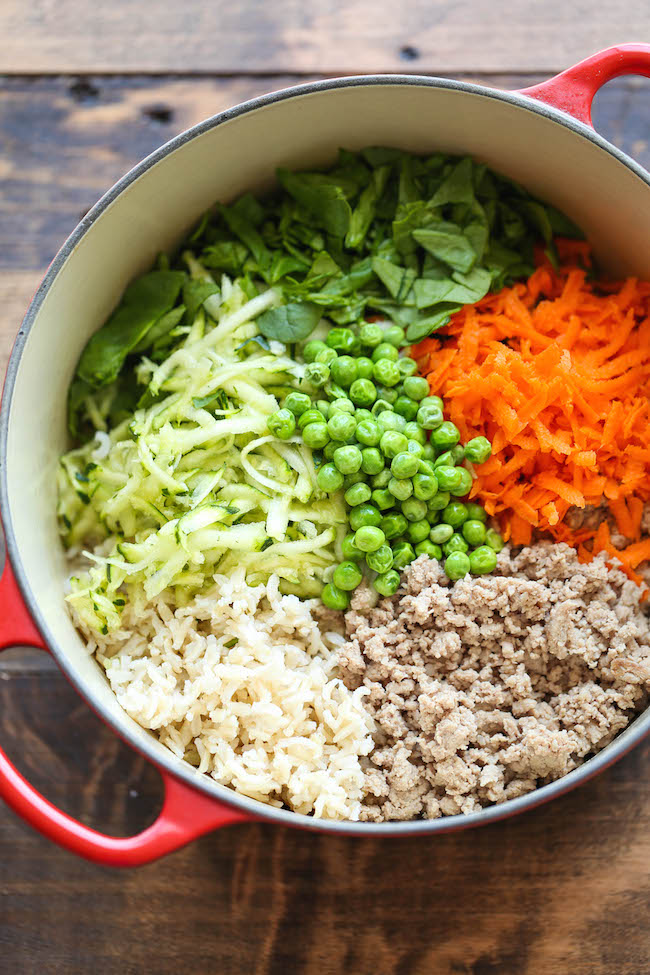
Proteins are the building blocks for your dog’s muscles. Use lean meats like chicken, turkey, and beef. Fish such as salmon and whitefish offer good fats and proteins. Cook all meats thoroughly to kill bacteria. Avoid processed meats or those with spices.
Vegetables And Fruits
Vegetables add fiber and vitamins to dog meals. Safe choices include carrots, green beans, and peas. Fruits like apples and blueberries provide antioxidants. Remove seeds and cores from fruits before feeding. Avoid onions, grapes, and raisins, which are toxic to dogs.
Grains And Supplements
Grains provide energy and fiber for digestion. Brown rice, oatmeal, and quinoa are good options. Use grains in small amounts to prevent stomach upset. Supplements like fish oil add healthy fats. Consult a vet before adding vitamins or minerals.
Credit: damndelicious.net
Ingredients To Avoid
Choosing the right ingredients for homemade dog food is very important. Some foods can harm your dog’s health. Knowing which ingredients to avoid helps keep your dog safe and healthy.
Bad ingredients can cause stomach problems, allergies, or even poisoning. Always check what you include in your dog’s meals. Avoid these harmful ingredients to protect your pet.
Toxic Foods
Certain foods are poisonous to dogs. Chocolate, grapes, and raisins can cause severe illness. Onions and garlic harm red blood cells and cause weakness. Avoid these completely in homemade recipes.
Avocado and macadamia nuts are also dangerous. They can cause vomiting and tremors. Keep these foods far from your dog’s diet.
Harmful Additives
Many processed foods contain additives not safe for dogs. Artificial colors and preservatives may cause allergies. Avoid ingredients like sodium nitrate and BHA/BHT.
High salt content can lead to dehydration and kidney problems. Choose fresh, natural ingredients without added chemicals for your dog’s food.
Unsafe Seasonings
Seasonings like salt, pepper, and spicy spices can upset your dog’s stomach. Dogs do not need extra salt or strong flavors in their food.
Herbs such as chives and nutmeg can be toxic. Use plain, simple ingredients to keep meals safe and tasty for your dog.
Simple Homemade Dog Food Recipes
Simple homemade dog food recipes make feeding your pet easy and healthy. These recipes use everyday ingredients. They provide balanced nutrition and taste good to dogs.
Preparing meals at home lets you control the quality of the food. It also helps avoid fillers and preservatives found in some commercial dog foods. Here are three easy recipes to try.
Chicken And Rice Bowl
Cook boneless chicken breast until fully done. Boil white rice until soft. Mix chicken and rice in a bowl. Add steamed carrots for extra vitamins. This meal is gentle on the stomach and full of protein.
Beef And Vegetable Mix
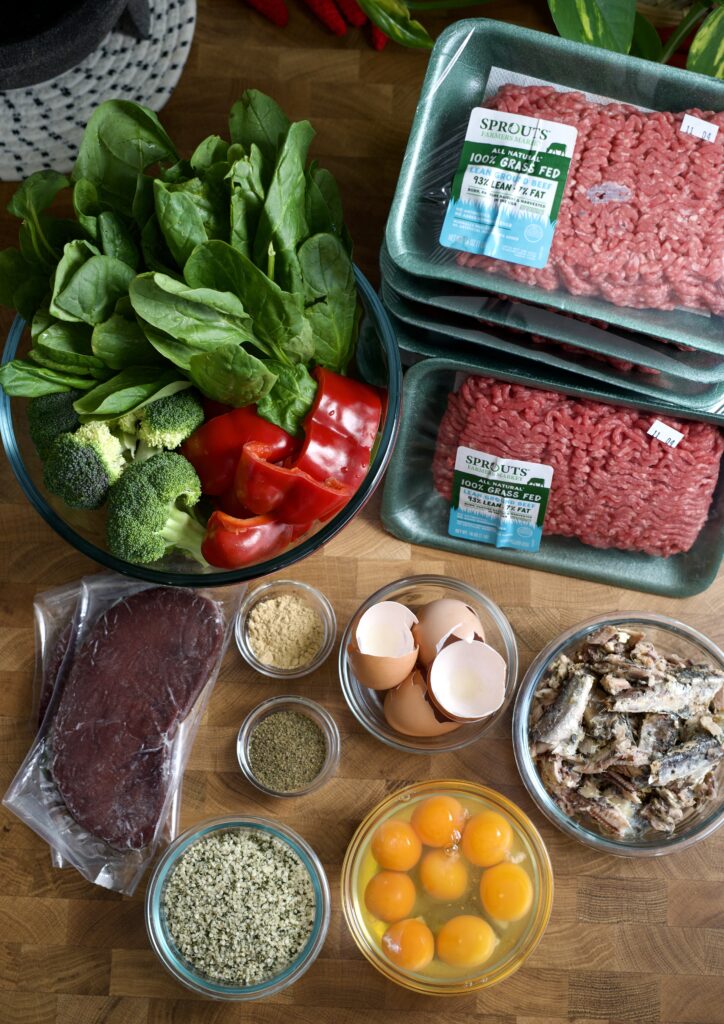
Brown lean ground beef in a pan. Chop green beans and peas finely. Steam the vegetables until tender. Combine beef with vegetables and a small amount of cooked quinoa. This recipe offers iron and fiber for energy.
Fish And Sweet Potato Dish
Use boneless fish like salmon or cod. Bake or steam the fish until cooked. Peel and boil sweet potatoes until soft. Mash sweet potatoes and mix with the fish. This dish is rich in omega-3 and vitamins for healthy skin and coat.
Credit: stellanspice.com
Preparing And Storing Dog Food
Preparing and storing homemade dog food is an important step in feeding your pet healthy meals. Proper cooking and storage keep the food safe and tasty. It also helps maintain nutrients dogs need to stay strong and happy.
Cooking Tips
Cook all ingredients thoroughly to kill harmful bacteria. Use fresh vegetables and lean meats for better nutrition. Avoid spices, onions, and garlic as they can harm dogs. Chop ingredients into small pieces for easy chewing. Use water or broth to keep food moist and tasty.
Portion Control
Feed your dog the right amount based on size, age, and activity. Overfeeding can cause weight gain and health issues. Use a measuring cup or scale for accuracy. Divide meals into two or three servings per day. Monitor your dog’s weight and adjust portions as needed.
Storage Guidelines
Store homemade dog food in airtight containers to keep it fresh. Refrigerate food for up to three days to prevent spoilage. Freeze extra portions for up to two weeks. Thaw frozen food in the refrigerator before serving. Always check the food for smell or mold before feeding.
Consulting With Your Veterinarian
Consulting with your veterinarian is an important step before making homemade dog food. Your vet knows your dog’s health history and needs. They can guide you to create balanced meals that suit your pet.
Every dog is different. Some have allergies or health issues. Your vet helps you avoid foods that might harm your dog. This keeps your dog safe and healthy while eating homemade food.
Customizing Meals
Your veterinarian can help customize meals for your dog’s specific needs. They suggest the right mix of proteins, fats, and carbs. They also recommend vitamins and minerals your dog needs daily. This ensures your dog gets all essential nutrients.
Monitoring Health
Regular check-ups with your vet help monitor your dog’s health. They watch for changes in weight, energy, and coat condition. These checks show if the homemade diet works well. Your vet can spot problems early and suggest changes.
Adjusting Diet Over Time
Your dog’s needs can change with age or health. Your vet can help adjust the diet as needed. They recommend new recipes or supplements to keep your dog healthy. This keeps meals suitable throughout your dog’s life.
Credit: stellanspice.com
Frequently Asked Questions
What Ingredients Make A Good Homemade Dog Food Recipe?
A good homemade dog food recipe includes lean proteins, vegetables, and grains. Chicken, carrots, and rice are common choices. Avoid onions, garlic, and toxic foods. Balance nutrients to meet your dog’s health needs.
How To Ensure Homemade Dog Food Is Nutritionally Balanced?
Consult a vet or pet nutritionist to balance protein, fats, and carbs. Include essential vitamins and minerals. Use supplements if needed. Regularly monitor your dog’s health and adjust the recipe accordingly.
Can Homemade Dog Food Improve My Dog’s Health?
Yes, homemade dog food can improve digestion, coat quality, and energy. It offers fresh ingredients and avoids additives found in some commercial foods. Always ensure recipes are balanced to support overall health.
How Often Should I Feed Homemade Dog Food?
Feed your dog homemade food twice daily for adult dogs. Puppies may require three to four meals daily. Maintain consistent portions to avoid overfeeding and monitor weight regularly.
Conclusion
A good homemade dog food recipe keeps your pet healthy and happy. Fresh ingredients provide essential nutrients dogs need every day. Preparing meals at home lets you control what your dog eats. It also helps avoid harmful additives found in some store brands.
Always include a balance of protein, vegetables, and grains. Consult your vet to meet your dog’s specific needs. Cooking for your dog can be simple and rewarding. Your furry friend will enjoy tasty, nutritious meals made with care. Try a homemade recipe and see the difference.


