

Have you ever wondered which dog breeds bite the most? If you own a dog or are thinking about getting one, this is something you should know.
Understanding which breeds are more likely to bite can help you keep yourself, your family, and your pet safe. You’ll discover the facts behind dog bites and learn how to recognize and prevent risky behaviors. Keep reading to protect your loved ones and enjoy a happier relationship with your furry friend.
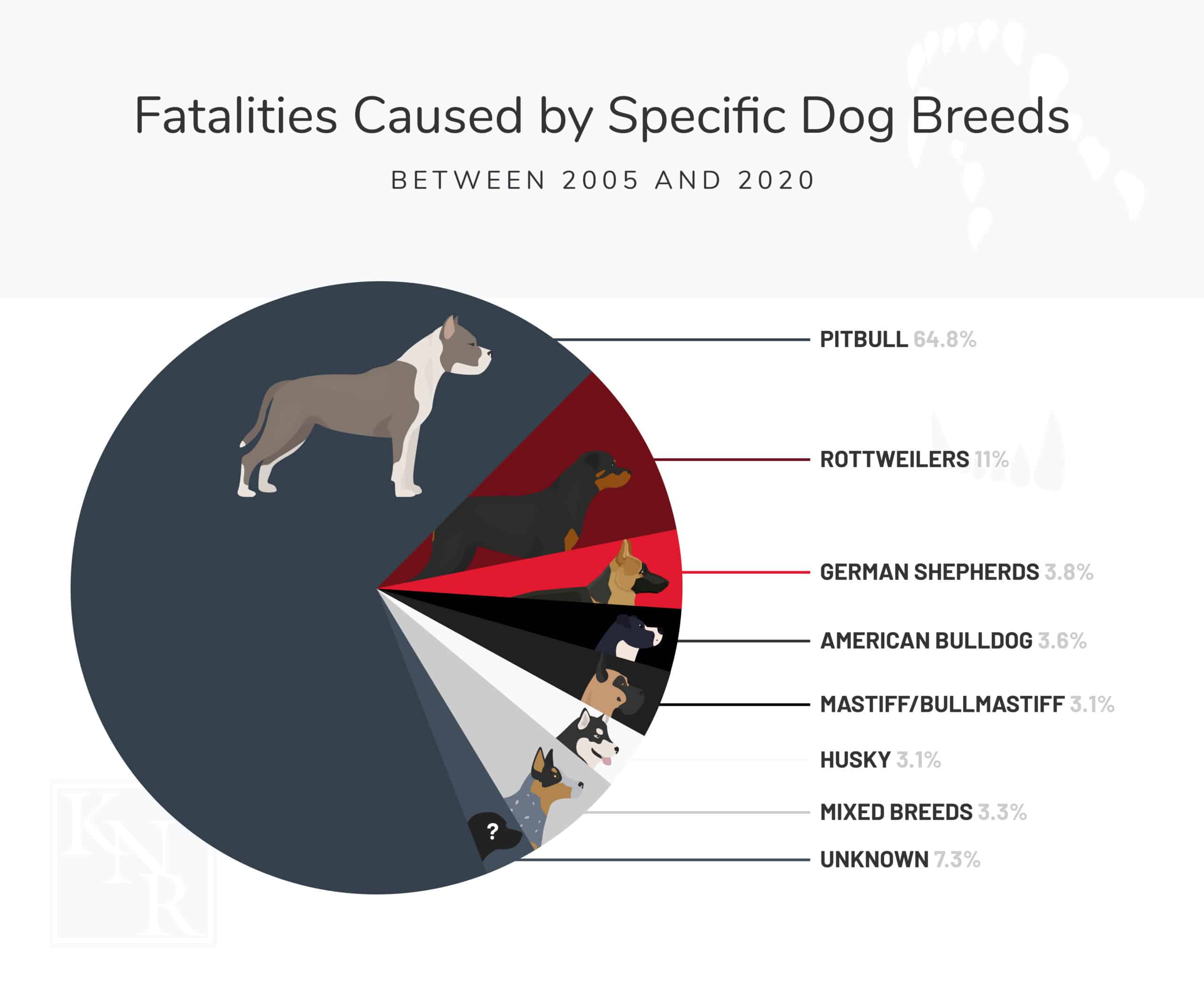
Credit: www.knrlegal.com
Common Aggressive Dog Breeds
Some dog breeds are known to show more aggressive behavior than others. This does not mean every dog of these breeds is dangerous. Many factors affect a dog’s temperament, such as training and environment. Still, certain breeds have a higher chance of biting due to their nature and strength. Knowing these breeds helps owners manage them better and keeps everyone safe.
Pit Bull Terrier
Pit Bull Terriers often appear in bite statistics. They are strong and very loyal dogs. Poor training or neglect can cause aggression. Socializing them early helps reduce risks. These dogs need firm, consistent handling.
German Shepherd
German Shepherds are intelligent and protective. They are popular as police and guard dogs. Without proper socialization, they may act aggressively. Training and exercise are essential for good behavior.
Rottweiler
Rottweilers are powerful and confident dogs. They can be aggressive if not trained well. Early socialization lowers aggressive tendencies. They need clear rules and regular activity.
Chow Chow
Chow Chows have a strong, independent nature. They can be aloof or suspicious of strangers. This breed may bite if provoked or scared. Gentle handling and social exposure are important.
Doberman Pinscher
Dobermans are alert and energetic dogs. They are protective of their family. Lack of training can lead to aggression. These dogs need mental and physical challenges daily.
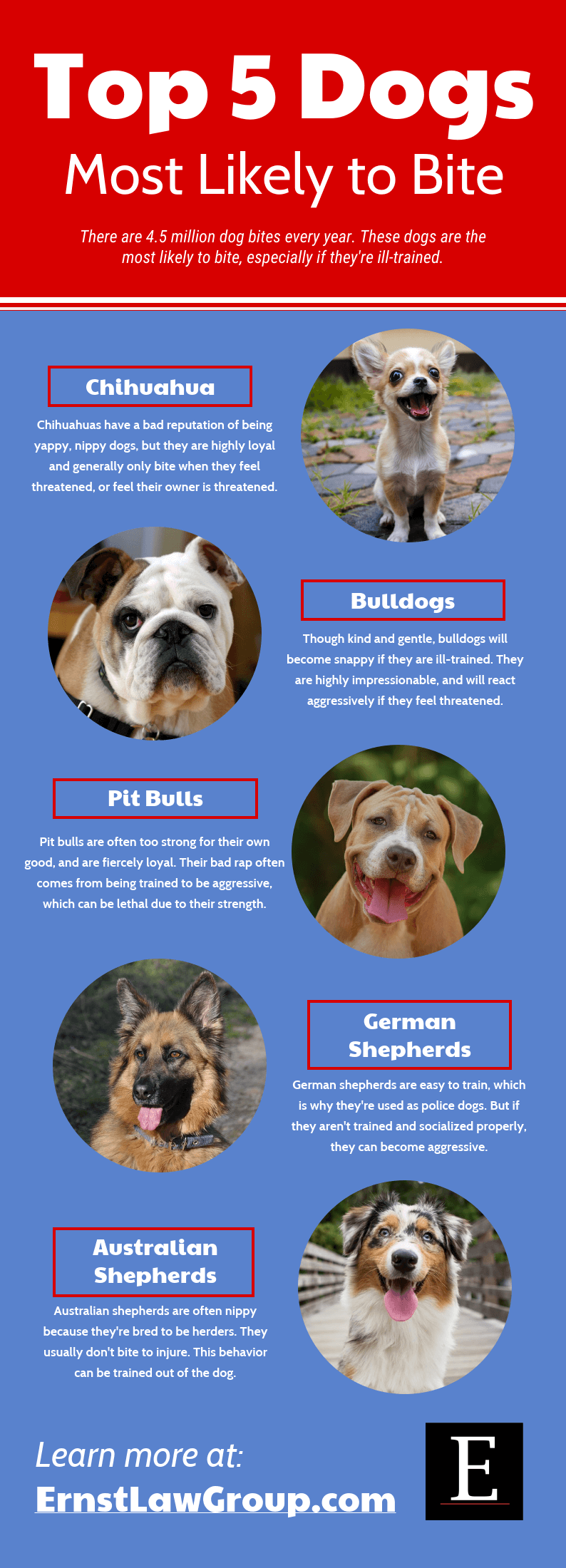
Credit: www.ernstlawgroup.com
Factors Influencing Dog Aggression
Dog aggression depends on many factors. Some dogs may bite more often due to their nature or how they are raised. Understanding these factors helps owners prevent bites and keep everyone safe.
Genetics And Breed Traits
Some breeds have traits that can make them more protective or cautious. These traits come from their genetics and history. Dogs bred for guarding or hunting may show more aggression. But genetics alone does not decide a dog’s behavior.
Training And Socialization
How a dog is trained affects its behavior a lot. Dogs that meet many people and animals when young learn to be calm. Poor training or no socialization can cause fear and aggression. Consistent, kind training reduces biting risks.
Environment And Upbringing
The place a dog grows up shapes its actions. Dogs living in stressful or unsafe homes may feel threatened. Lack of exercise and attention can increase frustration and biting. A calm, loving environment helps dogs stay relaxed.
Health And Pain Issues
Dogs in pain or with health problems may bite more. Illness or injury can make them irritable and defensive. Regular vet visits keep dogs healthy and reduce aggression risks. Watch for signs of pain or discomfort in your dog.
Misconceptions About Aggressive Breeds
Many people believe some dog breeds are naturally aggressive. This idea creates fear and unfair treatment of certain dogs. The truth is more complex. Understanding these misconceptions helps us see dogs clearly and fairly.
Breed Vs. Individual Behavior
A dog’s breed does not decide its behavior alone. Each dog has a unique personality. Some dogs of the same breed may be calm, while others might be nervous or defensive. Behavior depends on training, socialization, and environment, not just breed.
Media Influence On Perception
News often highlights attacks by specific breeds. This creates a false image that some breeds bite more. Media focuses on dramatic stories, not everyday calm dogs. This shapes public opinion unfairly and spreads fear without facts.
Role Of Owner Responsibility
Owners play a key role in a dog’s behavior. Proper training and care prevent most biting incidents. Neglect or abuse can make any dog defensive or scared. Responsible owners teach good manners and keep dogs safe and calm.
Preventing Dog Bites
Preventing dog bites is important for everyone. Dogs bite for many reasons, but most bites can be stopped. Understanding how to keep dogs calm and safe helps avoid these incidents. Teaching good behavior and reading dog signals are key steps.
Proper Training Techniques
Training helps dogs learn right from wrong. Use clear commands like “sit” and “stay.” Reward good behavior with treats or praise. Avoid harsh punishments that scare dogs. Consistent training builds trust and control.
Early Socialization
Socialize dogs when they are young. Let them meet other dogs and people gently. This helps dogs feel safe in new places. Early socialization reduces fear and aggression. A well-socialized dog is less likely to bite.
Recognizing Warning Signs
Dogs show signs before they bite. Watch for growling, barking, or stiff body. Look for raised fur or showing teeth. These signs mean a dog feels scared or angry. Step back and give space to avoid bites.
Safe Interaction Practices
Teach children and adults how to act around dogs. Avoid sudden movements or loud noises near dogs. Do not disturb dogs when they eat or sleep. Always ask permission before petting a dog. Safe actions help prevent bites and build trust.
Legal And Safety Measures
Understanding legal and safety measures helps protect people and dogs. These rules guide dog owners and ensure public safety. They focus on preventing bites and managing dog behavior.
Breed-specific Legislation
Some areas have laws targeting certain dog breeds. These laws often ban or restrict breeds seen as dangerous. Owners may face special rules or fines. The goal is to reduce bite incidents from specific breeds. Critics say these laws can be unfair and not always effective.
Leash And Muzzle Laws
Many places require dogs to be on a leash in public. Some breeds or dogs with a history of biting must wear muzzles. These rules help control dogs in crowded or unfamiliar areas. They protect both the dog and the people around them. Owners must follow these laws to avoid penalties.
Reporting And Handling Incidents
Reporting dog bites is important for safety. Authorities can track dangerous dogs and prevent future attacks. Victims should report incidents to local animal control or police. Proper handling includes medical care and investigation. Owners may face consequences if their dog bites someone. This process helps keep communities safe.

Credit: www.publicsource.org
Frequently Asked Questions
Which Dog Breeds Are Most Likely To Bite?
Breeds like Pit Bulls, Rottweilers, and German Shepherds have higher bite incidents. However, behavior depends on training and environment.
Why Do Certain Dog Breeds Bite More Often?
Biting frequency relates to breed traits, socialization, and owner responsibility. Aggression is not breed-exclusive but influenced by many factors.
How Can Dog Bite Risks Be Minimized?
Proper training, socialization, and supervision reduce bite risks. Understanding breed behavior helps owners prevent aggressive incidents effectively.
Are Small Dog Breeds Less Likely To Bite?
Small dogs can bite too. Their bites may cause less injury but still require caution and proper handling.
Conclusion
Understanding which dog breeds bite most helps keep everyone safe. Dogs bite for many reasons, not just breed. Training and care play a big role in behavior. Always watch dogs closely, especially around children. Teaching dogs good manners can prevent many bites.
Respect and patience build trust between dogs and people. Remember, any dog can bite if scared or hurt. Stay informed and responsible for a happy, safe pet experience.


