

Are you wondering what breeds can be service dogs and which one might be the perfect fit for your needs? Choosing the right service dog breed is a big decision that can change your life.
Not every dog breed is suited for the important tasks service dogs perform. Understanding which breeds excel in service work can help you find a companion who is not only loyal but also reliable and skilled. Keep reading to discover the top breeds that make the best service dogs and learn how to find the one that matches your lifestyle and needs.
:strip_icc()/service-dog-breeds-b19c144519874f17a2cc35218486b3e5.jpg)
Credit: www.thesprucepets.com
Popular Service Dog Breeds
Service dogs help people with different needs. Certain breeds fit this role best. They have traits that make training easier and support reliable. These popular service dog breeds show loyalty, intelligence, and calmness. They work well in homes, public places, and stressful situations.
Labrador Retriever
Labradors are friendly and smart. They learn commands quickly and love to please. Their gentle nature makes them great for guiding and therapy. Labs adapt well to many tasks and environments.
Golden Retriever
Golden Retrievers are patient and kind. They have a strong work drive and good focus. These dogs are great at assisting people with mobility or hearing needs. Their soft temperament suits families well.
German Shepherd
German Shepherds are brave and loyal. They have sharp minds and strong bodies. These dogs excel in protection and police work. They handle complex tasks and stay calm under pressure.
Poodle
Poodles are highly intelligent and quick learners. They are hypoallergenic, good for allergy sufferers. Their small to medium size fits many living spaces. Poodles perform well in varied service roles.
Border Collie
Border Collies are energetic and focused. They have excellent problem-solving skills. These dogs thrive on mental challenges and tasks. Their agility helps in guiding and alerting duties.
Traits That Make A Good Service Dog
Service dogs perform important tasks that help people every day. Not every dog can be a good service dog. Certain traits help dogs succeed in this role. These traits make training easier and ensure the dog can work safely and reliably. Understanding these qualities helps choose the best breeds for service work.
Temperament
A calm and steady temperament is key for service dogs. They must stay focused in busy, noisy places. Friendly and gentle behavior helps them work well with strangers. Dogs that get nervous or aggressive are not suited for this job. A patient and confident nature makes a dog reliable and trustworthy.
Trainability
Service dogs must learn many tasks quickly and accurately. High intelligence helps dogs understand commands fast. Willingness to please their handler is very important. Dogs that are stubborn or easily distracted find training hard. Good service dogs enjoy learning and working with people.
Size And Strength
Size matters depending on the service task. Some dogs need strength to help with mobility or pulling wheelchairs. Others should be small enough to fit in tight spaces or carry small items. The dog’s size should match the handler’s needs for safety and comfort. Balance between strength and agility is important.
Health And Longevity
Healthy dogs live longer and serve better. Good service dogs have no major health problems that limit work. Strong bones, joints, and good vision help them perform tasks. Regular vet care keeps dogs fit and ready. Choosing breeds with fewer hereditary diseases improves service dog success.
Service Dogs For Mobility Assistance
Service dogs for mobility assistance help people move safely and confidently. These dogs support daily tasks like walking, balance, and picking up items. They improve independence and quality of life. Choosing the right breed is important for strength and temperament. The right dog must be calm, strong, and trainable.
Best Breeds For Physical Support
Labrador Retrievers are popular for their strength and calm nature. Golden Retrievers also make great helpers due to their gentle temperament. German Shepherds are strong and intelligent, good for heavier tasks. Standard Poodles combine strength with low shedding, good for allergy sufferers. Bernese Mountain Dogs offer powerful support but need space. These breeds excel in physical support roles.
Key Abilities Required
Service dogs must have good balance and strength. They need to stay calm in busy places. Dogs must learn to pull wheelchairs or help steady their owner. They respond quickly to commands and focus well. Picking up dropped items is a vital skill. Dogs must be patient and gentle with their handler.
Service Dogs For Medical Alert
Service dogs for medical alert help people stay safe and independent. These dogs sense health changes early. They alert their owners to take action quickly. This support can save lives and reduce emergency visits.
Training and breed choice matter a lot. Some dogs have special skills and traits for this work. Their keen senses and calm nature make a big difference.
Breeds Suited For Diabetes And Seizure Alerts
Labrador Retrievers are popular for medical alert tasks. They are smart, gentle, and easy to train. Golden Retrievers share similar traits and strong noses.
German Shepherds have sharp senses and high energy. They can detect changes in body chemicals. Poodles are good for people with allergies. They are intelligent and quick learners.
Smaller breeds like Miniature Schnauzers sometimes work well. They can alert quietly and are easy to carry. Choosing the right breed depends on the owner’s lifestyle and needs.
Specialized Training Techniques
Training starts with teaching dogs to notice body changes. Trainers use scent samples from the person during episodes. Dogs learn to alert by nudging or barking.
Repetition and rewards help dogs remember their tasks. Trainers also teach dogs how to stay calm in busy places. Socialization ensures dogs behave well around others.
Advanced training includes guiding owners to medicine or phones. Some dogs learn to press buttons for help. Consistent practice keeps skills sharp and reliable.
Emotional Support And Psychiatric Service Dogs
Emotional support and psychiatric service dogs help people with mental health challenges. They provide comfort and support during stressful moments. These dogs can ease anxiety, depression, and PTSD symptoms. Their presence helps improve emotional well-being and daily functioning.
These dogs are trained to recognize signs of emotional distress. They respond by calming their owners or alerting others for help. Not all dogs can serve this role. Certain breeds have qualities that make them better suited for emotional support and psychiatric tasks.
Top Breeds For Emotional Support
Labrador Retrievers are gentle, calm, and very friendly. Their patient nature helps people feel safe and relaxed. Golden Retrievers share similar traits with Labs and are easy to train. Cavalier King Charles Spaniels offer great comfort with their loving nature. Poodles are smart and hypoallergenic, good for allergy sufferers. Border Collies are attentive and responsive, ideal for alerting owners.
Roles In Mental Health Assistance
These dogs provide constant companionship, reducing feelings of loneliness. They interrupt harmful behaviors like self-harm or panic attacks. Psychiatric service dogs guide owners through crowded or stressful places. They help ground owners during dissociative episodes by physical contact. Some dogs remind owners to take medication or attend therapy. Their support helps improve independence and quality of life.
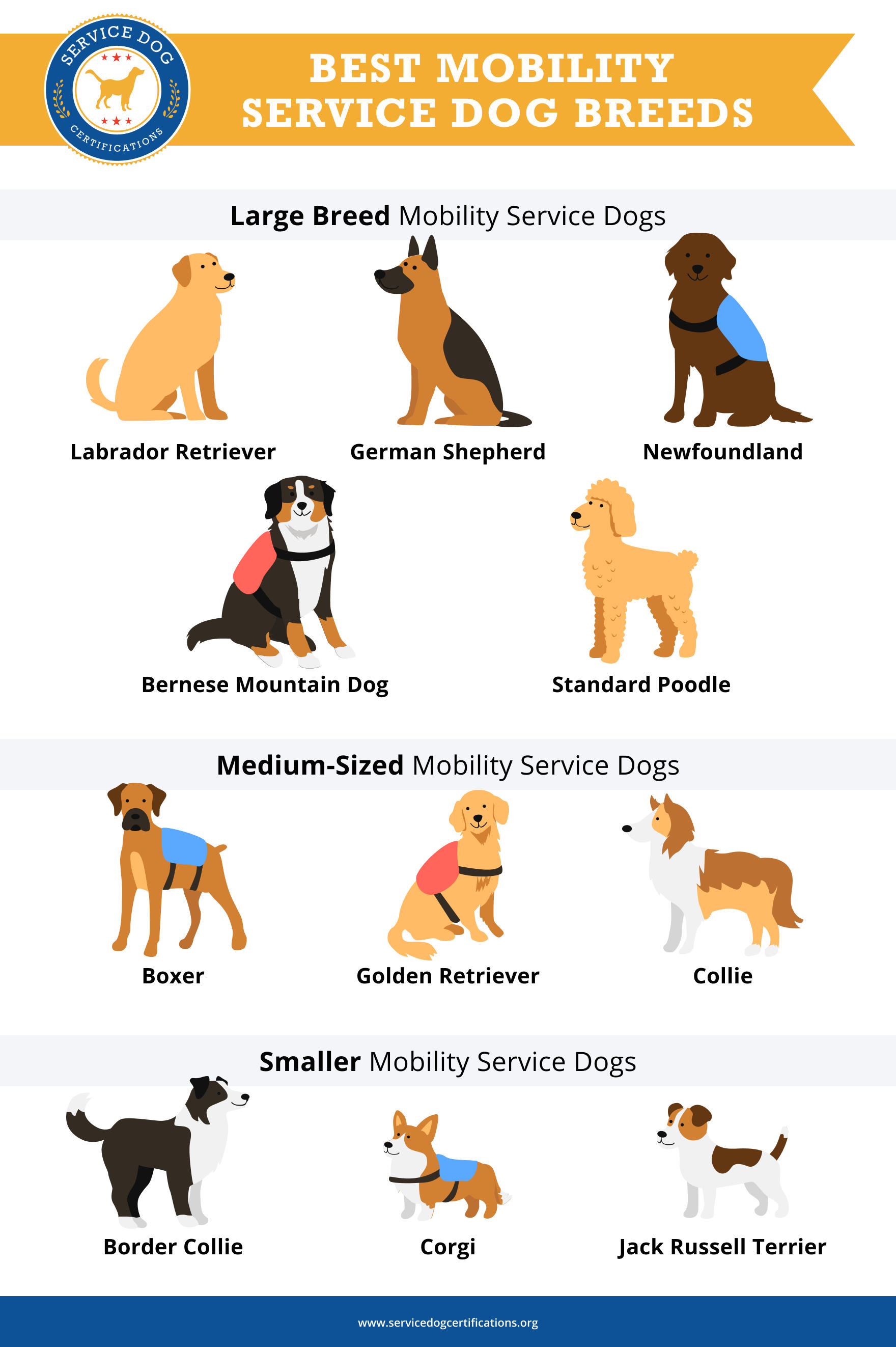
Credit: www.servicedogcertifications.org
Choosing The Right Breed For Specific Needs
Choosing the right service dog breed matters a lot. Different breeds have unique skills and traits. These traits match specific tasks and needs. Picking the correct breed helps the dog perform better. It also improves the bond between handler and dog.
Matching Breed Characteristics With Tasks
Each service dog breed has special qualities. Some dogs are strong and good for physical tasks. Others have sharp senses for alerting to medical issues. For example, Labrador Retrievers are smart and easy to train. They work well for guiding and mobility tasks. German Shepherds are brave and protective. They suit roles like police or search and rescue. Small breeds like Poodles help with hearing or medical alerts. Choose a breed with qualities that fit the job well.
Considering Lifestyle And Environment
The handler’s lifestyle affects breed choice. Active people may prefer energetic breeds. Calm, quiet breeds fit better in peaceful homes. Space also matters. Big dogs need room to move freely. Small dogs do well in apartments. Weather plays a role too. Some breeds handle cold better than heat. Think about daily routine, living space, and climate. The right match keeps both dog and handler happy and healthy.
Training And Certification Considerations
Training and certification are key steps for any service dog. These steps ensure the dog can help safely and reliably. Not all dogs are the same. Their training needs may differ by breed. Understanding these factors helps pick the right dog and training method.
Professional Training Options
Professional trainers teach service dogs specific skills. They focus on obedience, public behavior, and task performance. Trainers use methods suited to each breed’s nature. Some breeds learn commands faster than others. Training can take months or even years.
Many trainers offer group classes or private sessions. Group classes help dogs adapt to distractions. Private sessions focus on individual needs. Trainers also guide owners on handling and care. Proper training builds trust between dog and handler.
Legal Requirements By Breed
Service dog laws do not limit breeds. Any breed can become a service dog if trained well. Some places may have breed restrictions for safety. Check local laws before choosing a breed. Certain breeds may face challenges in public access.
Certification is not mandatory in all areas. Proof of training and behavior is often required. Documentation helps protect rights in public spaces. Always verify the legal status of your service dog breed. Understanding these rules helps avoid issues.

Credit: www.assistanceanimalsconsulting.com
Frequently Asked Questions
What Breeds Are Most Commonly Used As Service Dogs?
Labrador Retrievers, Golden Retrievers, and German Shepherds are the most common service dog breeds. They have friendly temperaments, intelligence, and trainability, making them ideal for various service tasks.
Can Small Dog Breeds Be Service Dogs?
Yes, small breeds like Poodles and Dachshunds can be service dogs. They often assist with medical alerts and mobility tasks, especially in urban settings or for users needing compact dogs.
How Do Breed Traits Affect Service Dog Training?
Breed traits like intelligence, temperament, and energy level impact training success. Calm, focused breeds learn tasks quickly and perform reliably in public environments, essential for effective service dogs.
Are Mixed Breed Dogs Suitable As Service Dogs?
Mixed breed dogs can be excellent service dogs if they have the right temperament and trainability. Their diverse genetics may offer unique strengths for specific service roles.
Conclusion
Service dogs come from many different breeds. Each breed has special skills and traits. Some are strong and calm, others are smart and quick learners. What matters most is the dog’s training and personality. Any breed can help if it fits the person’s needs.
Choosing the right dog means thinking about work, size, and behavior. Service dogs improve lives every day. They offer support, safety, and friendship. Remember, love and care help every service dog succeed.


