

Have you ever wondered what breeds make the best service dogs? If you’re thinking about getting a service dog or just curious about these amazing helpers, understanding which breeds are commonly chosen can give you a clear picture.
The right breed can make a big difference in how well a service dog supports you or someone you love. You’ll discover the most popular service dog breeds and what makes each one special. Keep reading to find out which furry friend could be the perfect match for your needs.
:strip_icc()/service-dog-breeds-b19c144519874f17a2cc35218486b3e5.jpg)
Credit: www.thesprucepets.com
Common Service Dog Breeds
Service dogs help many people every day. Some dog breeds are better suited for this work. These breeds have the right skills and temperament to assist their handlers. They are smart, calm, and easy to train. Below are some common service dog breeds you will often find.
Labrador Retriever
Labradors are one of the most popular service dogs. They are friendly, gentle, and very intelligent. Labradors learn tasks quickly and love to help. Their calm nature makes them great for many types of assistance.
Golden Retriever
Golden Retrievers are kind and patient. They have a strong desire to please their owners. This breed works well with people of all ages. Their soft temperament and quick learning make them excellent helpers.
German Shepherd
German Shepherds are strong and alert. They protect and assist with confidence. This breed is very loyal and focused. German Shepherds often serve as guide dogs or in police work.
Poodle
Poodles are smart and hypoallergenic. They are great for people with allergies. Poodles are easy to train and eager to work. Their intelligence helps them perform complex tasks well.
Traits That Make A Great Service Dog
Service dogs must have special traits to help people well. These traits make them reliable and safe companions. Not all dogs have the right qualities for this important work. Certain traits stand out in the best service dogs. These traits affect how they behave, learn, and stay healthy.
Temperament
A great service dog stays calm in many situations. They do not get scared or angry easily. Friendly and gentle behavior matters most. These dogs listen well and do not get distracted. They stay focused on their tasks without fuss.
Trainability
Service dogs learn commands quickly and obey them. They understand what their handler needs. Smart dogs who like to please humans do best. They practice tasks many times until perfect. Good trainers notice how fast dogs learn.
Size And Strength
Size depends on the type of service work needed. Some tasks require strong dogs that can carry or pull. Others need smaller dogs who can move easily in crowds. Strength helps in physical support and safety. The dog’s size should fit the handler’s needs well.
Health And Longevity
Healthy dogs work longer without problems. They must have good joints and no serious illnesses. Long life helps build a strong bond with the handler. Regular vet care keeps them fit for service. Choosing breeds with fewer health issues is wise.
Specialized Service Dog Breeds
Specialized service dog breeds train for specific tasks. They help people with unique needs. These dogs learn skills that match their owner’s challenges. Their work improves daily life and safety.
Each breed has strengths that suit certain roles. Choosing the right breed is important for success. These dogs often go through long training programs. They become reliable partners for their handlers.
Medical Alert Dogs
Medical alert dogs detect health changes early. They sense conditions like diabetes or seizures. Their keen noses pick up chemical shifts in the body. These dogs warn owners before problems get serious.
Breeds like Labrador Retrievers and German Shepherds excel here. They are alert and calm under pressure. Their quick reactions save lives and reduce emergency visits.
Mobility Assistance Dogs
Mobility assistance dogs help people move safely. They support those with disabilities or injuries. These dogs carry items or open doors. Some pull wheelchairs or steady their owners.
Golden Retrievers and Saint Bernards are common choices. Their strength and gentle nature make tasks easier. These dogs increase independence and confidence daily.
Hearing Dogs
Hearing dogs alert deaf or hard-of-hearing owners. They notice sounds like alarms or doorbells. These dogs quickly get their owner’s attention. They guide them to the sound source.
Cocker Spaniels and Poodles are often trained for hearing work. They stay focused and respond to commands well. Their assistance improves safety and awareness.
Psychiatric Service Dogs
Psychiatric service dogs support people with mental health needs. They help calm anxiety and prevent panic attacks. These dogs remind owners to take medication or practice coping skills.
Breeds like Border Collies and Standard Poodles are common. They sense changes in mood and behavior. Their presence provides comfort and emotional stability.
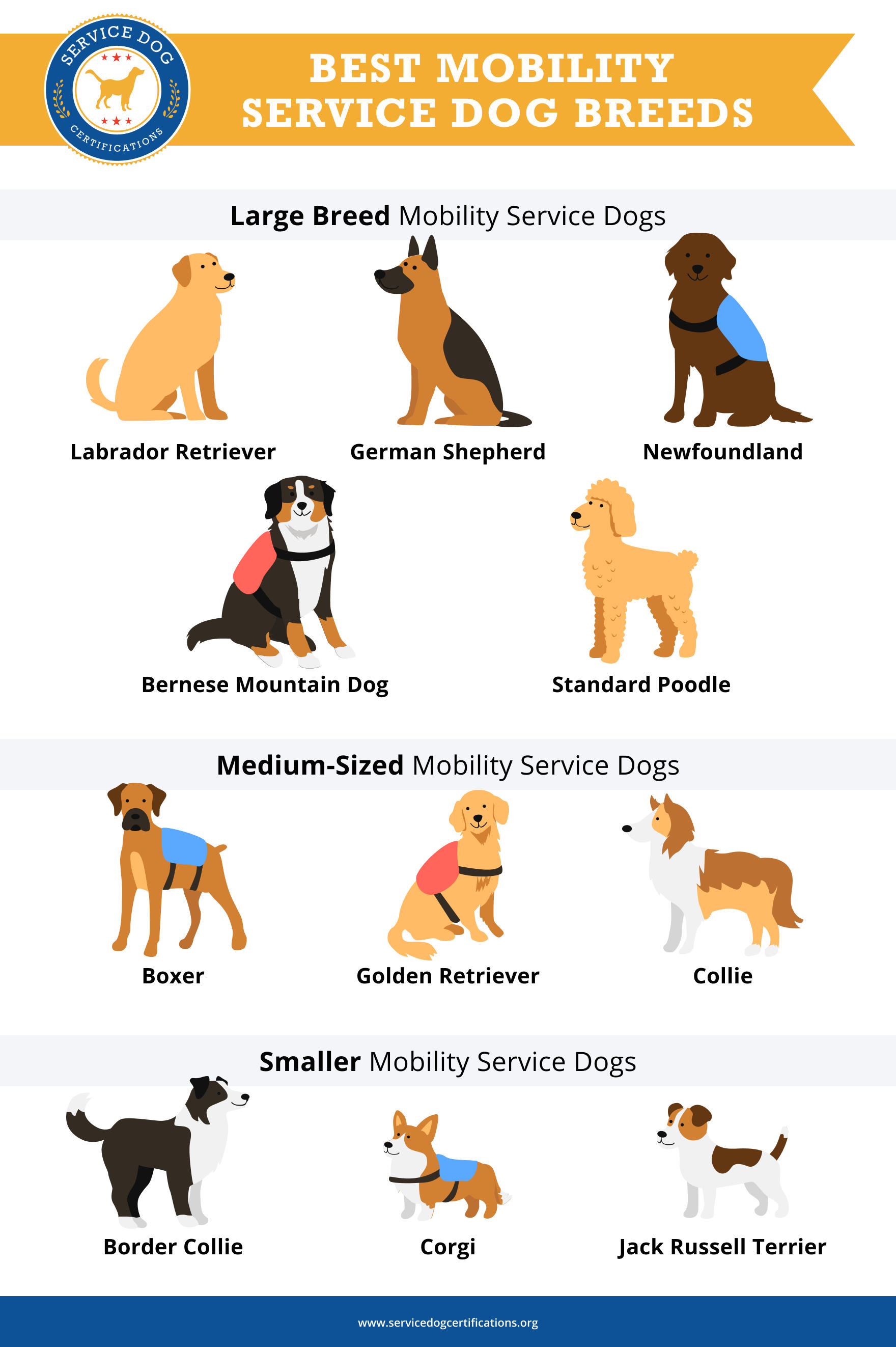
Credit: www.servicedogcertifications.org
Choosing The Right Breed For Your Needs
Choosing the right breed for your service dog matters a lot. Different breeds have different strengths. Matching a dog’s traits with your needs ensures better support and comfort. Think about what fits your lifestyle and health needs best.
Activity Level
Service dogs need to keep up with your daily activities. Some breeds have high energy and need lots of exercise. Others are calmer and prefer gentle walks. Pick a breed that matches how active you are. This helps the dog stay healthy and happy.
Living Environment
Your home and surroundings affect which breed suits you. Big dogs may need more space and yards. Smaller dogs fit well in apartments or small homes. Noise and other pets also matter. Choose a breed that adapts well to your living place.
Specific Assistance Tasks
Different breeds excel at different tasks. Some are great at guiding the blind. Others help with mobility or medical alerts. Think about the tasks you need help with. Find a breed known for those skills. This makes your service dog more effective.
Training Considerations For Different Breeds
Training service dogs varies greatly depending on their breed. Different breeds have unique traits that affect how they learn and perform tasks. Knowing these differences helps trainers create effective training plans. Each breed needs special attention to bring out its best abilities and to overcome its challenges.
Breed-specific Challenges
Some breeds have natural instincts that can make training easier or harder. For example, retrievers are eager to please and learn quickly. Terriers may be stubborn and need more patience. Large breeds can be strong and need control training early. Small breeds might struggle with physical tasks but excel in alerting roles. Trainers must understand these traits to adapt their methods.
Training Duration
Training time changes by breed and the dog’s personality. Some breeds learn commands fast, finishing training in a few months. Others need longer because they are more independent or sensitive. Consistent practice is key to success. Patience during training ensures the dog gains skills and confidence.
Professional Vs. Owner Training
Professional trainers offer experience with breed traits and behavior. They use proven methods and handle difficult training stages. Owners training their dogs need guidance and realistic goals. Some breeds need expert help more than others. Professional training often saves time and reduces stress for both dog and owner.
Credit: www.lovedisabledlife.com
Frequently Asked Questions
What Breeds Are Commonly Used As Service Dogs?
Common service dog breeds include Labrador Retrievers, Golden Retrievers, German Shepherds, and Poodles. These breeds are chosen for their intelligence, temperament, and trainability. They excel in tasks like guiding, alerting, and mobility assistance due to their adaptability and strong work ethic.
Why Are Labrador Retrievers Popular As Service Dogs?
Labrador Retrievers are popular for their friendly nature, intelligence, and ease of training. They adapt well to various service roles such as guide dogs and therapy dogs. Their calm temperament and strong work drive make them ideal for assisting people with disabilities.
Can Small Breeds Be Service Dogs?
Yes, some small breeds like Poodles and Dachshunds can be service dogs. They are often used for medical alert or psychiatric support tasks. Small breeds must have the right temperament and training to perform service duties effectively.
How Do Breed Traits Affect Service Dog Roles?
Breed traits like size, intelligence, and temperament determine the service tasks a dog can perform. Larger breeds suit mobility and guide roles, while smaller breeds excel in alerting or psychiatric support. Matching traits to tasks ensures effective assistance.
Conclusion
Service dogs come in many breeds, each with special skills. Labrador Retrievers and German Shepherds often lead the way. These dogs are trained to help with different tasks. They bring comfort and support to many people’s lives. Choosing the right breed depends on the job needed.
Every service dog is unique and valuable. They work hard to make life easier. Understanding breeds helps you appreciate their important role. Service dogs truly show the power of teamwork and trust.


