

Are you wondering when your puppy should start eating adult dog food? It’s a question many dog owners ask, and getting the timing right is important for your furry friend’s health.
Feeding your dog the right food at the right age can boost their energy, support strong bones, and keep their coat shiny. But how do you know the perfect moment to make the switch? Keep reading, and you’ll discover clear signs and expert tips to help you choose the best time for your dog to move on to adult food.
Your dog’s well-being depends on it!
Puppy Growth Stages
Puppy growth happens in clear stages. Each stage needs different nutrition. Knowing these stages helps decide when to switch to adult food. Puppies need food that matches their growth needs. Here are the main puppy growth stages to understand.
Neonatal To Weaning Phase
This phase covers birth to about 4 weeks old. Puppies depend fully on their mother’s milk. Milk provides all nutrients and antibodies they need. Around 3 to 4 weeks, puppies start trying soft, wet food. This helps their teeth and digestive system grow. The transition from milk to solid food is slow and gentle.
Juvenile Development
Puppies aged 4 weeks to 6 months are in juvenile development. Their bodies grow fast and their energy needs rise. They need food rich in protein and fat. This supports muscles, bones, and brain growth. Puppies eat puppy-formulated food during this time. It has the right balance of nutrients. Feeding adult food too early may cause nutrient gaps.
Adolescence In Dogs
This stage runs from about 6 months to 12 months. Growth slows but energy demand stays high. Some large breeds grow longer and need puppy food longer. Dogs become more active and curious. Their digestive system matures, ready for adult food. Most small and medium breeds can start adult food near one year.

Credit: www.scala-santa.com
Nutritional Needs By Age
Dogs need different nutrients at each stage of life. Their diets must change as they grow. Feeding the right food helps them stay healthy and strong. Understanding these nutritional needs helps owners choose the best food for their dogs.
Puppy Diet Essentials
Puppies need food rich in protein and fat. These nutrients support fast growth and energy. Puppies also require more vitamins and minerals. Calcium and phosphorus are key for strong bones. Puppy food is specially made to meet these needs.
Transitioning Nutrient Requirements
As puppies grow, their nutrient needs change. They need less fat but steady protein levels. Gradual switching to adult food prevents stomach upset. This transition usually starts around 9 to 12 months. Always mix puppy and adult food slowly over days.
Adult Dog Nutrition
Adult dogs need balanced nutrients to maintain health. Their food has fewer calories to avoid weight gain. Protein stays important for muscle maintenance. Fiber helps digestion and keeps the gut healthy. Adult dog food is designed to meet these needs perfectly.
When To Switch Foods
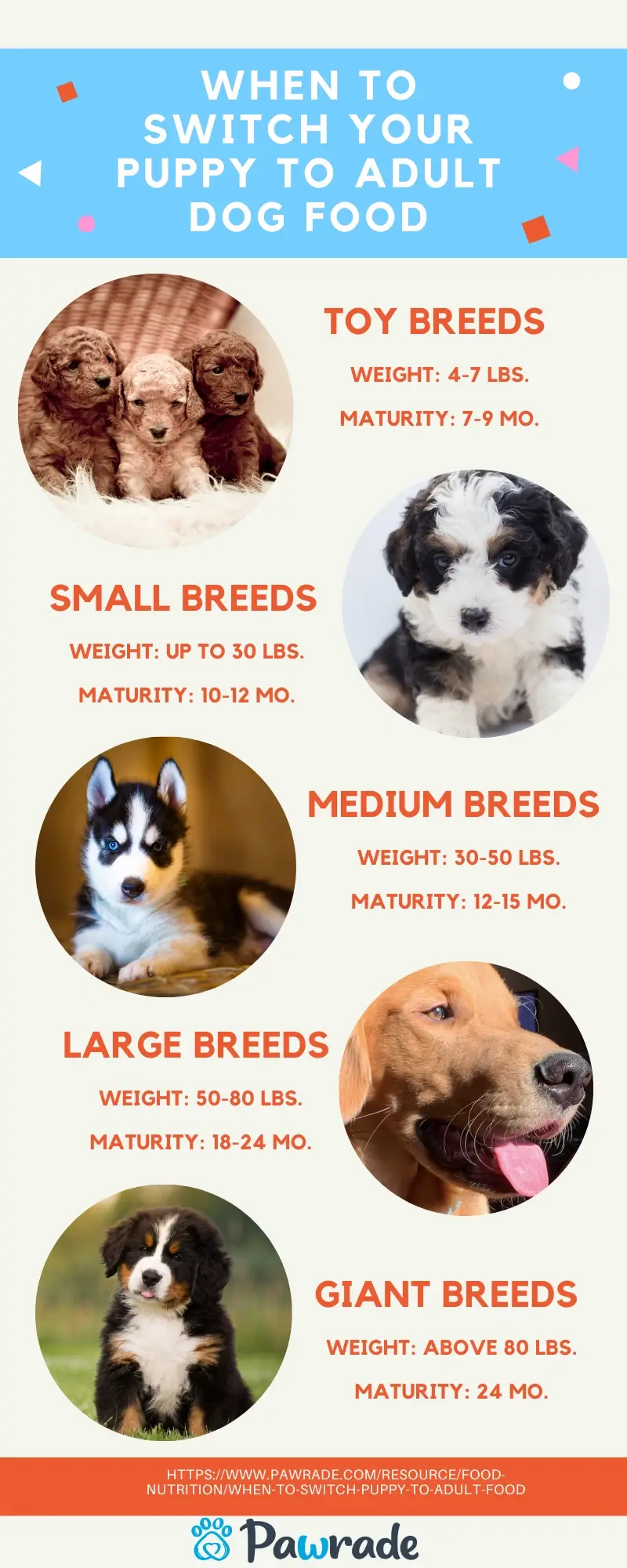
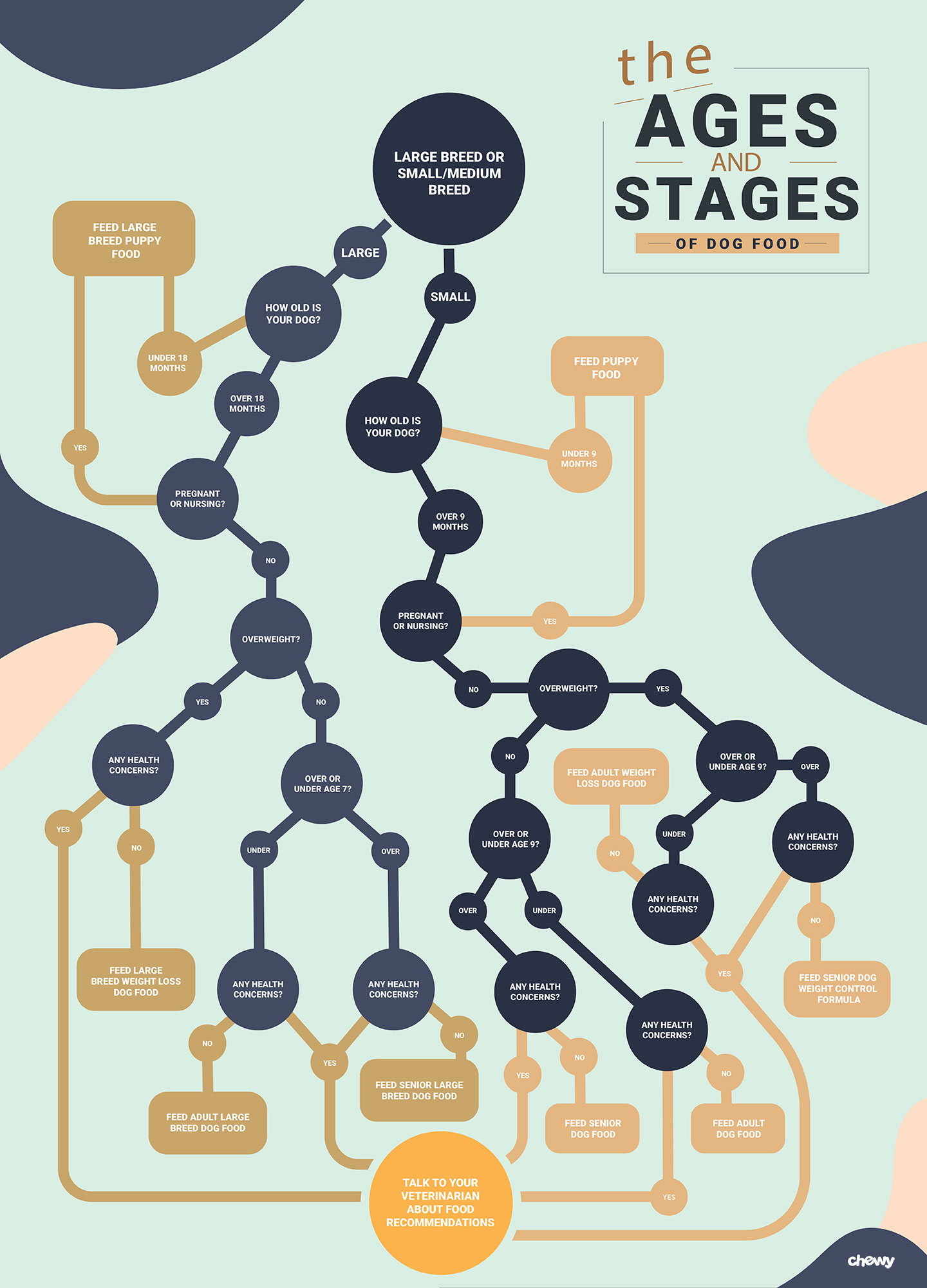
Switching your puppy from puppy food to adult food is an important step. It affects their growth, health, and energy. Knowing the right time to switch helps your dog get the right nutrients. Watch your puppy closely. Look for signs that show they are ready for adult food. Consider your dog’s breed and size too. This helps you choose the best time to change their diet. Your veterinarian can give advice based on your dog’s needs.
Signs Your Puppy Is Ready
One clear sign is your puppy’s age. Most puppies switch between 9 and 12 months old. Also, check their behavior and growth. Puppies ready for adult food may eat less or show less growth. Their teeth become stronger and adult-like. Energy levels may change too. Watch for a more steady pace. These signs help you know the right moment to switch foods.
Breed And Size Considerations
Small breeds often switch to adult food earlier, around 9 months. Large breeds may need puppy food longer, up to 12-18 months. Large dogs grow slower and need special nutrients longer. Knowing your dog’s breed helps plan the switch. Size matters because it affects growth rate and diet needs. Tailor the food change to your dog’s breed and size for best results.
Veterinarian Recommendations
Your vet knows your dog’s health history. They can suggest the best time to switch foods. Vets consider growth, weight, and overall health. Talk to your vet before making changes. They may recommend a gradual switch over days or weeks. This helps avoid stomach upset. Follow their advice to keep your dog healthy and happy.
Credit: bulit.com
How To Transition Safely
Changing your dog’s food from puppy to adult needs care and attention. A sudden switch can upset your dog’s stomach. A smooth change helps your dog accept the new food easily. Follow simple steps to keep your dog healthy and happy during this time.
Gradual Food Mixing
Start by mixing a small amount of adult food with puppy food. Slowly add more adult food over ten days. This helps your dog’s stomach get used to the new food. Stop mixing once you feed only adult food.
Monitoring Digestive Health
Watch for signs like diarrhea, vomiting, or constipation. These may mean your dog is not adjusting well. Check your dog’s energy and mood too. Contact a vet if problems last more than a few days.
Adjusting Portions
Adult dogs need different food amounts than puppies. Follow the feeding guide on the food package. Change the portion size slowly as your dog grows. Avoid overfeeding to keep your dog fit and healthy.
Common Mistakes To Avoid
Feeding your dog adult food at the right time is important for their health. Many dog owners make mistakes that affect their pet’s growth and well-being. Avoiding these common errors helps your dog stay strong and happy. Here are some mistakes to watch out for when changing your dog’s diet.
Switching Too Early
Changing to adult food too soon can harm your puppy’s development. Puppies need special nutrients to grow properly. Adult food lacks these essential nutrients. Feeding adult food too early can cause nutrient shortages and slow growth. Wait until your vet says it’s time to switch.
Ignoring Breed Differences
Different dog breeds grow at different speeds. Small breeds mature faster than large breeds. Large breeds need more time on puppy food for healthy bones. One-size-fits-all feeding can cause problems. Know your dog’s breed needs before changing their food.
Overfeeding Risks
Adult food often has more calories than puppy food. Giving too much can lead to weight gain. Overfeeding causes joint problems and other health issues. Measure your dog’s food carefully and follow feeding guidelines. Keep your dog active and healthy.
Credit: arts.ircica.org
Special Cases
Some puppies need special care when switching to adult dog food. Their size, health, and background change their food needs. Understanding these special cases helps owners make the best choice. Feeding the right food at the right age supports healthy growth and avoids problems.
Large Breed Puppies
Large breed puppies grow fast and need careful feeding. Switching to adult food too early may stop their growth. They usually switch around 12 to 18 months old. Their adult food has less fat and calories to prevent weight gain. Feeding the right food helps protect their bones and joints.
Small Breed Puppies
Small breed puppies grow quickly but finish earlier than large breeds. Most change to adult food by 9 to 12 months old. Their food is richer in calories and nutrients to keep their energy high. Feeding adult food too late can cause weight problems. Proper timing supports their fast metabolism.
Rescue Or Shelter Dogs
Rescue dogs have unknown or varied past diets. Their age and health might not be clear. Switching food should be slow to avoid stomach upset. Start with puppy or adult food based on their size and weight. A vet check helps decide the best diet plan for these dogs.
Expert Tips For Feeding
Feeding a dog adult food at the right time is important for their health. Experts suggest careful choices to keep dogs strong and happy. Small changes in diet can make a big difference. Here are some tips to help you feed your dog the best way.
Choosing Quality Adult Food
Select adult dog food with real meat as the first ingredient. Avoid foods with too many fillers like corn or wheat. Look for brands that meet AAFCO standards for balanced nutrition. Foods rich in protein and healthy fats support energy and muscle growth. Check labels for added vitamins and minerals to help your dog stay healthy.
Supplements And Additives
Some dogs need extra supplements for joints or coat health. Omega-3 fatty acids help keep skin shiny and reduce inflammation. Glucosamine supports strong joints, especially in larger breeds. Always talk to a vet before adding supplements. Avoid giving human vitamins, as they can harm dogs.
Routine Health Checks
Regular vet visits help track your dog’s health and diet needs. Your vet can suggest diet changes based on age and activity level. Watch for weight changes or digestion problems. Early checks prevent serious health issues. Keep a feeding diary to share with your vet during visits.
Frequently Asked Questions
When Should Puppies Switch To Adult Dog Food?
Puppies usually switch to adult dog food around 12 months old. Large breeds may transition later, around 18-24 months. This timing supports healthy growth and development while meeting changing nutritional needs.
How Do I Know If My Dog Is Ready For Adult Food?
Watch for slowed growth and maturity signs. Your vet can confirm readiness based on breed, size, and health. Transitioning too early or late can affect nutrition and health.
Can Feeding Adult Food Too Early Harm My Puppy?
Yes, feeding adult food too early may lack essential nutrients for growth. Puppies need higher protein and fat levels. Premature switching can stunt development or cause deficiencies.
What Are The Risks Of Delaying Adult Food Transition?
Delaying adult food can cause excess calorie intake and weight gain. It may also lead to nutrient imbalances as your dog’s needs change. Timely transition ensures optimal health.
Conclusion
Choosing the right time for your dog to eat adult food matters a lot. Most dogs switch at about one year old, but size and breed can change this. Watch your dog’s growth and energy to decide the best moment.
Feeding adult food too soon or too late can cause problems. Always talk to your vet for the best advice. Healthy food helps your dog stay strong and happy. Remember, every dog is different. Take your time and choose wisely for your furry friend.

