

Potty training your puppy can feel overwhelming, but it doesn’t have to be. Imagine having a clean house and a happy pup who knows exactly where to go.
You’re just a few simple steps away from making that happen. You’ll discover easy, practical tips that anyone can follow. Whether you’re a first-time dog owner or need a refresher, these tips will save you time, frustration, and stress. Ready to turn potty training into a smooth, successful experience?
Keep reading and take the first step toward a well-trained puppy.

Credit: shnakhat.com
Prepare For Training
Getting ready for potty training sets the stage for success. Preparing your home and mind helps your puppy learn faster. Clear steps and tools make the process smooth. Patience and consistency start here.
Choose A Designated Spot
Pick one outdoor area for your puppy to go potty. This spot helps your dog remember where to go. Keep it easy to reach from your home. Use the same place every time for training.
Gather Essential Supplies
Have the right tools ready before training starts. Get puppy pads, cleaning spray, and treats for rewards. Use a leash to guide your puppy outside. Keep supplies in one place for easy access.
Set A Consistent Schedule
Plan regular times for potty breaks each day. Take your puppy out after meals, naps, and playtime. Stick to the same times to build good habits. A routine helps your puppy learn quickly.

Credit: shnakhat.com
Create A Routine
Creating a routine is key to successful puppy potty training. Puppies feel more secure and learn faster with consistent schedules. A steady routine helps your puppy know when to eat, play, and go outside.
Feed On A Regular Timetable
Feed your puppy at the same times every day. This helps regulate their digestion. When your puppy eats on a schedule, you can predict bathroom needs. Avoid free feeding to keep control over potty times.
Take Frequent Bathroom Breaks
Take your puppy outside often, especially after meals and naps. Puppies have small bladders and need regular breaks. Every 1-2 hours is a good target for young puppies. Frequent trips prevent accidents and build good habits.
Recognize Puppy’s Signals
Watch for signs like sniffing, circling, or whining. These often mean your puppy needs to go out. Acting quickly when you see these signals helps your puppy learn. Responding fast prevents accidents and builds trust.
Use Positive Reinforcement
Positive reinforcement is the best way to teach your puppy good potty habits. It helps your puppy learn by showing what behaviors you want. Puppies respond well to praise and rewards. This method builds trust and makes training easier.
Reward Good Behavior
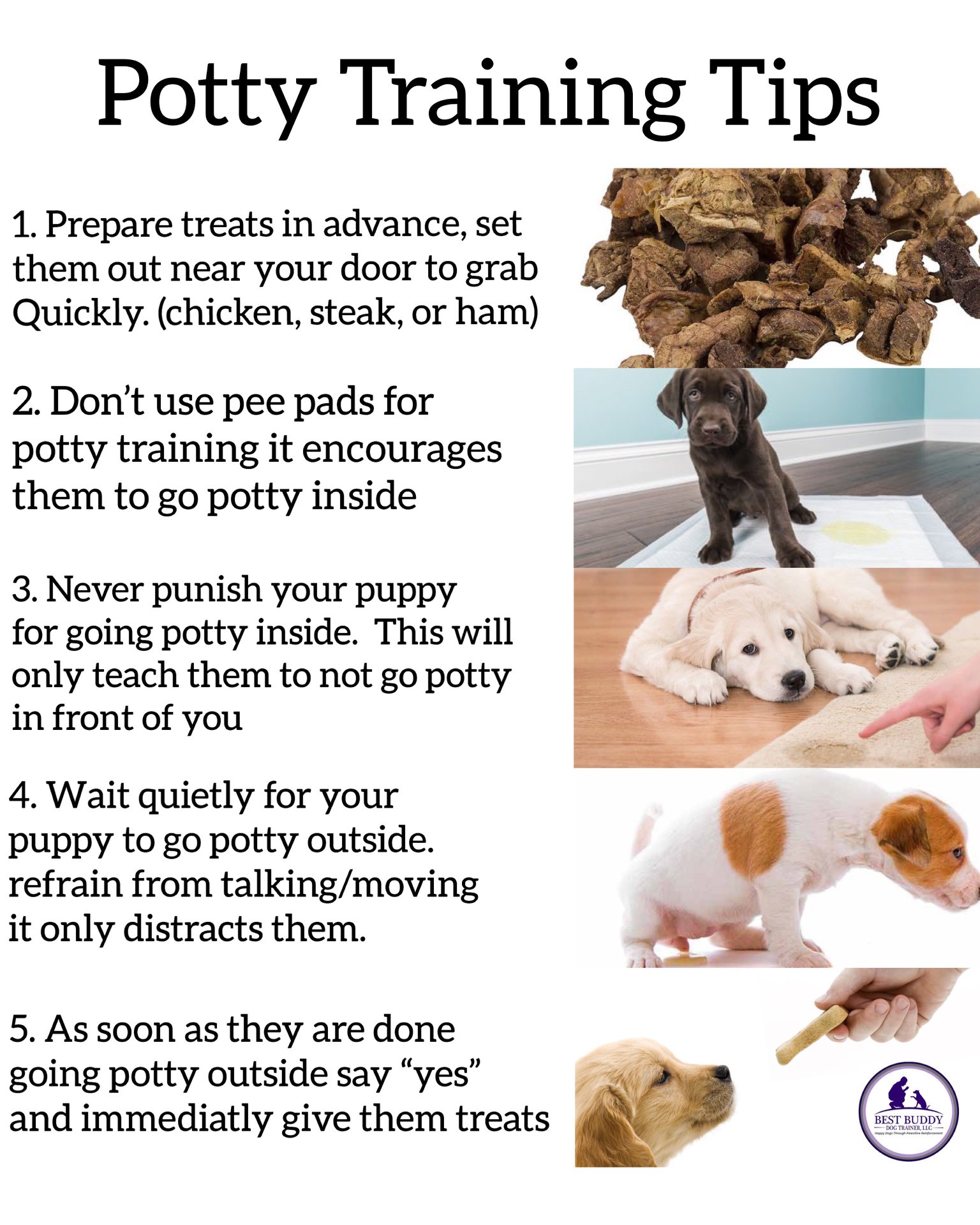
Give your puppy treats right after they go potty outside. Use kind words like “good job” or “well done.” This helps your puppy connect the reward to the action. Small treats work best to keep their attention. Celebrate every success to encourage repeat behavior.
Avoid Punishment
Never punish your puppy for accidents inside the house. Punishment can make them scared and confused. It may cause your puppy to hide when they need to go. Focus on guiding and praising instead. Patience and kindness make training safe and effective.
Stay Patient And Encouraging
Potty training takes time and effort. Your puppy will make mistakes. Keep calm and keep trying. Use a cheerful voice to encourage your puppy. Consistency and support help your puppy learn faster. Stay positive and enjoy the process.
Handle Accidents Calmly
Accidents happen when training a puppy. Staying calm helps your puppy learn better. Reacting calmly builds trust and keeps training positive. Your puppy feels safe and learns faster this way.
Clean Thoroughly
Clean the accident spot well. Use a cleaner that removes odors fully. This stops your puppy from returning to the same place. A clean area helps keep your home fresh and your puppy focused.
Avoid Negative Reactions
Do not yell or punish your puppy. Puppies do not understand punishment. Negative reactions cause fear and confusion. Stay patient and gentle, even after accidents. Your calm attitude teaches your puppy what to do next.
Learn From Mistakes
Watch your puppy’s signals closely. Learn what causes accidents. Adjust your schedule or training steps as needed. Every mistake is a chance to improve. Understanding your puppy helps you guide them better.
Crate Training Benefits
Crate training offers many benefits for potty training puppies. It creates a safe space where your puppy feels secure and calm. Puppies naturally avoid soiling their sleeping area, which helps teach bladder control. Using a crate also sets clear boundaries and routines. This consistency makes potty training easier and faster.
Choose The Right Crate
Select a crate that fits your puppy well. It should be large enough to stand and turn around comfortably. Avoid crates that are too big, as puppies may use one corner as a bathroom. A properly sized crate helps your puppy learn to hold their bladder.
Introduce Gradually
Start by letting your puppy explore the crate at their own pace. Place treats and toys inside to make it inviting. Close the door for short periods while you stay nearby. Slowly increase the time your puppy spends inside the crate. This gentle approach helps reduce fear and builds trust.
Use Crate For Bathroom Control
Keep your puppy in the crate between bathroom breaks. Puppies cannot hold their bladder for long, so frequent trips outside are important. This method teaches them to wait for the right place to go. Crate time limits accidents and helps develop a bathroom schedule.
Common Challenges
Potty training a puppy is often full of surprises. Challenges can slow progress and test your patience. Knowing common hurdles helps you stay calm and keep training on track.
Dealing With Setbacks
Setbacks happen even with the best training plans. Puppies might have accidents inside the house. This does not mean failure. Stay consistent and patient. Clean accidents quickly to remove smells. Avoid punishment. Use positive reinforcement to encourage good behavior.
Managing Multiple Puppies
Training several puppies at once can be tough. Each puppy learns at a different speed. Watch each puppy closely and give individual attention. Use separate potty times if needed. Keep routines clear and simple. This reduces confusion and speeds up learning.
Adjusting For Older Puppies
Older puppies may have habits that are hard to break. They might not understand the rules yet. Be gentle but firm in training. Use more bathroom breaks to help them learn. Reward progress, no matter how small. Patience is key to success.
Credit: plnbbi.co.id
Frequently Asked Questions
How Long Does Puppy Potty Training Usually Take?
Puppy potty training typically takes 4 to 6 months. Consistency, patience, and positive reinforcement speed up the process. Each puppy learns at their own pace, so adapt your approach accordingly.
What Are The Best Potty Training Techniques For Puppies?
Use crate training, regular outdoor trips, and praise for success. Establish a routine and watch for signs your puppy needs to go. Avoid punishment to build trust and encourage good habits.
How Often Should I Take My Puppy Outside To Potty?
Take your puppy outside every 1 to 2 hours initially. Also, go outside after meals, naps, and play sessions. Frequent trips reduce accidents and help your puppy learn faster.
What Are Common Potty Training Mistakes To Avoid?
Avoid inconsistent schedules, punishing accidents, and neglecting supervision. Don’t rush the process or ignore signs your puppy needs to go. Consistency and patience are key to successful potty training.
Conclusion
Potty training a puppy takes time and patience. Stay consistent with your routine every day. Reward your puppy for good behavior. Expect accidents and clean them calmly. Watch for signs your puppy needs to go out. Keep the training sessions short and positive.
Remember, every puppy learns at their own pace. Celebrate small successes along the way. Soon, your puppy will understand where to go. Enjoy the journey of raising a happy, well-trained dog.


