

Have you ever wondered why your rescue dog shows aggressive behavior? It can be confusing and even scary when a dog you want to love and trust suddenly snaps or growls.
Understanding what causes this aggression is the first step to building a happier, safer relationship with your furry friend. You’ll discover simple, effective ways to recognize and manage aggressive behavior in rescue dogs. By the end, you’ll feel more confident and connected with your dog than ever before.
Keep reading—your dog’s happiness and your peace of mind depend on it.
Causes Of Aggression In Rescue Dogs
Aggression in rescue dogs can confuse and worry new owners. Understanding the causes helps in handling these behaviors better. Rescue dogs often carry emotional and physical scars from their past. These wounds can show as aggression in different ways.
Each dog’s story is unique. Their aggressive actions usually have a reason behind them. Recognizing these reasons can lead to safer and happier homes.
Past Trauma And Abuse
Many rescue dogs have faced abuse or neglect. Painful experiences shape their view of the world. They may grow defensive or aggressive to protect themselves. Past trauma makes trust hard to build. These dogs need patience and gentle care to heal.
Fear And Anxiety Triggers
Fear often causes aggressive behavior in rescue dogs. Loud noises, sudden movements, or unfamiliar people can scare them. Anxiety may make them react with growling or biting. They use aggression to feel safer. Understanding their triggers helps reduce these reactions.
Territorial Behavior
Rescue dogs sometimes act aggressively to guard their space. New homes and surroundings may feel threatening. They protect what they see as theirs. This behavior is a natural instinct to survive. Clear boundaries and calm training can ease territorial aggression.
Medical Issues Influencing Aggression
Pain or illness can cause sudden aggression in dogs. Conditions like arthritis or dental problems make them irritable. Some medical issues affect brain function, leading to aggression. A vet check-up is important for any new aggressive behavior. Treating health problems often reduces aggression.
Recognizing Aggressive Behavior Signs
Recognizing signs of aggressive behavior in rescue dogs helps keep everyone safe. It also guides you in providing the right care and training. Aggression often shows through body language, sounds, and specific situations.
Body Language Cues
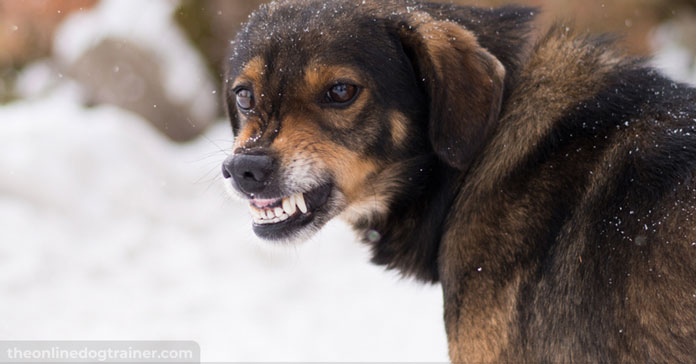
Watch for stiff posture and raised hackles along the dog’s back. Tight lips or bared teeth signal discomfort or threat. A fixed stare or direct eye contact can mean the dog feels challenged. Ears pinned back or flat often show fear or anger. Tail position matters too—rigid and high or low and tucked.
Vocalizations And Growls
Growling is a clear warning sign of aggression. Snarling or deep barking can also show unease or anger. Whining or yelping might mean stress but can lead to aggression if ignored. Pay attention to the tone and volume of sounds. Quiet snarls might be just as serious as loud barks.
Trigger Situations
Some rescue dogs react aggressively during feeding or when guarding toys. Sudden movements or loud noises can startle and provoke a response. New people or animals in their space might cause tension. Handling sensitive areas like paws or tail may trigger aggression. Identifying these triggers helps prevent problems before they start.
Creating A Safe Environment
Creating a safe environment helps reduce aggressive behavior in rescue dogs. A calm and secure space lets your dog feel protected. This lowers stress and builds trust over time. Safety is key for healing and good behavior.
Safe Spaces For Your Dog
Provide a quiet spot where your dog can relax alone. Use a crate or a small room with their bed and toys. This space should feel like a refuge. Avoid loud noises and sudden movements near this area. Let your dog retreat there when feeling overwhelmed.
Managing Interactions With People And Pets
Watch your dog carefully around others. Keep meetings short and calm. Use a leash or barrier for control. Teach visitors and family to move slowly and speak softly. Separate your dog from other pets until trust grows. Clear rules keep everyone safe and calm.
Consistent Routine And Structure
Dogs feel safer with a steady schedule. Feed, walk, and train your dog at the same times daily. Predictable routines reduce anxiety and confusion. Set clear rules and follow them every day. Consistency helps your dog know what to expect.
Training Techniques To Reduce Aggression
Training a rescue dog to reduce aggressive behavior takes patience and the right techniques. Understanding how to guide your dog gently helps build trust. Consistent training creates a safer and happier environment for both of you.
Positive Reinforcement Methods
Positive reinforcement rewards good behavior immediately. Use treats, praise, or toys to encourage calm actions. Avoid punishment, as it can increase fear and aggression. Reward your dog for small steps toward better behavior. This method helps your dog learn what you expect clearly.
Desensitization And Counterconditioning
Desensitization means slowly exposing your dog to triggers. Start with low levels that do not cause aggression. Gradually increase exposure while keeping your dog calm. Counterconditioning changes your dog’s emotional response to triggers. Pair scary situations with treats or play to create positive feelings. This reduces aggressive reactions over time.
Impulse Control Exercises
Impulse control teaches your dog to pause before reacting. Simple exercises like “sit” and “wait” build self-control. Practice these commands daily in different settings. Reward patience and calm behavior consistently. This training helps your dog think before acting aggressively.
Working With Professionals
Working with professionals can make a big difference in handling aggressive behavior in rescue dogs. These experts have the skills to guide you and your dog through tough moments. They offer support and clear advice to help your dog feel safe and calm.
Choosing A Qualified Trainer
Pick a trainer with experience in aggressive dogs. Check their certifications and ask about their methods. A good trainer uses positive reinforcement, not punishment. They understand your dog’s unique needs. Trust and patience are key traits in a trainer.
When To Consult A Behaviorist
Consult a behaviorist if your dog’s aggression is severe or sudden. They study why your dog acts this way. Behaviorists create a detailed plan to change bad habits. They work closely with you to track progress. Early help can stop aggression from getting worse.
Benefits Of Group Classes
Group classes let your dog meet other dogs safely. They teach social skills and reduce fear. These classes offer real-world practice for good behavior. Trainers watch and guide your dog in these sessions. Group settings build confidence and calmness in rescue dogs.
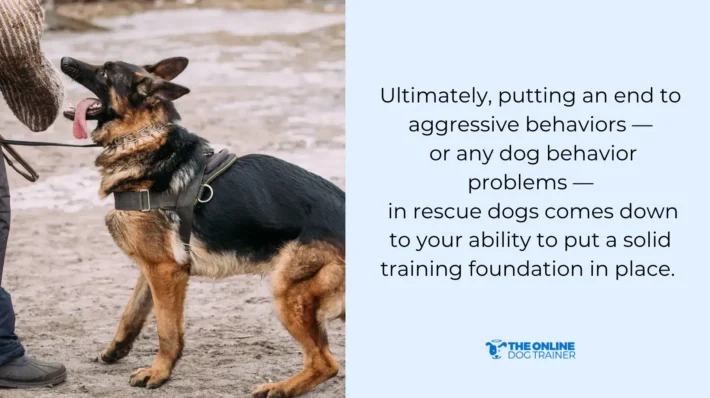
Credit: theonlinedogtrainer.com
Health And Nutrition’s Role
Health and nutrition play a big role in shaping a rescue dog’s behavior. A well-fed dog feels better physically and emotionally. Poor health or bad diet can cause stress and irritability. This can lead to aggressive actions. Helping a dog stay healthy and well-nourished can lower these risks. It builds a strong base for good behavior.
Understanding the link between diet, health, and mood helps owners support their rescue dogs better. Small changes in food and care can calm a dog’s mind and body. This section explains how diet, vet care, and supplements help reduce aggression in rescue dogs.
Diet Impact On Behavior
What a dog eats affects its mood and energy. High-quality food with balanced nutrients supports brain health. Poor diet may cause hyperactivity or irritability. Avoid foods with artificial colors or fillers. Proteins, omega-3 fatty acids, and vitamins help calm nerves. Feeding a rescue dog with the right diet supports better behavior.
Regular Veterinary Checkups
Regular vet visits catch health issues early. Pain or illness often cause aggressive behavior. A vet can spot problems like infections or allergies. Treating these issues can reduce a dog’s stress and fear. Keeping shots and parasite control up to date protects health. Healthy dogs feel safer and act calmer.
Supplements For Calming
Certain supplements can help soothe anxious dogs. Omega-3 fatty acids reduce inflammation and improve brain function. Some herbal supplements support relaxation without side effects. Probiotics help gut health, which links to mood and stress. Always check with a vet before adding supplements. Proper supplements can ease tension and lower aggression.
Building Trust And Bonding
Building trust and bonding with a rescue dog showing aggressive behavior takes time. Trust is the base for any strong relationship with your dog. It helps reduce fear and aggression. Bonding makes your dog feel safe and loved. This connection encourages good behavior and cooperation.
Patience And Consistency
Patience is key when working with an aggressive rescue dog. Do not rush the process. Keep your actions calm and steady. Consistency helps your dog understand what to expect. Use the same commands and routines daily. This predictability lowers stress and builds trust.
Engaging Activities And Play
Playtime is more than fun; it builds your bond. Choose gentle games that do not scare your dog. Use toys your dog likes. Activities like fetch or tug can create positive moments. These moments show your dog you are a friend, not a threat.
Recognizing Progress
Celebrate small wins with your dog. Notice when your dog stays calm or follows a command. Praise and reward these moments. Progress may be slow, but every step counts. Recognizing improvement boosts your dog’s confidence and trust in you.

Credit: wagwalking.com
Credit: theonlinedogtrainer.com
Frequently Asked Questions
What Causes Aggressive Behavior In Rescue Dogs?
Aggressive behavior in rescue dogs often stems from fear, past trauma, or lack of socialization. Stress and anxiety can also trigger aggression. Understanding these causes helps in addressing the behavior effectively and safely.
How Can I Safely Handle An Aggressive Rescue Dog?
Always approach calmly and avoid sudden movements. Use positive reinforcement and avoid punishment. Consulting a professional trainer or behaviorist is crucial for safe handling and effective behavior modification.
Can Rescue Dogs With Aggression Improve Over Time?
Yes, with consistent training, patience, and proper care, many aggressive rescue dogs can improve significantly. Early intervention and a stable environment are key to successful behavior change.
Are Certain Breeds More Prone To Aggression In Rescues?
Aggression is not breed-specific but depends on individual history and environment. Each dog’s behavior is unique; breed alone does not determine aggression levels.
Conclusion
Rescue dog aggressive behavior can improve with time and care. Patience helps build trust between you and your dog. Consistent training and gentle guidance shape better habits. Understanding the dog’s past helps address fears and triggers. Small steps create big changes in behavior.
Love and attention support a calm, happy dog. Each dog is unique and needs your kindness. Keep learning and stay hopeful on this journey. Your efforts make a real difference every day.

