

Are you wondering when it’s time to switch your furry friend from puppy food to adult dog food? Making this change at the right moment is key to keeping your dog healthy and happy.
If you switch too early or too late, it could affect their growth, energy, and overall well-being. You’ll discover exactly when to make the switch, what signs to look for, and how to do it smoothly. Keep reading to make sure you’re giving your dog the best nutrition at every stage of their life.
Credit: www.ralphs.com
Signs Your Puppy Is Ready
Knowing the right time to switch your puppy to adult food is important. Puppies grow fast and their diet must match their needs. Some clear signs show your puppy is ready for adult food. Watch for these signs closely to make the change smooth and healthy.
Growth Milestones
Puppies grow in stages. By six months, many reach half their adult size. Large breeds take longer, often up to a year. When growth slows, it means they need adult food. Their bones and muscles are stronger now. Adult food supports steady growth without extra calories.
Behavioral Changes
Your puppy’s behavior changes as it grows. They become less hyper and more calm. Their energy bursts shorten and focus improves. These changes mean their body needs different nutrition. Adult food helps keep their energy stable. It matches their slower but steady activity.
Teething Stage
Puppies start teething around three to six months. They chew a lot to ease pain. After teething ends, their mouth feels better. They can handle harder adult food. Switching after teething helps avoid digestive upset. Adult food has the right texture and nutrients for adult teeth.
Credit: www.pdsa.org.uk
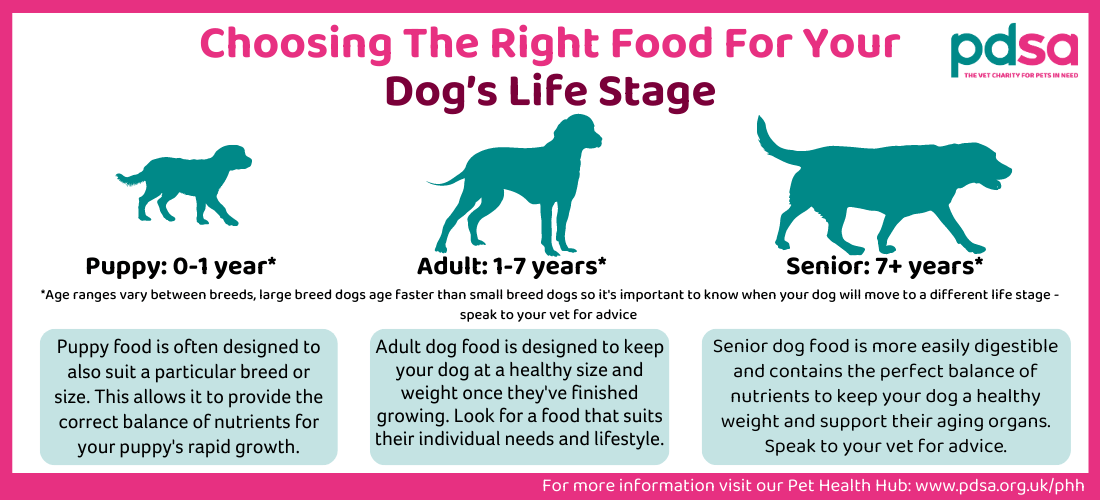
Age Guidelines By Breed Size
Choosing the right time to switch your dog to adult food depends on their breed size. Dogs grow at different rates, and their nutritional needs change as they mature. Following age guidelines by breed size helps ensure your dog stays healthy and strong during growth.
Small Breeds
Small breed dogs grow faster than larger breeds. They often reach adult size by 9 to 12 months. You can start giving adult food around this age. Their metabolism is high, so adult food helps maintain energy levels. Choose food designed for small breeds for better nutrition.
Medium Breeds
Medium breed dogs grow a bit slower than small breeds. They usually mature between 12 and 15 months. Start feeding adult food once they reach this age range. Their growth plates close around this time, signaling maturity. Adult food supports their balanced growth and activity.
Large Breeds
Large breed dogs take longer to grow fully. They mature between 15 and 24 months. Switching to adult food too early can cause problems. Large breeds need special food to support joint health and slow growth. Begin adult food after 15 months or when your vet advises.
Choosing The Right Adult Food
Choosing the right adult food for your dog is very important. It helps keep your dog healthy and active. Adult dog food should match your dog’s size, breed, and activity level. This section explains what to watch for when picking adult food.
Nutritional Needs
Adult dogs need balanced nutrition to stay strong. Protein helps build muscles. Fat gives energy. Carbohydrates support digestion. Vitamins and minerals keep organs working well. The food should have the right mix of these nutrients for your dog’s age and size.
Ingredients To Look For
High-quality meat should be the main ingredient. It provides essential protein. Whole grains like brown rice or oats supply energy. Vegetables add fiber and vitamins. Natural ingredients support better health and digestion. Avoid foods with vague terms like “meat by-products.”
Avoiding Common Additives
Avoid foods with artificial colors or flavors. These can cause allergies or upset stomachs. Stay away from preservatives like BHA or BHT. These chemicals may harm long-term health. Choose foods with natural preservatives like vitamin E or C.
Transitioning Your Dog’s Diet
Transitioning your dog’s diet from puppy food to adult food needs care and patience. This change supports your dog’s growth and health. A smooth switch helps avoid stomach problems and keeps your dog happy.
Gradual Food Introduction
Start by mixing a small amount of adult food with puppy food. Slowly increase the adult food over 7 to 10 days. This helps your dog’s stomach adjust to the new food. Sudden changes can cause upset tummy or diarrhea.
Monitoring Digestive Health
Watch your dog’s stool and energy levels during the switch. Soft stool or vomiting can mean the food change is too fast. If problems continue, slow the transition or consult your vet. Healthy digestion is key to your dog’s well-being.
Adjusting Portion Sizes
Adult dogs need different food amounts than puppies. Check the food package for portion guidelines based on weight and age. Adjust portions as your dog grows and activity changes. Avoid overfeeding to keep your dog fit and healthy.
Consulting Your Veterinarian
Consulting your veterinarian is a smart step before changing your dog’s diet. They understand your dog’s health and growth needs better. Their advice helps you choose the right time and type of adult food. This ensures your dog stays healthy and happy.
Personalized Recommendations
Every dog is different. Your vet can give advice based on your dog’s breed, size, and activity level. They suggest the best food to support healthy growth and energy. Personalized tips help avoid common feeding mistakes.
Health Checks
Vets perform health checks to spot any issues before switching food. They check weight, teeth, and digestion health. These checks ensure your dog is ready for adult food. Healthy dogs adjust better to new diets.
Addressing Special Needs
Some dogs have allergies or special health needs. Your vet can recommend food that suits these needs. This prevents discomfort and health problems. Special diets keep your dog strong and comfortable.

Credit: www.thinkjinx.com
Common Mistakes To Avoid
Feeding your dog the right food at the right time is important. Many pet owners make common mistakes that can harm their dog’s health. Avoid these errors to keep your dog happy and healthy.
Switching Too Early
Changing your dog to adult food too soon can cause problems. Puppies need special nutrients to grow strong. Switching early might lead to poor growth or digestion issues. Wait until your vet confirms your dog is ready.
Ignoring Breed Differences
Different dog breeds grow at different speeds. Small breeds mature faster than large breeds. Feeding large breed dogs adult food too early can harm their joints. Understand your dog’s breed needs before switching food.
Skipping Transition Period
Sudden food changes can upset your dog’s stomach. Mix old and new food gradually over 7 to 10 days. This helps your dog adjust without digestive problems. Rushing the switch can cause vomiting or diarrhea.
Frequently Asked Questions
When Should I Switch My Puppy To Adult Dog Food?
You should switch to adult dog food when your puppy is about 12 months old. Large breeds may need adult food later, around 18-24 months. Consult your vet to determine the best timing based on your dog’s breed and growth rate.
How Do I Know If My Dog Needs Adult Food?
Signs include slowed growth, decreased energy, and changes in appetite. Adult dog food supports maintenance rather than growth. If your dog is fully grown and active, it’s time to transition to adult food for balanced nutrition.
What Are The Benefits Of Adult Dog Food?
Adult dog food contains balanced nutrients for maintenance, not growth. It helps maintain a healthy weight, supports organ function, and provides proper energy levels. This food is tailored to adult dogs’ needs, promoting overall health and longevity.
Can I Feed Adult Food To My Puppy Early?
Feeding adult food too early can cause nutrient deficiencies. Puppies need higher protein and calorie content for growth. Transitioning too soon may stunt development. Always follow vet advice to ensure your puppy gets proper nutrition for healthy growth.
Conclusion
Feeding your dog adult food at the right time helps keep them healthy. Most dogs switch around one year old. Watch your dog’s size, breed, and energy for clues. Talk to your vet for advice. Changing food too soon or late can cause problems.
Keep an eye on your dog’s weight and behavior after switching. A smooth transition means a happier, healthier pet. Remember, every dog is different. Pay attention and adjust as needed. Your dog deserves the best care every step of the way.


