

Training your puppy can feel overwhelming at times, but it doesn’t have to be. Imagine having a well-behaved, happy dog who listens to you and fits perfectly into your daily life.
You can achieve this with the right approach and simple techniques. You’ll discover easy-to-follow tips that make puppy training effective and even enjoyable. Ready to build a strong bond with your new furry friend while setting clear boundaries? Keep reading, because these tips will change the way you and your puppy connect forever.

Credit: www.matthewslegacyfarm.com
Choosing The Right Training Approach
Choosing the right training approach for your puppy is very important. Puppies learn best with methods that match their personality and your lifestyle. The right approach builds trust and makes training easier. It helps your puppy grow into a well-behaved dog.
Some methods work better for certain puppies. Understanding different techniques helps you pick what fits your dog. This section covers key points to guide your choice. Use these tips to create a training plan that works well.
Positive Reinforcement Techniques
Positive reinforcement means rewarding good behavior. Treats, praise, or petting show your puppy when it does right. This method encourages your puppy to repeat good actions.
It is gentle and builds a strong bond. Avoid punishment as it can scare your puppy. Rewards make training fun and effective.
Consistency In Commands
Use the same words for each command every time. This helps your puppy understand what you want. Changing commands can confuse your dog.
Be patient and repeat commands calmly. Consistency speeds up learning and reduces mistakes. Everyone in the family should use the same commands.
Setting Realistic Expectations
Puppies learn slowly and need time to practice. Expect small progress each day. Avoid pushing your puppy too hard.
Celebrate small wins and stay patient. Training is a step-by-step process. Realistic goals keep you and your puppy motivated.
Establishing Basic Commands
Teaching your puppy basic commands sets the foundation for good behavior. These commands help your puppy understand what you expect. Early training builds trust and communication between you and your dog. Keep sessions short and use positive rewards. Consistency is key to success in training.
Sit, Stay, And Come
Start with the “Sit” command. Hold a treat close to your puppy’s nose. Move the treat upward, and your puppy will naturally sit. Say “Sit” and give the treat with praise. Repeat this several times daily.
“Stay” teaches your puppy patience. Ask your puppy to sit. Show your open palm and say “Stay.” Step back slowly. If your puppy stays, reward immediately. Gradually increase the time and distance.
“Come” is vital for safety. Use a cheerful voice and say “Come.” Gently pull the leash if needed. Reward your puppy when they reach you. Practice often in safe, enclosed areas.
Leash Walking Skills
Puppies need to learn calm walking on a leash. Start indoors or in a quiet area. Hold the leash loosely and let your puppy explore. Use treats to encourage walking beside you. Stop walking if your puppy pulls. Wait for them to return, then continue.
Practice short walks daily. Keep your puppy’s attention with praise and treats. Avoid pulling or dragging the leash. Walking should be fun and relaxed for both of you.
Crate Training Tips
Crate training gives puppies a safe space. Choose a crate large enough for your puppy to stand and turn. Make the crate comfortable with a soft blanket.
Encourage your puppy to enter with treats and toys. Feed meals inside the crate to create positive feelings. Close the door briefly while your puppy rests inside. Increase the time slowly.
Never use the crate as punishment. The crate should feel like a cozy den your puppy loves.
Potty Training Made Easy
Potty training is a key step in raising a happy puppy. It helps your puppy learn where to go. This makes life easier for both of you. Patience and consistency are very important. Start early to build good habits.
Creating A Bathroom Schedule
Set regular times for bathroom breaks. Puppies need to go after eating, drinking, and waking up. Take your puppy outside often, about every two hours. A schedule helps your puppy understand when to go. This reduces accidents inside the house.
Recognizing Signs
Learn to spot when your puppy needs to go. Restlessness, sniffing, or circling are common signs. Your puppy might whine or bark. Watch closely to catch these signals early. Acting fast helps prevent accidents.
Dealing With Accidents
Accidents happen. Stay calm and don’t punish your puppy. Clean the area well to remove smells. Use a cleaner made for pet stains. Praise your puppy when they go outside. This encourages good behavior and quick learning.
Socializing Your Puppy
Socializing your puppy is a key part of their growth. It helps them become confident and friendly. Early social experiences shape their behavior with people and other animals. Good social skills reduce fear and aggression later. Start socializing soon after bringing your puppy home. Gentle, positive encounters build trust and comfort. Here are practical tips for socializing your puppy effectively.
Introducing To People And Pets
Introduce your puppy to many people of all ages. Let them meet calm and friendly dogs. Keep these meetings short and positive. Use treats to reward calm behavior. Avoid forcing your puppy to approach if scared. Let them explore new friends at their own pace. Regular, gentle introductions create good social habits.
Handling Fear And Anxiety
Fear can stop your puppy from enjoying new experiences. Watch for signs like cowering or trembling. Stay calm and speak softly to reassure them. Give your puppy space if they seem stressed. Use treats to create a positive link with new sights and sounds. Gradually increase exposure to avoid overwhelming your puppy.
Safe Playtime Practices
Supervise all play sessions with other pets and children. Choose safe toys that are puppy-friendly. Avoid rough play that might scare or hurt your puppy. Teach gentle play and take breaks often. Safe playtime helps your puppy learn good manners. It also builds bonds with family and other pets.
Addressing Common Challenges
Puppy training can be full of challenges. Each puppy shows different behaviors that need gentle handling. Understanding common problems early helps in shaping good habits. This section covers some usual issues and how to manage them effectively.
Biting And Chewing
Young puppies explore the world with their mouths. Biting and chewing are natural but can be painful. Provide plenty of chew toys to keep your puppy busy. Redirect biting from your hands to toys firmly but calmly. Praise your puppy when they chew the right items. Avoid harsh punishments; they can cause fear or confusion.
Excessive Barking
Some puppies bark a lot to get attention or express fear. Ignore barking that seeks attention to avoid encouraging it. Teach a quiet command and reward silence with treats or praise. Keep your puppy active and tired to reduce barking from boredom. Use calm tones to soothe your puppy during noisy moments.
Separation Anxiety
Puppies may feel anxious when left alone. Start by leaving your puppy alone for short periods. Gradually increase the time as your puppy gets comfortable. Leave a favorite toy or piece of your clothing for comfort. Avoid making a big deal when leaving or returning home. This helps your puppy learn that being alone is safe.
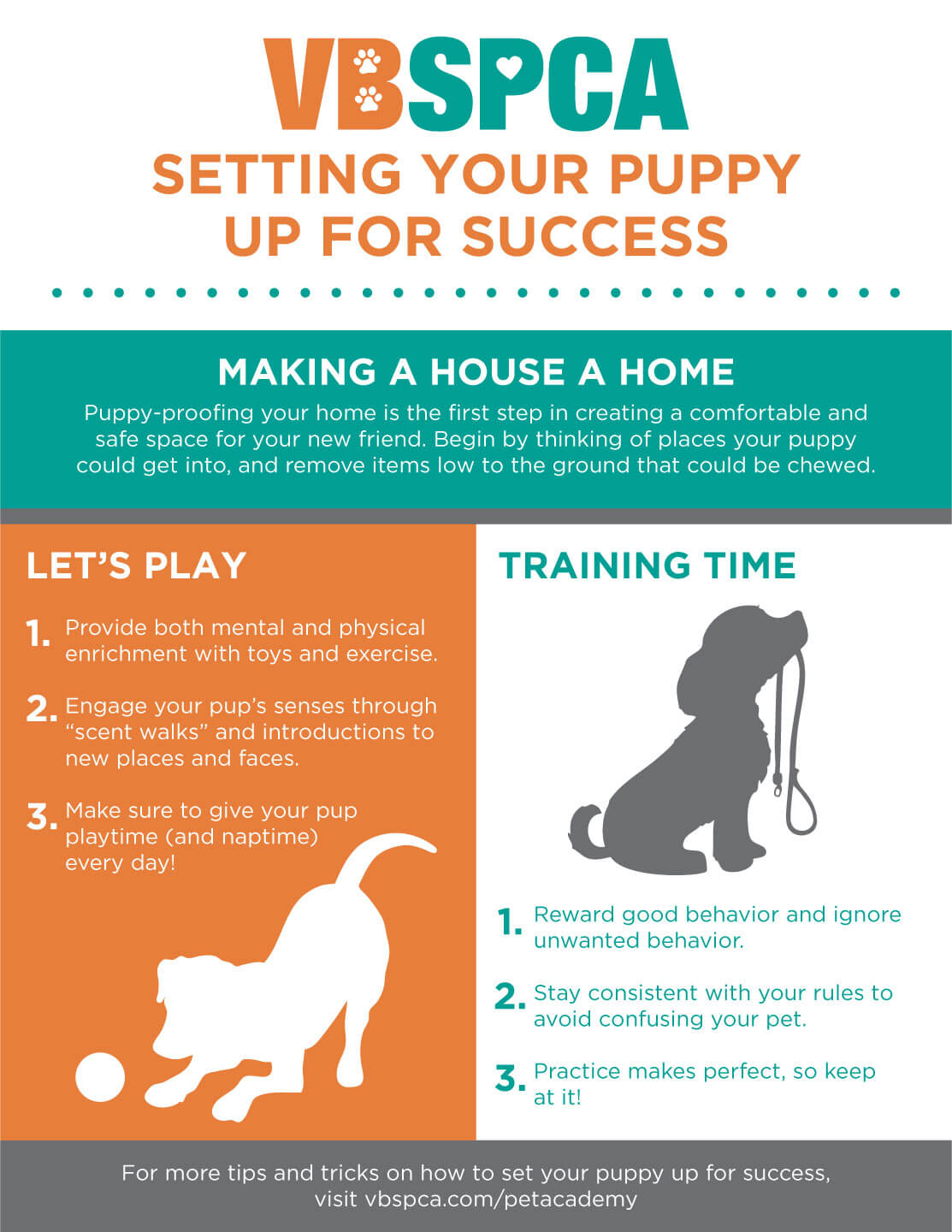
Credit: vbspca.com
Maintaining Training Progress
Maintaining training progress with your puppy is essential for lasting good behavior. Training does not end after initial lessons. It requires ongoing effort to keep your puppy learning and obedient. Consistency and patience help your puppy remember commands and behave well in different settings.
Regular Practice Sessions
Set short, daily training sessions for your puppy. Keep these sessions fun and focused. Practice commands in various places to reinforce learning. Frequent practice helps your puppy understand expectations better. Avoid long sessions that may tire your puppy or reduce attention.
Adjusting Techniques As Needed
Watch your puppy’s reactions during training. Change methods if your puppy seems confused or bored. Use simpler commands or more treats to motivate your puppy. Be flexible and patient to find what works best. Training styles should fit your puppy’s unique personality.
Rewarding Good Behavior
Always praise your puppy when it follows commands. Use treats, petting, or kind words as rewards. Positive reinforcement encourages your puppy to repeat good behavior. Avoid punishment, which can cause fear or confusion. Celebrate small successes to build your puppy’s confidence.

Credit: www.robcary.com
Frequently Asked Questions
How Early Should I Start Training My Puppy?
Start training your puppy as early as 8 weeks old. Early training helps build good habits and social skills. Consistency and patience during this period are key to effective learning and bonding with your puppy.
What Are The Best Puppy Training Techniques?
Use positive reinforcement like treats and praise. Keep sessions short and fun. Consistent commands and routines help puppies learn faster. Avoid punishment, which can harm trust and slow progress.
How Often Should I Train My Puppy Daily?
Train your puppy 2 to 3 times daily for 5 to 10 minutes each. Short, frequent sessions keep puppies engaged without overwhelming them. Regular training reinforces good behavior and quickens skill development.
How Can I Stop My Puppy From Biting?
Redirect biting to chew toys immediately. Praise calm behavior and avoid rough play. Consistent gentle correction teaches bite inhibition and encourages gentle interactions.
Conclusion
Training a puppy takes patience and time. Keep sessions short and fun. Praise good behavior often to encourage learning. Consistency helps your puppy understand rules clearly. Remember, every puppy learns at their own pace. Stay calm and positive throughout the process.
Small steps lead to big progress over time. Enjoy building a strong bond with your puppy. Training today means a happier dog tomorrow.


