

Grooming your dog can be a stressful experience—for both of you. If your furry friend gets anxious, restless, or scared during grooming, it can turn a simple task into a struggle.
But what if you could make grooming calm and even enjoyable? You’ll discover easy, effective ways to soothe your dog before and during grooming. By learning these simple techniques, you’ll create a peaceful routine that keeps your dog happy and your grooming sessions smooth.
Ready to transform grooming time into a stress-free moment? Let’s dive in.
Preparing Your Dog
Preparing your dog for grooming helps reduce stress and makes the process smoother. Calm dogs are easier to handle and stay relaxed during grooming. Start early by setting a peaceful environment and introducing grooming tools gently. This builds trust and helps your dog feel safe.
Choose A Quiet Space
Select a calm, quiet area for grooming sessions. Avoid busy or noisy places that can scare your dog. A familiar spot at home works best. Keep the space clean and free from distractions. This helps your dog focus and stay calm.
Gather All Grooming Tools
Collect all necessary grooming tools before you start. Brush, comb, nail clippers, and shampoo should be ready. Having everything at hand avoids interruptions. It also keeps your dog from getting anxious waiting for tools.
Familiarize Your Dog With Equipment
Show your dog each tool before using it. Let them sniff and explore items calmly. Turn on clippers or hairdryers away from your dog first. Gradual exposure lowers fear and builds comfort. Praise your dog for calm behavior around tools.
Building A Calm Environment
Creating a calm environment helps your dog feel safe during grooming. A peaceful space lowers stress and makes grooming easier. Small changes around the room can have a big impact on your dog’s mood.
Use Soothing Sounds
Soft music or gentle white noise calms many dogs. Sounds like nature or quiet classical music work well. Avoid loud or sudden noises that might scare your dog. Keep the volume low to create a relaxing atmosphere.
Maintain Comfortable Temperature
Dogs feel better in rooms that are not too hot or cold. Aim for a mild temperature around 68 to 72 degrees Fahrenheit. A comfortable temperature keeps your dog calm and focused. Avoid drafts or direct sunlight that may cause discomfort.
Minimize Sudden Movements
Move slowly and smoothly around your dog. Quick actions can startle and upset them. Calm body language helps build trust and reduces anxiety. Keep your hands gentle and predictable during grooming tasks.
Effective Handling Techniques
Calming a dog for grooming requires gentle and skilled handling. Dogs feel more secure when handled with care. Effective handling techniques reduce stress and make grooming easier. These methods help build trust between you and your dog. Understanding how to handle your dog calmly is key to a smooth grooming session.
Gentle Restraint Methods
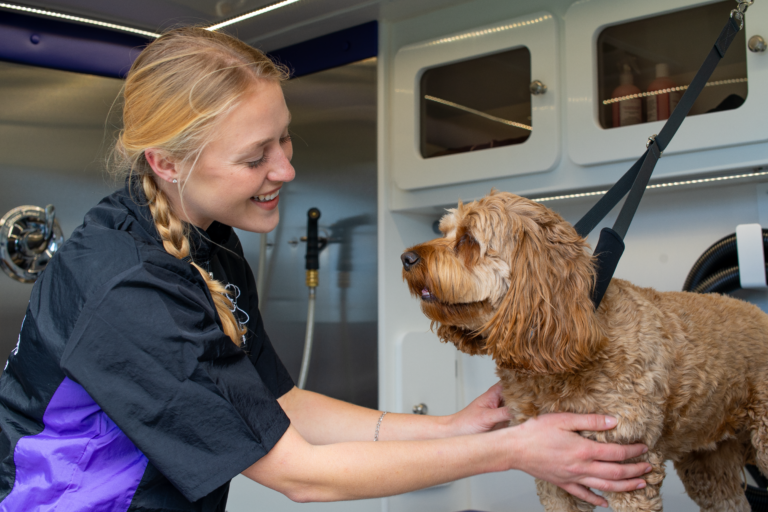
Use soft, steady holds to keep your dog still. Avoid tight grips that cause fear or pain. Support your dog’s body comfortably to prevent sudden movements. Use a grooming loop or leash gently around the neck. Let your dog feel safe, not trapped. Gentle restraint keeps your dog calm and cooperative.
Positive Touch And Praise
Touch your dog calmly and slowly during grooming. Use soft strokes on areas your dog enjoys. Give praise with a calm, happy voice. Reward your dog with treats after good behavior. Positive touch helps your dog relax and trust you. Praise encourages your dog to stay calm and patient.
Recognizing Stress Signals
Watch for signs of stress like yawning or lip licking. Panting, trembling, or avoiding eye contact also show discomfort. Recognizing these signals lets you pause and calm your dog. Take breaks if your dog looks scared or restless. Responding early to stress helps prevent fear and resistance. Knowing your dog’s signals improves grooming success.
Credit: wagntails.com
Desensitizing Your Dog
Desensitizing your dog helps reduce fear and stress during grooming. It makes grooming easier for both you and your dog. This process involves slowly getting your dog used to grooming activities. Patience and consistency are important for success.
Short, Frequent Grooming Sessions
Start with very short grooming sessions. Just a few minutes at a time. Repeat these often throughout the day or week. This helps your dog stay calm and relaxed. Over time, increase the session length a little bit.
Reward-based Training
Use treats and praise to reward calm behavior. Give a treat after each step of grooming. This creates a positive connection with grooming. Your dog learns that grooming leads to good things. Keep rewards small and given right away.
Gradual Introduction To Grooming Tools
Show your dog each grooming tool before use. Let your dog sniff and explore the tools. Turn on clippers or dryers briefly to get your dog used to sounds. Slowly bring tools closer during sessions. Avoid rushing this step to prevent fear.
Using Calming Aids
Using calming aids can help reduce your dog’s stress during grooming. These aids create a peaceful environment. They make grooming easier for both you and your dog. Choose the right calming aid based on your dog’s needs.
Aromatherapy Options
Aromatherapy uses scents to calm dogs. Lavender and chamomile oils work well. Use a diffuser or spray a small amount on a cloth. Avoid direct contact with your dog’s skin. The gentle scents help lower anxiety and calm your dog’s mind.
Calming Treats And Supplements
Calming treats contain natural ingredients like chamomile, valerian, or CBD. Give treats before grooming to help your dog relax. Supplements may include vitamins and minerals that support calmness. Always check the dosage and consult your vet for safety.
Thundershirts And Wraps
Thundershirts apply gentle pressure around your dog’s body. This pressure soothes and calms anxious dogs. Wraps work similarly by providing a feeling of security. Use these aids during grooming sessions to reduce stress and keep your dog calm.

Credit: www.amazon.com
When To Seek Professional Help
Knowing when to seek professional help is crucial for a calm grooming experience. Some dogs show signs of fear that owners cannot handle alone. These cases need expert care to keep the dog safe and stress-free.
Ignoring severe anxiety can make grooming worse. Professionals have the skills to manage stress and make grooming easier.
Signs Of Severe Anxiety
Watch for constant trembling or shaking. Dogs that hide or try to escape show fear. Excessive drooling and panting are other signs. Aggressive behavior like biting or snapping is serious. If these signs appear, professional help is needed.
Choosing A Grooming Specialist
Find groomers who understand anxious dogs. They use gentle techniques and calming tools. A good groomer works slowly and talks softly. Ask about their experience with nervous pets. A calm environment helps reduce stress greatly.
Veterinary Options For Stress Management
Vets can offer medicines to reduce anxiety. Some dogs benefit from calming supplements or sedatives. Consult a vet before using any medication. They can also suggest behavior training or therapy. Combining vet care with grooming support works best.

Credit: groomtepro.com
Frequently Asked Questions
How Can I Calm My Dog Before Grooming?
Create a calm environment with soft voices and gentle petting. Use treats to reward good behavior. Gradually introduce grooming tools to reduce fear and anxiety.
What Are The Best Calming Techniques For Grooming Dogs?
Use slow, soothing strokes and speak softly. Play calming music and offer chew toys. Practice short grooming sessions to build trust and comfort.
How Long Should Grooming Sessions Last For Anxious Dogs?
Keep sessions brief, around 5 to 10 minutes. Gradually increase time as your dog becomes more comfortable. Frequent short sessions reduce stress and improve cooperation.
Can Training Help Reduce Grooming Anxiety In Dogs?
Yes, training helps dogs associate grooming with positive experiences. Use treats and praise to reinforce calm behavior. Consistent training builds trust and reduces fear during grooming.
Conclusion
Calming a dog during grooming takes patience and gentle care. Speak softly and move slowly to keep your dog relaxed. Use treats and praise to build trust. Short, calm sessions work better than long ones. Watch your dog’s body language to know when to pause.
A calm dog makes grooming safer and easier for both of you. Keep practicing these steps, and grooming will become a positive experience. Simple actions can help your dog feel safe and happy every time.


