

Are you wondering when your playful puppy should start eating adult dog food? Making the switch at the right time is key to keeping your furry friend healthy and happy.
Feed them too early, and they might miss out on important nutrients. Wait too long, and you could be slowing down their growth. You’ll discover the signs to look for, expert tips to make the transition smooth, and how to choose the best food for your dog’s next stage of life.
Keep reading to make sure your puppy’s diet supports their bright, energetic future.
Puppy Growth Stages
Puppy growth happens in clear stages. Each stage shows changes in size, skills, and needs. Understanding these stages helps you know the best time to switch to adult dog food. This ensures your puppy stays healthy and strong.
From Newborn To Weaning
Newborn puppies rely fully on their mother’s milk. They cannot eat solid food yet. Around three to four weeks, puppies start tasting soft, mushy food. This stage is called weaning. Their bodies begin to adapt to new foods.
Juvenile Phase Milestones
From six weeks to six months, puppies grow very fast. They gain muscle and lose baby fat. Teeth change from baby to adult teeth. Energy levels increase. This phase needs high-quality puppy food with extra nutrients.
Signs Of Physical Maturity
Puppies show signs of physical maturity between nine months and two years. Their growth slows down. Bones and muscles become strong. Coat texture changes to adult form. When these signs appear, it is time to think about adult dog food.
Credit: paw-review.com
Nutritional Needs Of Puppies
Puppies need special care in their diet to grow healthy and strong. Their bodies develop fast, so they require the right food. Choosing the right food helps their bones, muscles, and brain develop well. Feeding the right nutrients supports their energy and immune system too.
Essential Nutrients For Growth
Puppies need protein to build muscles. Fat helps with energy and brain growth. Vitamins and minerals keep their bones strong. Calcium and phosphorus are important for healthy teeth and bones. DHA supports good brain and eye development.
Differences Between Puppy And Adult Food
Puppy food has more protein and fat than adult food. It has extra vitamins for growth. Adult food has fewer calories and less fat. Puppy food is softer and easier to chew. The balance of nutrients helps puppies grow fast and stay healthy.
Role Of Calories And Proteins
Puppies burn lots of energy playing and growing. They need more calories than adult dogs. Protein helps build and repair muscles. Too few calories or protein can slow growth. The right amount supports strong bones and a healthy coat.
When To Make The Switch
Knowing the right time to switch your puppy to adult dog food is important. The change should support healthy growth and keep your dog strong. Switching too early or too late can cause health problems. Watch your puppy closely and plan the change carefully.
Age Guidelines By Breed Size
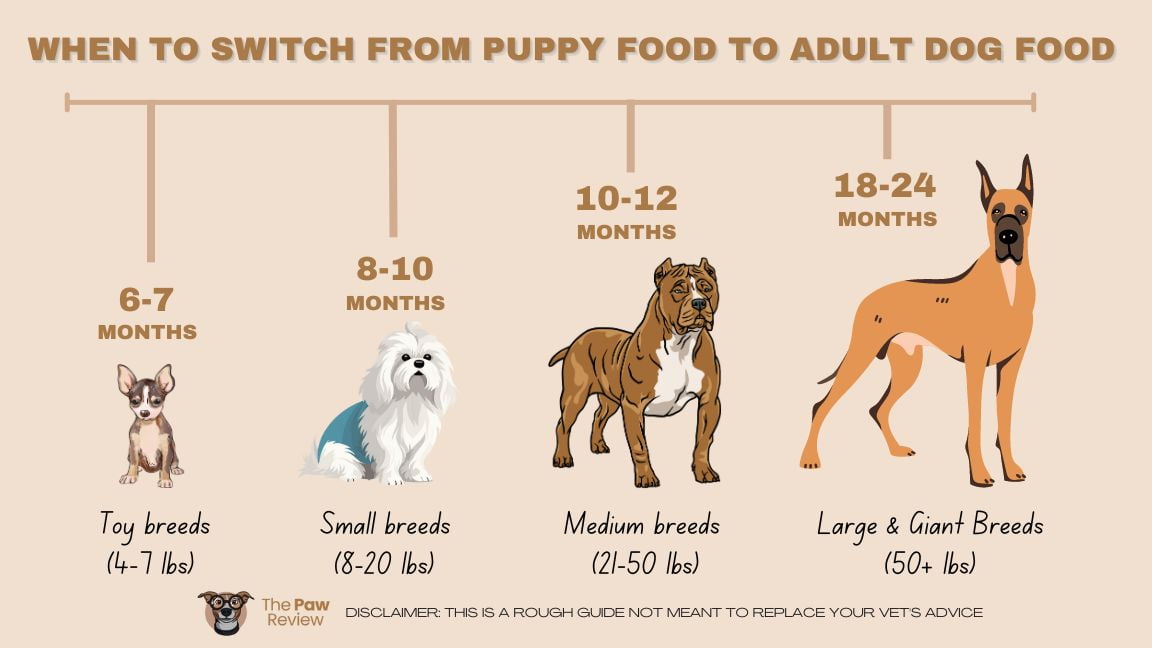
Small breeds grow faster than large breeds. Small dogs often switch to adult food around 9 to 12 months. Medium breeds may switch at about 12 months. Large and giant breeds take longer, around 12 to 24 months. Follow the age guide for your dog’s breed size. It helps ensure proper nutrition during growth.
Behavioral And Physical Indicators
Look for signs that your puppy is ready. Puppies may eat less or seem less active. Their growth rate will slow down. Teeth will be fully developed. Coat changes or increased muscle tone can show maturity. These signs help decide the right time to switch food.
Veterinarian Recommendations
Your vet can give the best advice. They know your puppy’s health and breed needs. Regular check-ups allow vets to track growth and development. Follow their advice on when and how to switch food. This ensures your puppy stays healthy and happy.
Credit: www.bluebuffalo.com
Transitioning Process
Switching your puppy from puppy food to adult dog food is an important step. This change must be done slowly to avoid upsetting your puppy’s stomach. The transition process helps your puppy adjust to new nutrients and tastes. A careful approach ensures your puppy stays healthy and happy during this time.
Gradual Food Mixing Techniques
Start by mixing a small amount of adult food with puppy food. Use about 25% adult food and 75% puppy food on the first day. Over the next week, slowly increase the adult food amount. By day seven, your puppy should eat only adult food. This slow mixing helps your puppy get used to new flavors and textures.
Managing Digestive Adjustments
Your puppy’s stomach may need time to adjust to adult food. Watch for signs like soft stools or gas. If these happen, slow the transition pace. Keep fresh water available to help digestion. A gentle diet change reduces the risk of digestive upset.
Monitoring Puppy’s Response
Observe your puppy’s energy and stool quality during the change. Healthy puppies remain active and have firm stools. If your puppy shows discomfort or diarrhea, pause the transition. Consult a vet if problems continue. Close monitoring keeps your puppy safe and comfortable.
Common Mistakes To Avoid
Changing your puppy’s food is an important step. Many pet owners make simple mistakes during this change. These errors can affect your puppy’s health and growth. Avoiding these common mistakes ensures a smooth transition to adult dog food.
Switching Too Early Or Too Late
Switching your puppy’s food too early can cause nutrition gaps. Puppies need special nutrients to grow properly. Switching too late can lead to excess calories and weight gain. Follow your vet’s advice on the right time to switch. Every dog grows at a different pace.
Ignoring Breed-specific Needs
Different breeds have different nutritional needs. Large breeds need food that supports bone growth. Small breeds need calorie-dense food for their fast metabolism. Using generic adult dog food may not fit your puppy’s breed. Choose food that matches your puppy’s size and breed requirements.
Overfeeding During Transition
Many owners feed too much during the food switch. Overfeeding can cause stomach upset and weight problems. Gradually mix adult food with puppy food over 7-10 days. Watch your puppy’s weight and energy levels carefully. Feeding the right amount helps keep your puppy healthy.

Credit: www.iams.com
Special Considerations
Switching your puppy to adult dog food needs careful thought. Each puppy is unique. Some need special care during this change. Understanding these special needs helps keep your puppy healthy and strong. Below are key points to consider for a smooth transition.
Puppies With Health Issues
Puppies with health problems need extra attention. Illnesses can affect their nutrient needs. A vet can guide the best food choices. Special diets may help manage these issues. Avoid sudden food changes to prevent stomach upset. Watch closely for any signs of discomfort.
Adjustments For Large And Giant Breeds
Large and giant breed puppies grow fast. They need food that supports bone and joint health. Adult food switch happens later, around 12 to 18 months. Use breed-specific formulas for balanced nutrition. Overfeeding can cause growth problems and joint strain. Follow vet advice for the right timing and portions.
Homemade Vs. Commercial Food Options
Homemade meals give control over ingredients. Fresh food can be healthy but needs balance. Essential nutrients must meet puppy requirements. Commercial foods are tested for complete nutrition. They save time and ensure safety. Choose high-quality brands with clear ingredient lists. Consult a vet before changing to homemade diets.
Frequently Asked Questions
When Should I Switch My Puppy To Adult Dog Food?
Most puppies can switch to adult dog food between 9 to 12 months old. Large breeds might switch later, around 12 to 18 months. Consult your vet for the best timing based on your puppy’s growth and breed.
What Signs Show My Puppy Is Ready For Adult Food?
Signs include slowed growth, less frequent feeding, and increased energy stability. Your vet can confirm readiness by assessing weight, size, and overall health.
Can I Switch To Adult Dog Food Too Early?
Switching too early can cause nutrient deficiencies and digestive issues. Puppies need puppy food for growth support. Always transition based on age and vet advice.
How Do I Transition My Puppy To Adult Food?
Gradually mix adult food with puppy food over 7 to 10 days. Increase adult food portion daily while decreasing puppy food to avoid stomach upset.
Conclusion
Puppies grow fast and need good nutrition to stay healthy. Switching to adult dog food at the right time helps their body develop well. Watch your puppy’s weight, teeth, and energy to know when to change food. Always choose quality food made for adult dogs.
Talk to your vet if you feel unsure about the switch. Taking care now means your dog stays strong and happy later. Small steps lead to big health benefits for your furry friend. Trust your instincts and give your puppy the best start.


