

Have you ever wondered what colors your dog actually sees when you toss them a brightly colored toy? Understanding your dog’s color vision can change the way you choose toys, making playtime more exciting and engaging for your furry friend.
If you want to pick the perfect toy that truly catches your dog’s eye, keep reading. This simple insight can help you connect better with your pet and make every game more fun for both of you.
Credit: www.pumpkin.care
Dog Vision Basics
Dogs see the world differently than humans. Their vision helps them understand their surroundings and find toys. Knowing how dogs see colors and shapes helps choose the right toys for them.
Dogs rely on other senses too, like smell and hearing. But vision plays a key role in how they play and explore. Let’s explore the basics of dog vision to learn more.
How Dogs See The World
Dogs see fewer colors than humans. Their eyes have special cells called cones and rods. Cones help see colors, while rods help see in low light.
Dogs have more rods than cones. This means they see better in the dark but with less color detail. Their world looks less bright and colorful.
Dogs also see movement very well. This helps them spot toys or animals quickly. Their eyes focus more on shapes and motion than on color.
Differences Between Human And Dog Vision
Humans have three types of cones for color vision. Dogs only have two types. This means dogs see fewer colors.
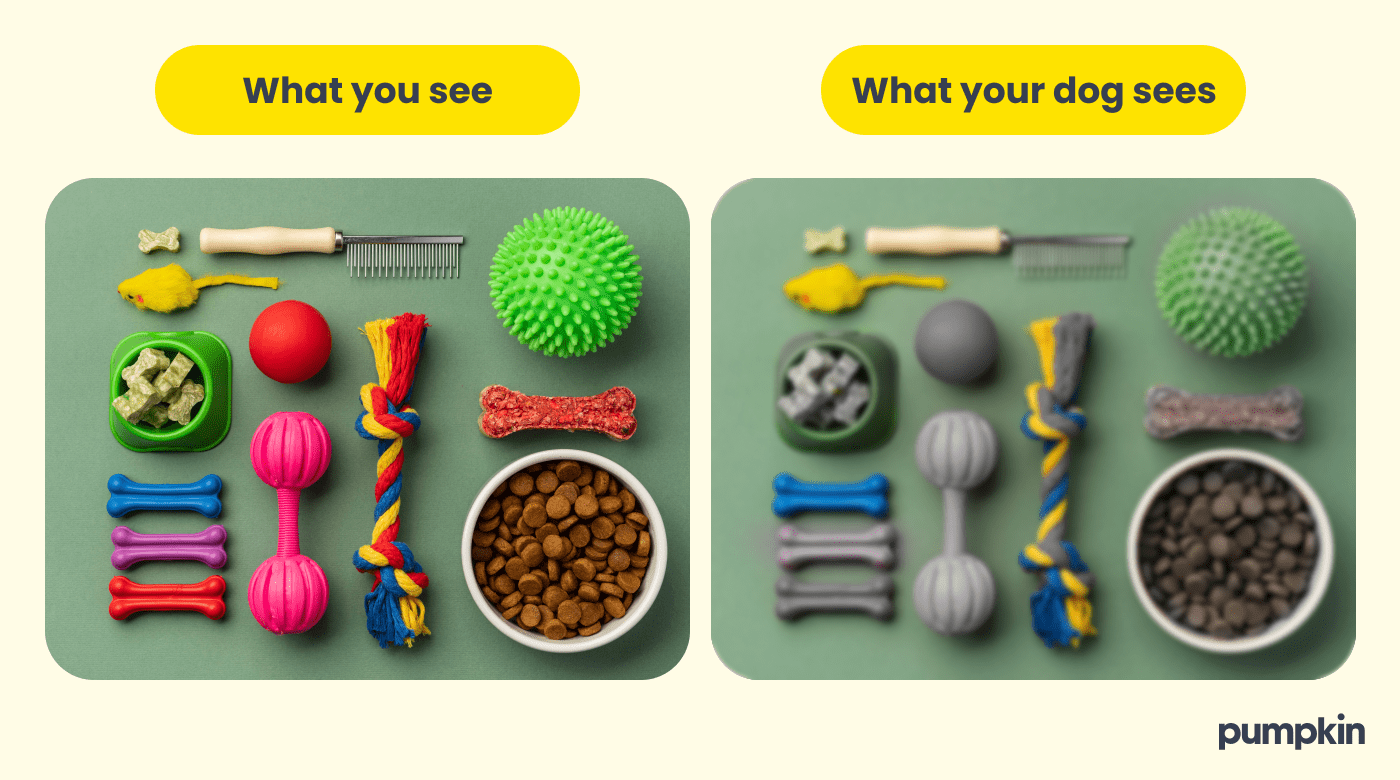
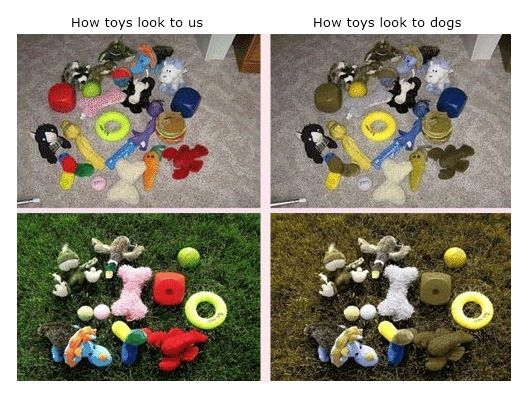
Dogs mainly see shades of blue and yellow. They cannot see red or green well. These colors look like gray or brown to them.
Dogs also have a wider field of view. They can see about 250 degrees around them. Humans see around 180 degrees.
Dogs have better night vision than humans. Their eyes have a special layer called the tapetum lucidum. It reflects light and helps them see in the dark.
Credit: www.canadavetexpress.com
Colors Dogs Can Detect
Dogs do not see colors the way humans do. Their vision is different because their eyes have fewer color receptors. This means they can detect some colors but not all. Understanding the colors dogs can see helps in choosing toys that catch their attention.
Choosing the right toy color makes playtime more fun for dogs. It also helps keep them interested and engaged.
Visible Spectrum For Dogs
Dogs see mainly in shades of blue and yellow. Their eyes have two types of color receptors. Humans have three types, which is why we see more colors. Dogs cannot see red, green, or orange well. These colors appear as gray or brown to them. The visible spectrum for dogs is limited but enough for daily activities.
Colors That Stand Out To Dogs
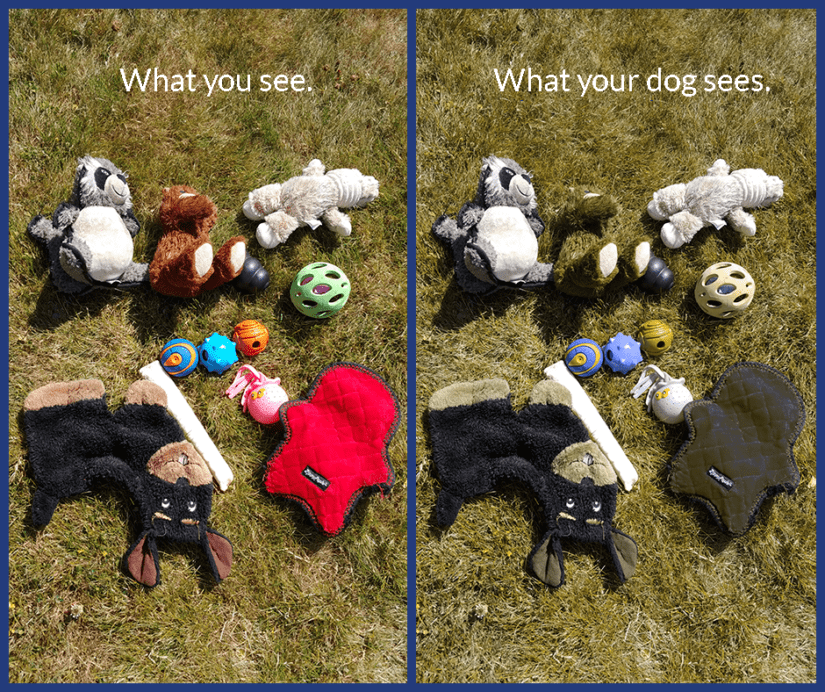
Blue and yellow toys stand out the most to dogs. These colors are easier for them to spot. Bright blue toys can catch a dog’s eye in green grass. Yellow toys also appear clear against many backgrounds. Red or green toys might blend in and be hard to find. Using blue or yellow toys can improve playtime and training sessions.
Colors Dogs Struggle With
Dogs see colors differently than humans. Their vision is similar to red-green color blindness in people. This means some colors look very alike or dull. Understanding these colors helps choose the right toys for dogs. It also explains why some toys do not attract dogs as much as others.
Common Misunderstood Colors
Dogs struggle to see red and green clearly. These colors often look like shades of brown or gray to them. Toys in red or green may seem dull or blend into the background. Blue and yellow are easier for dogs to see. Bright blue or yellow toys can catch a dog’s attention better.
Why Some Colors Appear Similar
Dogs have fewer color receptors in their eyes. This limits their ability to distinguish certain colors. Red and green fall into this category. Both colors may appear as a single shade to dogs. This makes red and green toys look alike. Choosing colors dogs see well improves playtime fun and interaction.
Choosing Toys For Dogs
Choosing the right toys for dogs helps keep them happy and active. Dogs enjoy toys that catch their attention and are easy to find. Picking toys that show well in their vision makes playtime better. Knowing what colors dogs see best helps select toys they will love.
Best Colors For Visibility
Dogs see colors differently than humans. They see blues and yellows clearly. Red and green look like gray to dogs. Toys in blue or yellow stand out more. These colors help dogs spot toys quickly outside or indoors. Bright blue or yellow toys reduce lost playthings.
Materials And Shapes That Attract Dogs
Dogs like toys with different textures. Soft rubber, rope, and plush materials feel good to chew. Shapes that move or bounce catch their eye. Balls, rings, and tug toys keep dogs busy. Toys that are easy to carry and chew are favorites. Safe, durable materials last longer and keep dogs healthy.
Benefits Of Color-optimized Toys
Choosing toys in colors dogs can see improves their play experience. Dogs see colors differently than humans. They mainly notice blue and yellow shades.
Toys in these colors catch a dog’s attention faster. Bright, visible toys encourage dogs to stay active and interested. This simple change can make playtime more fun and rewarding.
Enhancing Playtime Engagement
Toys in blue and yellow stand out in a dog’s eyes. This makes fetching and chasing games easier to follow. Dogs lose less interest and play longer with visible toys.
Clear colors reduce frustration during play. Dogs can spot their toys quickly. This leads to more enjoyable and active play sessions.
Supporting Training And Mental Stimulation
Color-optimized toys help dogs focus during training. Dogs recognize colored toys faster, aiding commands like fetch or drop. This boosts learning speed and memory.
Using visible toys keeps dogs mentally sharp. Training with clear colors challenges their minds. Mental exercise is as important as physical activity for dogs.
Scientific Studies On Canine Color Perception
Scientific studies on canine color perception reveal fascinating insights into how dogs see the world. Researchers have used various tests to understand the colors dogs can distinguish. These studies show that dogs do not see colors the same way humans do. Their color vision is limited but still functional for everyday life.
Key Research Findings
Scientists discovered dogs have two types of color receptors, unlike humans who have three. This means dogs see fewer colors. They mostly see shades of blue and yellow. Red and green colors appear as gray or brown to dogs. This type of vision is called dichromatic.
Studies also found dogs rely more on brightness and movement than color. Their eyes are better adapted to low light and detecting motion. This helps them in hunting and navigating environments.
Implications For Pet Owners
Knowing what colors dogs see helps pet owners choose better toys. Blue and yellow toys stand out more to dogs. Red or green toys may be less visible and less interesting. Selecting the right colors improves playtime and engagement.
Understanding canine color perception can also improve training tools. Using colors dogs see clearly helps them learn commands faster. Bright, visible objects attract their attention better than dull ones.
Credit: spca.bc.ca
Frequently Asked Questions
What Colors Do Dogs See Best In Toys?
Dogs see blue and yellow colors best. They have difficulty distinguishing red and green. Choosing blue or yellow toys makes them easier for dogs to spot.
Can Dogs See Red Or Green Toys Clearly?
No, dogs cannot see red or green clearly. These colors appear as shades of gray or brown to them. Avoid red or green toys for better visibility.
Why Is Toy Color Important For Dogs?
Toy color helps dogs find and enjoy playtime. Bright colors like blue and yellow stand out to dogs. This improves their engagement and reduces frustration.
How Do Dogs’ Eyes Perceive Color Differently?
Dogs have fewer color receptors than humans. They see the world mainly in blue and yellow hues. This limited palette affects how they view toys and objects.
Conclusion
Dogs see colors differently than humans. They notice blues and yellows best. Red and green toys look dull to them. Choosing toys in blue or yellow helps dogs find them easily. Bright colors keep playtime fun and engaging. Remember, the right toy color can make your dog happier.
Simple changes can improve your pet’s play experience. Keep your dog’s vision in mind when buying toys. This small effort shows you care. Playtime becomes better for both you and your dog.


