

Choosing the right dog breed isn’t just about picking the cutest puppy. It’s about finding a furry friend who fits your lifestyle, personality, and home.
Imagine having a dog that matches your energy, needs little grooming, or loves outdoor adventures just like you do. When you get this right, every day with your dog becomes easier and more joyful. Keep reading, and you’ll discover simple steps to find the perfect dog breed that feels like it was made just for you.
Credit: www.harmonyanimalhospital.net
Assess Your Lifestyle
Choosing the right dog breed starts with knowing your lifestyle well. Dogs need care and attention that fit your daily routine. Matching a dog’s needs with your way of living helps both of you stay happy. Think about your activity, space, and time before picking a breed.
Evaluate Your Activity Level
Some dogs need lots of exercise and play. Others prefer calm walks or quiet time. Your energy and activity affect which dog suits you best. Active people may enjoy breeds that love running and hiking. Less active people might choose dogs that like short walks and rest.
Consider Your Living Space
Big dogs need room to move and play. Small dogs adapt well to apartments or small homes. Think about your house size and yard. Space limits or expands your dog choices. A large breed in a tiny flat can feel stressed. Choose a breed that fits your home comfortably.
Account For Time Commitment
Dogs need daily care, feeding, and attention. Puppies require more time for training and socializing. Some breeds have health needs needing regular vet visits. Make sure you have time for walks and play. Busy schedules may fit dogs needing less daily care.
Determine Size And Energy Needs
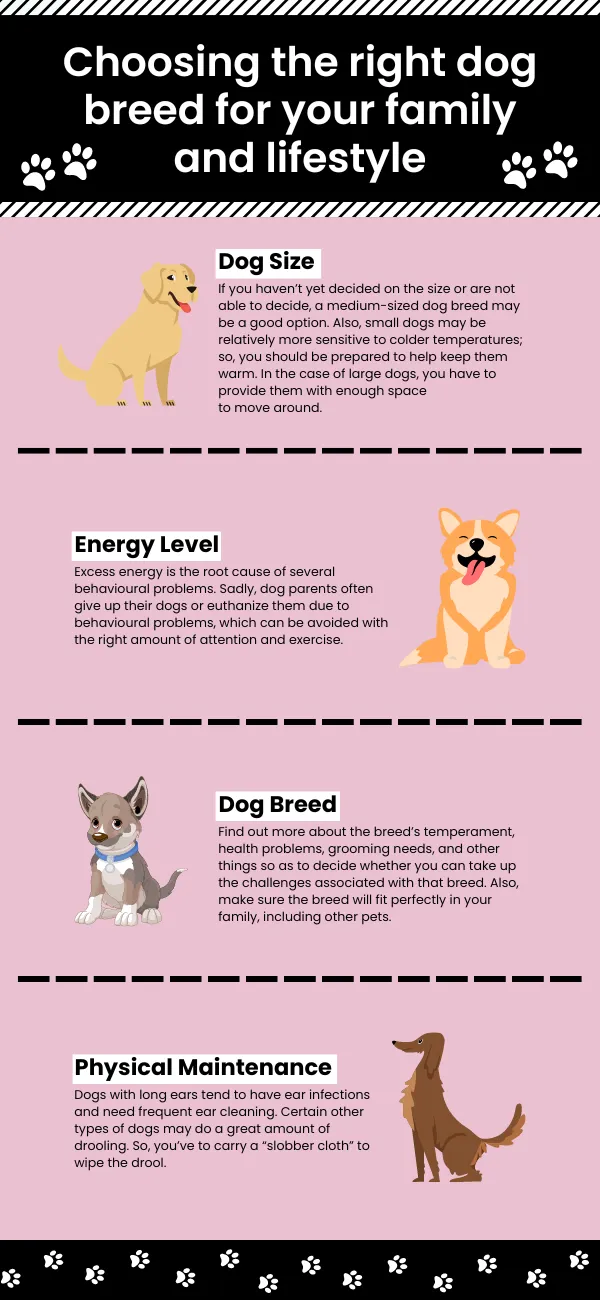
Choosing the right dog breed starts with understanding size and energy needs. Size affects space requirements and daily care. Energy levels impact how much exercise and playtime your dog needs. Matching these factors with your lifestyle helps create a happy home for both of you.
Small Vs. Large Breeds
Small dogs fit well in apartments and small homes. They need less space but can still be very active. Large breeds require more room and can be strong. They need regular exercise to stay healthy. Think about your living space and daily routine before choosing.
High Vs. Low Energy Dogs
High energy dogs need lots of play and exercise every day. They enjoy running, playing, and exploring. Low energy dogs are calm and need less exercise. They prefer relaxing and short walks. Choose a dog that matches your activity level to avoid stress.
Allergies And Grooming
Choosing the right dog breed means thinking about allergies and grooming needs. Some dogs cause less allergy problems. Others need more time for brushing and cleaning. Knowing these details helps pick a dog that fits your life and health.
Hypoallergenic Options
Some dog breeds shed less and spread fewer allergens. These are called hypoallergenic dogs. They might help people with allergies feel better. Breeds like Poodles, Bichon Frises, and Maltese often fit this group. No dog is 100% allergy-free. But these breeds cause fewer reactions for many people.
Grooming Requirements
Every breed has different grooming needs. Some dogs need daily brushing to stop mats. Others need regular haircuts or baths. Long-haired dogs often need more care than short-haired ones. Grooming takes time and effort. Choose a breed with grooming needs that match your schedule and skills.
Temperament And Behavior
Temperament and behavior are key factors in choosing the right dog breed. Each breed has unique traits that affect how they act around people and other animals. Understanding these traits helps you find a dog that fits your lifestyle. Some dogs are calm and friendly, while others are alert and protective.
Family-friendly Breeds
Family-friendly dogs are gentle and patient with children. They enjoy being part of the family and love attention. Breeds like Labrador Retrievers and Golden Retrievers are known for their kind nature. These dogs usually get along well with other pets. They make great playmates and protectors for kids. Their calm and friendly behavior makes them perfect for homes with young children.
Guard Dogs And Watchdogs
Guard dogs and watchdogs are alert and protective. They watch over your home and family. Breeds like German Shepherds and Rottweilers have strong guarding instincts. These dogs are loyal and brave, ready to warn you of danger. They need proper training to balance protection with calm behavior. Their natural alertness makes them excellent protectors.
Companion And Therapy Dogs
Companion dogs offer comfort and emotional support. They are calm, gentle, and loving. Breeds such as Cavalier King Charles Spaniels and Poodles are popular therapy dogs. These dogs help reduce stress and anxiety. Their friendly nature makes them great for seniors and people with special needs. They enjoy quiet environments and close bonds with their owners.
Health And Lifespan Considerations
Choosing a dog breed means thinking about health and lifespan. Some breeds have more health problems than others. Knowing about these issues helps you care better for your dog. It also prepares you for the time you will share with your pet.
Common Breed Health Issues
Each breed has unique health risks. For example, large dogs may suffer from hip dysplasia. Small breeds often face dental problems. Some breeds have heart or breathing issues. Researching breed health helps prevent surprises. Regular vet visits catch problems early.
Expected Lifespan
Dog lifespans vary widely by breed. Small dogs usually live 12 to 16 years. Large breeds often live 8 to 12 years. Lifespan depends on genetics and care. Knowing this helps set realistic expectations. A longer lifespan means more time to bond.

Credit: www.amazon.com
Research And Meet Breeds
Choosing the right dog breed starts with research and meeting different breeds. This step helps you understand each breed’s needs and personality. It also shows how well a breed fits your lifestyle. Spending time with dogs gives a real feel of what to expect.
Visiting Shelters And Breeders
Visit local shelters to meet many breeds and mixes. Shelters often have dogs of all sizes and ages. You can see how dogs behave and interact with people. Meeting dogs in person helps you notice their energy and temperament.
Breeders can provide detailed information about specific breeds. They usually know each dog’s health and background. Talking to breeders helps you learn about breed traits and care needs. Always choose responsible breeders who care about their dogs’ well-being.
Talking To Owners And Experts
Speak with current dog owners about their experiences. Owners share honest stories about daily life with their dogs. They can tell you what challenges and joys to expect.
Experts like trainers and veterinarians offer practical advice. They know breed behavior and health concerns. Asking experts helps you avoid surprises after bringing a dog home. Their knowledge guides you to a breed that matches your home and habits.
Prepare For Training And Socialization
Preparing for training and socialization is key when choosing a dog breed. Every dog learns in its own way and at its own pace. Knowing what to expect helps create a happy home for you and your pet. Training builds good habits. Socialization helps dogs feel safe around people and other animals.
Training Needs By Breed
Different breeds have different training needs. Some dogs learn commands quickly. Others need more time and patience. Working breeds like Border Collies need lots of mental challenges. Toy breeds may be stubborn and need gentle guidance. Large breeds often require early training to manage their strength. Match training needs to your lifestyle and time availability. This makes training easier and more effective.
Socialization Tips
Socialization means exposing your dog to new sights, sounds, and people. Start socialization early, during puppyhood if possible. Introduce your dog to different environments slowly. Use positive rewards like treats or praise. Avoid forcing your dog into scary situations. Regular socialization prevents fear and aggression later. Meet other dogs in calm settings. Encourage friendly behavior with patience and kindness.
Credit: www.bluediamondsgr.org
Frequently Asked Questions
What Factors Should I Consider When Choosing A Dog Breed?
Consider your lifestyle, living space, activity level, and allergies. Also, think about the dog’s size, temperament, and grooming needs. Matching these factors ensures a happy life for you and your dog.
How Does A Dog’s Energy Level Affect Breed Choice?
Dogs with high energy need more exercise and mental stimulation. Low-energy breeds suit relaxed lifestyles or smaller living spaces. Choose a breed that matches your daily activity to maintain harmony.
Are Some Dog Breeds Better For Families With Children?
Yes, breeds like Labrador Retrievers and Beagles are gentle and patient. They usually adapt well to children’s energy and behavior. Always supervise interactions and teach kids how to respect dogs.
How Important Is Grooming In Selecting A Dog Breed?
Grooming varies widely; some breeds need regular brushing and trimming. Others require minimal care. Consider your time and willingness to groom when choosing a breed to avoid future challenges.
Conclusion
Choosing the right dog breed takes thought and care. Think about your home, time, and activity level. Some dogs need lots of exercise. Others prefer quiet and calm. Match a breed to your lifestyle for happiness. A good fit makes life easier for both.
Enjoy the bond that grows with the right dog. Take your time. Find a friend who fits just right.


