

You love your dog and want to give them the best care possible. One important decision is knowing when to switch your dog from puppy food to adult food.
It’s not always easy to tell the right time. Feeding your dog the wrong food can affect their health and energy. But don’t worry—you’re about to learn simple signs and expert tips that will help you make the best choice for your furry friend.
Keep reading to discover exactly when and how to make this important change.
Puppy Growth Stages
Puppy growth stages mark important changes in your dog’s life. These stages help decide the best time to switch from puppy food to adult dog food. Each stage has unique needs for nutrition and energy. Understanding these stages supports your dog’s health and development. It also guides you to choose the right food at the right time.
Rapid Growth Phase
The rapid growth phase happens in the first few months. Puppies grow very fast during this time. Their bones, muscles, and organs develop quickly. They need food rich in protein and calories. This supports strong bones and healthy muscles. Puppy food has extra nutrients to meet these needs. Feeding adult food now can slow their growth.
Development Milestones
Development milestones vary by breed and size. Small breeds mature faster than large breeds. Most puppies reach adult size between 9 and 12 months. During this time, growth slows and energy needs change. Switching to adult food supports steady health. Watch for signs like adult teeth and steady weight. These clues help decide the right time to change food.
Factors Influencing Food Transition
Changing your dog’s food from puppy to adult is important for their health. This change depends on several key factors. Understanding these helps pick the right time to switch. Each dog is different, so one size does not fit all. Consider breed size and your dog’s health and activity level.
Breed Size Differences
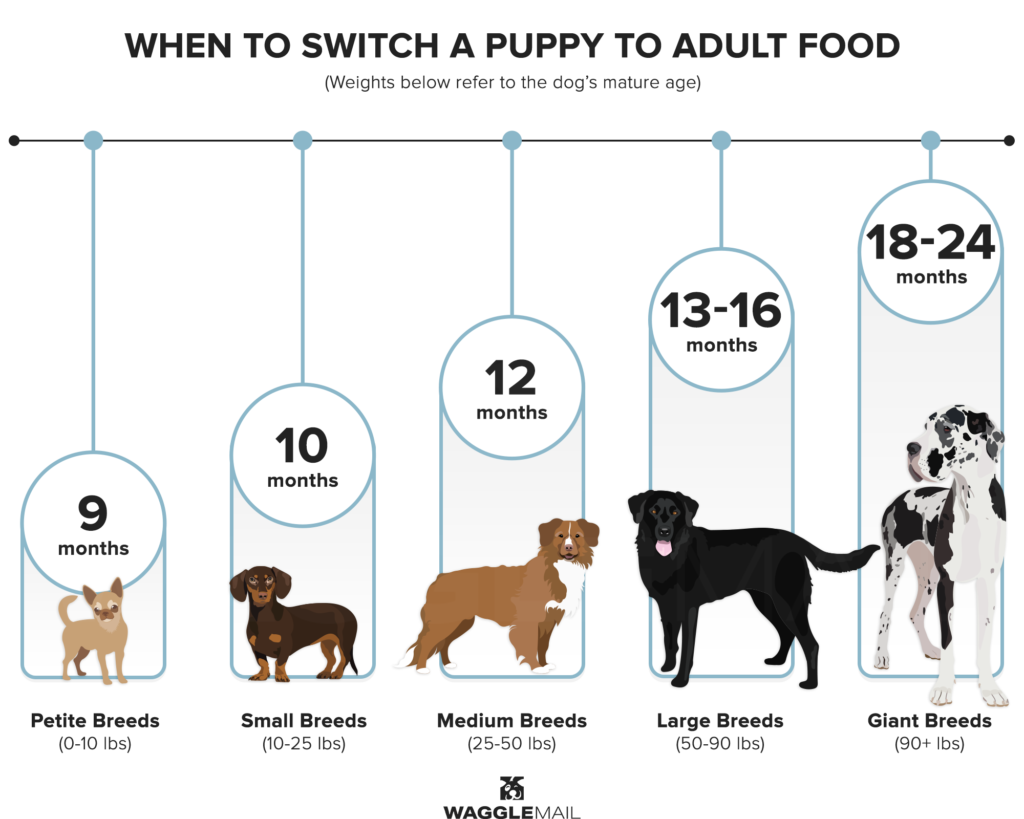
Small and large breeds grow at different speeds. Small breeds reach adulthood faster. They may switch to adult food around 9 to 12 months. Large breeds take longer to mature. They might need puppy food for 12 to 18 months. Large breed puppies need special nutrients for bone growth. Switching too early can cause health problems. Check your dog’s breed size to decide the right time.
Health And Activity Levels
Active dogs burn more energy and need more nutrients. Less active dogs require fewer calories. Dogs with health issues might need special diets. Consult your vet about food changes if your dog is sick. Monitor your dog’s weight and energy during the transition. Adjust food type and amount based on their health and activity. This helps keep your dog strong and healthy.
Signs Your Dog Is Ready
Knowing when to switch your dog to adult food is important. Dogs grow at different rates, so watch for signs that show they are ready. These signs help you feed your dog the right nutrition at the right time. Pay attention to physical and behavior changes to guide your choice.
Physical Indicators
Your dog’s body changes as it grows. Look for a full set of adult teeth. Puppies usually get all their adult teeth by six months old. Their size also matters. When your dog reaches about 80% of its expected adult weight, it is likely ready for adult food. Coat texture may change too. A shinier, thicker coat shows maturity. Energy levels might drop a bit as growth slows down.
Behavioral Changes
Watch how your dog acts. Puppies often have high energy and are very playful. When they start calming down, it shows growth. Appetite may change, with your dog eating more adult portions. They also become less curious about chewing everything. Sleep patterns shift too. Adult dogs tend to rest longer during the day. These behavior signs tell you it is time to switch food.
Timing The Switch
Knowing the right moment to switch your dog to adult food helps keep them healthy. Puppies need special nutrition to grow strong. Adult dogs need food that supports their energy and health. Changing food too soon or too late can cause problems. Watch your dog’s age and size to choose the best time.
Recommended Age Ranges
Most dogs switch to adult food between 9 and 12 months old. Small breeds may change earlier, around 9 months. Large breeds often wait longer, about 12 to 18 months. This delay helps support their slower growth. Follow your vet’s advice for your dog’s breed and size. Age is a useful guide for timing the switch.
Gradual Transition Process
Switch your dog’s food slowly over 7 to 10 days. Start by mixing a small amount of adult food with puppy food. Increase the adult food amount each day. This helps your dog’s stomach adjust to the new food. Watch for any signs of upset like vomiting or diarrhea. A slow change prevents digestive problems and stress.
Choosing The Right Adult Food
Choosing the right adult food for your dog is important for their health. Adult dog food supports energy, growth, and overall well-being. It must meet your dog’s specific needs based on size, breed, and activity. Selecting the right food helps your dog stay healthy and happy as they age.
Nutritional Needs
Adult dogs need balanced nutrients for energy and body repair. Protein supports muscles, while fats provide energy. Carbohydrates help with digestion and energy release. Vitamins and minerals keep the immune system strong. Choose food with high-quality ingredients that match your dog’s size and activity.
Special Dietary Considerations
Some dogs need special diets due to allergies or health issues. Sensitive stomachs might require gentle, easily digestible food. Dogs with joint problems benefit from added supplements like glucosamine. Weight management formulas help overweight dogs stay fit. Talk to your vet about your dog’s special needs before switching foods.

Credit: www.scala-santa.com
Common Mistakes To Avoid
Switching your dog to adult food is an important step. Mistakes in this process can affect your dog’s health. Knowing what to avoid helps ensure a smooth transition. This section highlights common errors to watch for.
Switching Too Early
Many pet owners change food too soon. Puppies need specific nutrients to grow strong. Adult food lacks these essentials. Early switch can cause poor growth and health issues. Wait until your vet says your dog is ready. Typically, this is around one year old for most breeds.
Ignoring Breed-specific Needs
Different dog breeds have unique dietary needs. Large breeds may need food with joint support. Small breeds might require more calories in smaller portions. Using a generic adult food may not meet these needs. Check your dog’s breed requirements before switching. Tailored nutrition helps keep your dog healthy and active.
Monitoring After The Switch
Switching your dog to adult food is a big step. Monitoring your dog after the change is very important. It helps ensure your dog stays healthy and happy. Watch your dog closely during the first few weeks. This time is key to spotting any issues early.
Tracking Health And Energy
Keep an eye on your dog’s weight. Sudden weight loss or gain needs attention. Check your dog’s coat and skin for shine and smoothness. Dull fur or dry skin can signal problems. Notice your dog’s energy level every day. More tiredness or hyperactivity may mean the diet is not right. Look at your dog’s digestion. Soft stools or diarrhea could be a sign of poor food tolerance.
Adjusting Diet As Needed
Adjust the amount of food based on your dog’s needs. Some dogs need more or less than the package suggests. Try mixing the adult food with the old food at first. Gradually increase the adult food portion over two weeks. If your dog shows signs of discomfort, slow down the transition. Consult your vet if problems persist. Sometimes, a different adult formula may suit your dog better.
Credit: greensafaris.com
Credit: www.scala-santa.com
Frequently Asked Questions
When Is The Right Age To Switch Dog Food?
Most dogs should switch to adult food between 12 and 18 months. Large breeds may need adult food later, around 18 to 24 months. Consult your vet for breed-specific guidance to ensure optimal growth and nutrition during this transition.
How To Transition Dog To Adult Food Safely?
Transition gradually over 7 to 10 days, mixing increasing amounts of adult food with puppy food. This helps prevent digestive upset. Monitor your dog’s health and adjust the ratio daily until fully switched to adult food.
What Are Signs Dog Needs Adult Food Now?
Signs include slowed growth, decreased energy, and less frequent weight gain. If your dog’s teeth are fully developed and they are no longer a puppy, it’s time to switch. Always check with your vet for confirmation.
Can Switching Dog Food Too Early Harm Health?
Yes, switching too early can cause nutrient deficiencies and digestive issues. Puppies need specific nutrients for growth that adult food lacks. Wait until your dog reaches the recommended age or vet advice before switching.
Conclusion
Switching your dog to adult food is an important step. Watch for signs like age and growth changes. Choose food that fits their size and energy needs. Keep an eye on their health during the change. Consult your vet to make the best choice.
A smooth switch helps your dog stay happy and healthy. Remember, every dog is different. Timing and food quality matter most for their wellbeing. Take your time and follow these tips for success.


