

Knowing exactly when to switch your dog from puppy food to adult food can feel confusing. You want to make sure your furry friend gets the right nutrition at the right time to stay healthy and happy.
If you change their diet too early or too late, it could affect their growth and energy. You’ll discover simple signs and expert tips to help you decide the perfect moment to make the switch. Keep reading to ensure your dog’s diet supports their best life every step of the way.
Credit: www.fredmeyer.com
Puppy Growth Stages
Puppy growth is a fast and exciting journey. It shapes how and when to change their food. Understanding these stages helps you give the right nutrition at the right time. This makes sure your puppy grows healthy and strong.
Each stage has special needs. Puppies move from drinking milk to eating solid food. Their bodies and teeth develop quickly. Knowing these changes guides you on when to start adult dog food.
From Newborn To Weaning
Puppies rely fully on their mother’s milk at birth. Milk gives all the nutrients needed for early life. They nurse often during the first few weeks. Their immune system is still weak and developing.
Weaning usually starts around 3 to 4 weeks old. This is when puppies begin to eat soft, solid food. Milk remains important but becomes less frequent. The transition must be gentle and slow.
Transition To Solid Food
At about 4 weeks, puppies try soft, mushy food. This helps their teeth and digestion get used to solid meals. Start with puppy-specific food mixed with water or puppy formula. Gradually reduce the liquid as they grow.
By 7 to 8 weeks, puppies should eat solid food regularly. They become less dependent on milk. This stage is crucial for energy and growth. Solid food should be rich in protein and fats.
Key Growth Milestones
Puppies grow fastest in the first six months. Their weight and size increase rapidly. Teeth change from baby to adult teeth during this time. Energy needs are higher than adult dogs.
Between 6 and 12 months, growth slows but continues. Most dogs are ready to switch to adult food near one year. Large breeds may need longer puppy food periods. Watch your puppy’s size and health closely.

Credit: www.catsharks.org
Signs Your Dog Is Ready
Knowing when to switch your dog to adult food is important. Puppies grow fast, and their diet needs change. Watch for clear signs that your dog is ready for adult food. These signs come from their body, behavior, and breed type.
Physical Development Indicators
One key sign is your dog’s size. Puppies reach near their adult height between 9 and 12 months. Their baby teeth fall out, and adult teeth come in strong. Muscle tone improves, and their body looks less round. Coat quality also changes to a shinier, thicker texture.
Behavioral Changes
Adult dogs eat less often but more at each meal. Puppies may lose some of their high energy bursts. They begin to settle down and rest longer. Chewing on everything decreases as teething ends. Your dog may show more focus and calmness during play.
Breed And Size Considerations
Small breeds mature faster, often ready by 9 months. Large breeds grow slower and may need puppy food until 12 to 18 months. Giant breeds can take even longer to mature fully. Check breed-specific guidelines to time the switch well. Feeding adult food too early or late can affect health.
Choosing The Right Time
Choosing the right time to switch your dog to adult food is important. Feeding adult food too early or too late can affect their health. Watch your dog’s growth and behavior. These clues help decide the best time for the change.
Age Guidelines By Breed Size
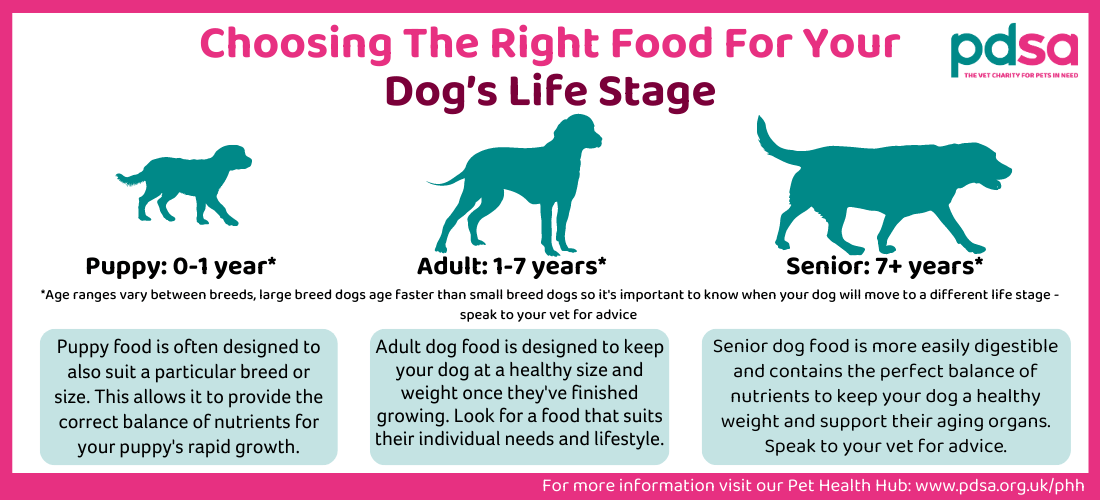
Small breeds grow fast and mature earlier. They usually switch to adult food around 9 to 12 months. Medium breeds need about 12 months to grow fully. Large and giant breeds take longer. They may need puppy food up to 18 or 24 months.
Nutritional Needs Shift
Puppies need extra nutrients for growth. Protein and fat levels are higher in puppy food. Adult dogs need fewer calories to avoid weight gain. Nutrients balance changes to support maintenance, not growth. Switching food matches these changing needs well.
Veterinarian Recommendations
Your vet knows your dog’s health best. They can suggest the perfect time to switch food. Regular check-ups help track growth and weight. Vets may recommend special diets for some dogs. Always ask your vet before changing food.
Credit: www.pdsa.org.uk
Making The Switch Smooth
Switching your dog from puppy food to adult food is an important step. A smooth transition helps your dog adjust well. Sudden changes can upset their stomach or make them refuse food. Taking time and care makes the switch easier and safer. This section offers tips to change your dog’s diet smoothly.
Gradual Food Transition Tips
Start by mixing a small amount of adult food with puppy food. Increase adult food slowly over 7 to 10 days. Watch your dog’s eating habits closely during this time. Keep the portions consistent to avoid hunger or overeating. Use fresh water and feed at the same times daily.
Monitoring Digestive Response
Check your dog’s stool for changes in color or consistency. Look for signs of diarrhea or constipation. Observe if your dog shows bloating or gas. If problems appear, slow down the transition. Consult a vet if digestive issues last more than a few days.
Avoiding Common Feeding Mistakes
Don’t switch foods suddenly or completely at once. Avoid mixing different brands or flavors quickly. Skip feeding human food during the transition. Avoid overfeeding to prevent weight gain. Stick to a feeding schedule to build good habits.
Adult Food Benefits
Switching your dog to adult food is important for their health. Adult food meets the specific needs of grown dogs. It helps keep them strong and active. Feeding the right food supports their overall well-being. Here are some key benefits of adult dog food.
Balanced Nutrition For Adults
Adult dog food offers the right mix of nutrients. It contains proteins, fats, vitamins, and minerals in proper amounts. These nutrients help maintain muscle and support body functions. Balanced nutrition also boosts the immune system. It keeps your dog healthy and less prone to illness.
Supporting Energy Levels
Adult foods provide energy suited for a grown dog’s lifestyle. The right calories help them stay active without gaining excess weight. This energy helps your dog play, walk, and enjoy daily activities. Proper energy levels improve mood and reduce tiredness.
Maintaining Healthy Weight
Adult dog food helps control weight by offering the right calories. It prevents obesity, which can cause health problems. A healthy weight supports joints and heart health. Feeding adult food keeps your dog fit and happy for years.
Special Cases To Consider
Choosing the right time to switch your dog to adult food can vary. Some dogs need special care based on size, health, or age. These factors affect their diet needs. Understanding these special cases helps you feed your dog better.
Large Vs Small Breeds
Large breed dogs grow slower than small breeds. They need puppy food longer to support joint health. Small breeds mature faster and need adult food sooner. Feeding the wrong food can cause weight or bone problems. Watch your dog’s growth and size to decide the right time.
Health Issues Impacting Diet
Some dogs have health problems that affect their diet. Dogs with allergies need special food types. Dogs with digestive issues may need gentle formulas. Your vet can suggest the best food for your dog’s condition. Changing food without advice can worsen health problems.
Senior Dogs And Food Changes
Older dogs have different nutrition needs than younger adults. They may need food with less fat and more fiber. Some senior dogs require special diets to support organs. Always check with your vet before changing a senior dog’s food. Proper diet helps keep older dogs healthy and active.
Frequently Asked Questions
When Should I Switch My Puppy To Adult Dog Food?
Switch your puppy to adult dog food around one year old. Large breeds may need more time, up to 18-24 months. Always consult your vet for breed-specific advice to ensure proper growth and health.
How Do I Know If My Dog Needs Adult Food?
Signs include slowed growth, reduced energy needs, and teeth development. Adult dog food supports maintenance rather than growth. Monitor weight and behavior to decide the right time to transition.
Can I Mix Puppy And Adult Dog Food During Transition?
Yes, gradually mix adult food with puppy food over 7-10 days. This helps avoid digestive upset. Increase adult food proportion slowly until fully switched to adult formula.
Does Breed Size Affect When To Start Adult Dog Food?
Yes, small breeds switch at about 12 months. Large breeds may need 18-24 months due to slower maturity. Breed size impacts nutritional needs and timing for adult food.
Conclusion
Choosing the right time to switch your dog to adult food is important. Most dogs start this change around one year old. Watch your dog’s size, breed, and energy needs closely. Gradual changes help avoid stomach problems. Healthy food supports strong bones and good energy.
Always check with your vet if unsure. Feeding the right food keeps your dog happy and healthy. Small steps make a big difference. Your dog deserves the best care every day.


