If your dog is struggling with aspiration pneumonia, you want the best antibiotic to help them recover fast. Choosing the right medicine can feel overwhelming, but understanding which antibiotics work best can make all the difference for your furry friend’s health.
You’ll discover clear, easy-to-follow advice on the top antibiotics for treating aspiration pneumonia in dogs. Keep reading to learn how to give your dog the care they need and get them back to their happy, healthy self as soon as possible.
Causes Of Aspiration Pneumonia In Dogs
Aspiration pneumonia in dogs happens when food, liquid, or vomit enters the lungs by mistake. This causes infection and inflammation. Understanding what causes this helps in prevention and treatment.
Several factors can lead to aspiration pneumonia. These factors make it easier for foreign material to reach the lungs instead of the stomach.
Swallowing DifficultiesDogs with trouble swallowing may accidentally inhale food or saliva. Conditions like nerve damage or muscle weakness can cause this problem. Puppies and older dogs often face swallowing issues.
Vomiting and RegurgitationVomiting or regurgitating can push stomach contents into the airway. Dogs that vomit often have a higher risk. This can happen with stomach upset or digestive illness.
Neurological DisordersDiseases affecting the brain or nerves can disrupt normal swallowing. Dogs with seizures or nerve injuries may inhale foreign materials. This leads to aspiration pneumonia.
General Anesthesia and SedationAnesthesia can weaken the gag reflex. This increases the chance of inhaling saliva or stomach contents during procedures. Careful monitoring helps reduce this risk.
Chronic Respiratory ConditionsDogs with chronic cough or lung disease may have impaired airway protection. This makes it easier for particles to enter the lungs. It increases the chance of infection.
Symptoms To Watch For
Aspiration pneumonia in dogs can be serious. Early detection helps treatment work better. Watch for signs that show your dog might be sick. Knowing these symptoms can save your dog’s life.
Coughing And Gagging
A persistent cough is a common symptom. It may sound wet or dry. Gagging or choking sounds can also appear. These signs show irritation in the lungs or throat.
Difficulty Breathing
Notice if your dog breathes fast or hard. Labored breathing or shortness of breath is a red flag. Your dog may breathe with an open mouth. This means they need help soon.
Fever And Lethargy
A fever often comes with infection. Your dog might feel weak and tired. Lack of energy or unwillingness to move is common. These signs show the body is fighting illness.
Loss Of Appetite
Dogs with aspiration pneumonia may eat less. They might refuse food or water. This can lead to dehydration and weakness. Monitor your dog’s eating habits closely.
Unusual Noises
Listen for abnormal breathing sounds. Wheezing or crackling sounds can mean lung issues. These noises point to fluid or inflammation inside the lungs.
How Antibiotics Help
Antibiotics play a key role in treating aspiration pneumonia in dogs. This infection occurs when bacteria enter the lungs after inhaling food, liquid, or vomit. Antibiotics work to stop the growth of harmful bacteria causing the illness.
Using the right antibiotic can help reduce inflammation and clear the infection faster. This supports your dog’s breathing and helps them recover more quickly. Understanding how antibiotics help is important for proper care.
How Antibiotics Fight Bacteria
Antibiotics attack bacteria in different ways. Some stop bacteria from building their cell walls, causing them to burst. Others block bacteria from making proteins needed to grow and multiply. This stops the infection from spreading.
Reducing Inflammation In The Lungs
The bacteria in aspiration pneumonia cause swelling and irritation in the lungs. Antibiotics help lower this inflammation by killing the bacteria. Less swelling means easier breathing and less pain for your dog.
Preventing Complications
Without antibiotics, the infection can worsen and cause serious problems. It may lead to lung abscesses or a widespread infection in the body. Timely antibiotic treatment helps avoid these dangerous complications.
Supporting The Immune System
Antibiotics work with your dog’s immune system to fight the infection. By reducing the number of bacteria, they give the immune system a better chance to heal the lungs. This teamwork speeds up recovery.
Credit: www.veterinarypracticenews.com
Top Antibiotics For Treatment
Aspiration pneumonia in dogs needs quick and effective treatment. Antibiotics play a key role in fighting the infection. Choosing the right antibiotic depends on the bacteria involved and the dog’s health.
Here are some of the best antibiotics used to treat aspiration pneumonia in dogs.
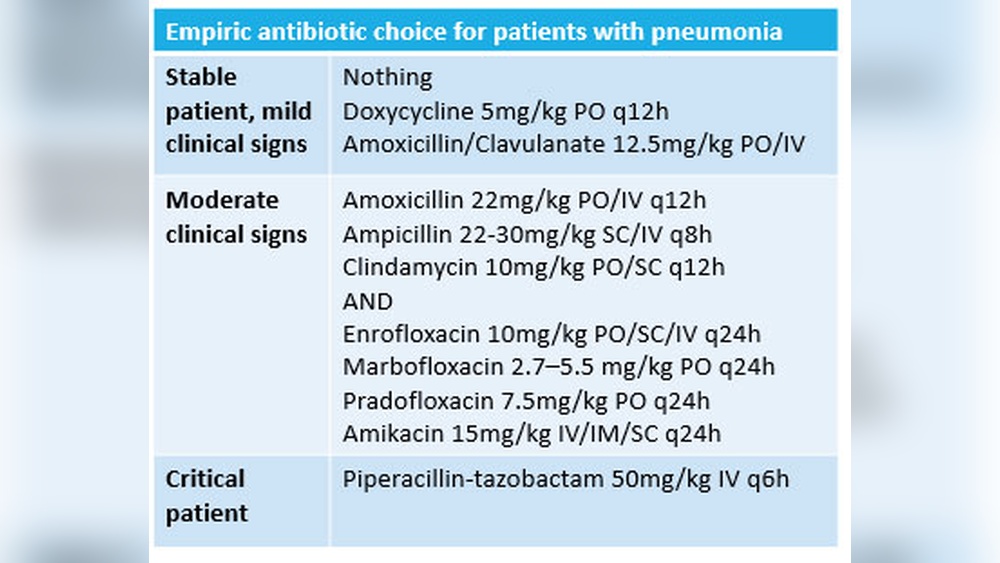
Amoxicillin-clavulanate
Amoxicillin-Clavulanate is a common choice for treating aspiration pneumonia. It fights a broad range of bacteria. This antibiotic is safe and usually well-tolerated by dogs. It helps reduce lung infection quickly and supports faster recovery.
Clindamycin
Clindamycin targets anaerobic bacteria, common in aspiration pneumonia. It is effective against infections caused by mouth bacteria. Clindamycin is often combined with other antibiotics for better results. It helps reduce inflammation and clears infection efficiently.
Metronidazole
Metronidazole is strong against anaerobic bacteria and parasites. It is often given alongside other antibiotics. This medicine helps control severe infections and prevents bacteria from growing. Metronidazole also reduces swelling in the lungs.
Enrofloxacin
Enrofloxacin treats a wide range of bacteria, including resistant strains. It is suitable for severe or complicated infections. This antibiotic works well on gram-negative bacteria often found in aspiration pneumonia. Enrofloxacin is powerful but requires careful dosing.
Choosing The Right Antibiotic
Choosing the right antibiotic for aspiration pneumonia in dogs is very important. The correct antibiotic targets the bacteria causing the infection. It helps your dog heal faster and prevents complications. Several factors influence the choice of antibiotic. These factors ensure treatment is safe and effective.
Bacterial Culture And Sensitivity
Bacterial culture tests identify the exact bacteria in the lungs. Sensitivity tests show which antibiotics kill those bacteria. This information guides the vet in selecting the best antibiotic. Using the right drug reduces the risk of resistance. It also avoids unnecessary side effects.
Severity Of Infection
The infection’s severity affects the antibiotic choice. Mild cases may need a simpler antibiotic. Severe infections require stronger or multiple antibiotics. The vet may start with broad-spectrum antibiotics. Later, they adjust treatment based on test results.
Dog’s Health History
Knowing your dog’s health history is key. Past allergies or reactions to drugs matter. Existing health problems can change how antibiotics work. The vet considers age, kidney, and liver health. This helps avoid harmful side effects and ensures safety.
Dosage And Duration Guidelines
Proper dosage and duration of antibiotics are crucial for treating aspiration pneumonia in dogs. The right amount helps fight infection effectively. The correct length of treatment prevents the infection from returning. Both factors support your dog’s full recovery.
Veterinarians decide dosage and duration based on the dog’s weight and illness severity. Following their advice ensures safety and success. Never change the dose or stop treatment early without consulting the vet.
Determining The Correct Dosage
Veterinarians calculate antibiotic dosage using the dog’s weight. Typically, the dose is given in milligrams per kilogram (mg/kg). This method ensures the dog gets enough medicine without overdosing.
Each antibiotic has a specific dose range. For example, amoxicillin-clavulanate often requires 12.5 to 20 mg/kg every 12 hours. Your vet may adjust this based on how your dog responds.
Recommended Duration Of Treatment
Treatment usually lasts between 10 to 21 days. The exact duration depends on the infection’s severity and the dog’s health. Completing the full course is essential, even if symptoms improve quickly.
Stopping antibiotics too soon may cause the infection to return. Your vet will schedule follow-up visits to monitor progress and decide when to stop treatment.
Signs To Watch During Treatment
Monitor your dog for side effects like vomiting or diarrhea. Report any unusual symptoms to your vet immediately. Improvement in breathing and energy levels shows the treatment is working.
Keep track of medication times. Consistent dosing helps maintain effective antibiotic levels in the body.
Possible Side Effects
Antibiotics can help treat aspiration pneumonia in dogs. Still, they may cause side effects. Knowing these effects helps you watch your dog closely. It also helps you spot problems early. Side effects vary by the type of antibiotic used. Some are mild, while others need quick care.
Gastrointestinal Upset
Many dogs experience stomach issues. Vomiting and diarrhea are common signs. Your dog may lose appetite or seem tired. These symptoms often improve after a few days. Giving antibiotics with food can reduce upset.
Allergic Reactions
Some dogs may have allergic reactions. Skin rashes, itching, or swelling can appear. Severe reactions include difficulty breathing. Allergic reactions need immediate veterinary care. Stop the medicine if you see these signs.
Changes In Gut Flora
Antibiotics can disrupt healthy gut bacteria. This change may cause diarrhea or other problems. Probiotics can help restore good bacteria. Always ask your vet before adding supplements.
Liver And Kidney Effects
Certain antibiotics may affect the liver or kidneys. Watch for jaundice or unusual tiredness. Blood tests may check organ health during treatment. Report any strange symptoms to your vet right away.

Credit: www.northshorespecialist.com.au
Supporting Care For Recovery
Supporting care plays a key role in helping dogs recover from aspiration pneumonia. Besides antibiotics, proper care ensures faster healing and comfort. This care focuses on hydration, nutrition, breathing support, and regular checks. Each step supports the dog’s strength and helps fight infection.
Hydration And Nutrition
Keeping your dog hydrated is crucial during recovery. Water helps thin mucus and supports overall health. Offer fresh water often and monitor intake carefully. Nutrition fuels the body and supports the immune system. Provide easy-to-digest, balanced meals in small portions. Soft or wet food may be easier for dogs with weak appetites. Avoid forcing food, but encourage eating to maintain energy.
Oxygen Therapy
Oxygen therapy helps dogs breathe better when lungs are affected. It increases oxygen levels in the blood and reduces breathing effort. This therapy can be given through masks or oxygen cages. Use oxygen therapy as directed by the veterinarian. It provides relief and supports lung healing during severe cases.
Monitoring And Follow-up
Regular monitoring tracks the dog’s progress and detects any complications early. Watch for changes in breathing, appetite, or behavior. Keep a daily log of symptoms to share with the vet. Follow-up visits ensure the infection is clearing and lungs are improving. Adjust treatments based on the dog’s response. Early detection of issues helps avoid serious problems.
When To See A Veterinarian
Aspiration pneumonia in dogs can be serious. Early veterinary care helps avoid complications. Watch your dog closely for signs of distress. Prompt action can save your pet’s life.
Recognizing The Signs Of Aspiration Pneumonia
Coughing that lasts longer than a day is worrying. Difficulty breathing or rapid breathing needs attention. Lethargy or weakness shows your dog feels sick. Loss of appetite or vomiting may also appear.
When Breathing Becomes Difficult
Struggling to breathe is an emergency. Your dog may breathe with an open mouth. Noisy breathing or wheezing means trouble. Immediate veterinary care is necessary in these cases.
Changes In Behavior And Energy
Your dog may become unusually tired. Lack of interest in play or walks is a red flag. Restlessness or confusion can indicate low oxygen levels. These symptoms require quick veterinary evaluation.
Fever And Other Physical Symptoms
Check for a high temperature by touch. Shivering or shaking can show fever. Pale or blue gums are serious signs. These symptoms mean your dog needs a vet fast.

Credit: todaysveterinarypractice.com
Frequently Asked Questions
What Is The Best Antibiotic For Aspiration Pneumonia In Dogs?
The best antibiotic for aspiration pneumonia in dogs often includes broad-spectrum options like amoxicillin-clavulanate. Vets may also prescribe clindamycin or metronidazole based on infection severity and bacterial type. Always consult a veterinarian for a tailored and safe antibiotic treatment plan.
How Long Should Antibiotics Be Given For Dog Pneumonia?
Antibiotics for aspiration pneumonia in dogs are usually given for 2 to 4 weeks. The exact duration depends on the infection severity and response to treatment. Completing the full course is crucial to prevent relapse and antibiotic resistance.
Can Untreated Aspiration Pneumonia Be Fatal In Dogs?
Yes, untreated aspiration pneumonia can be fatal in dogs. The infection causes lung inflammation, reducing oxygen intake. Early diagnosis and prompt antibiotic treatment improve survival chances significantly.
Are There Side Effects Of Antibiotics For Dogs?
Antibiotics can cause side effects like diarrhea, vomiting, and allergic reactions in dogs. Monitoring your pet during treatment is important. Inform your vet if you notice any adverse symptoms immediately.
Conclusion
Choosing the right antibiotic helps treat aspiration pneumonia in dogs effectively. Early treatment improves recovery chances and reduces complications. Always follow your vet’s advice for medicine and care. Watch your dog closely for changes in health or behavior. Proper medication and care can make a big difference.
Keep your dog comfortable and hydrated during recovery. Regular check-ups help ensure the infection clears fully. Your dog depends on you for the best care possible. Stay patient and attentive throughout the healing process.